
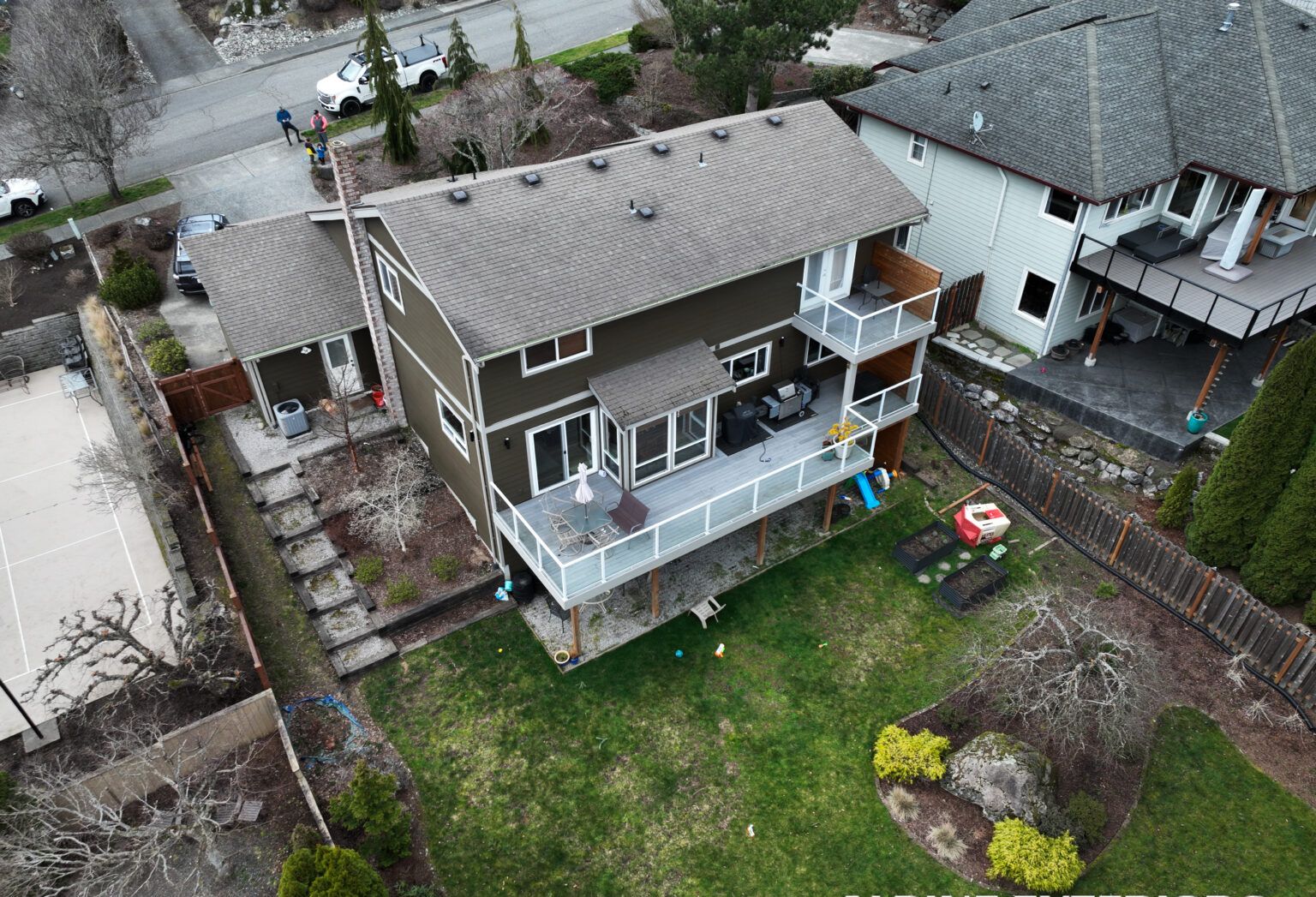
Most siding problems in Samish start small and localized: a rotted section near a downspout, a few cracked lap boards on the west wall, moss creeping up from the foundation line. If the damage is contained to a handful of boards and the sheathing underneath is still sound, repair is usually the right call. If moisture has been getting behind the siding for more than a season or two, or if the damage shows up in multiple places around the house, replacement of that wall (or the whole exterior) tends to be the more honest recommendation.
The hard part isn't identifying damaged boards — it's figuring out what's happening behind them. Samish sits in a pocket of Whatcom County where the combination of tree cover, lake-effect humidity off Lake Samish, and consistent winter rain means water intrusion often does more damage below the surface than what's visible from the driveway.
Siding failure around here rarely comes from one dramatic event. It's cumulative. A few of the patterns we see most often on Samish homes:
None of these are unusual for a Pacific Northwest home. What matters is how far each one has progressed, and whether the sheathing and framing behind the siding are still dry and structurally sound. That's the actual decision point, not the cosmetic condition of the boards themselves.
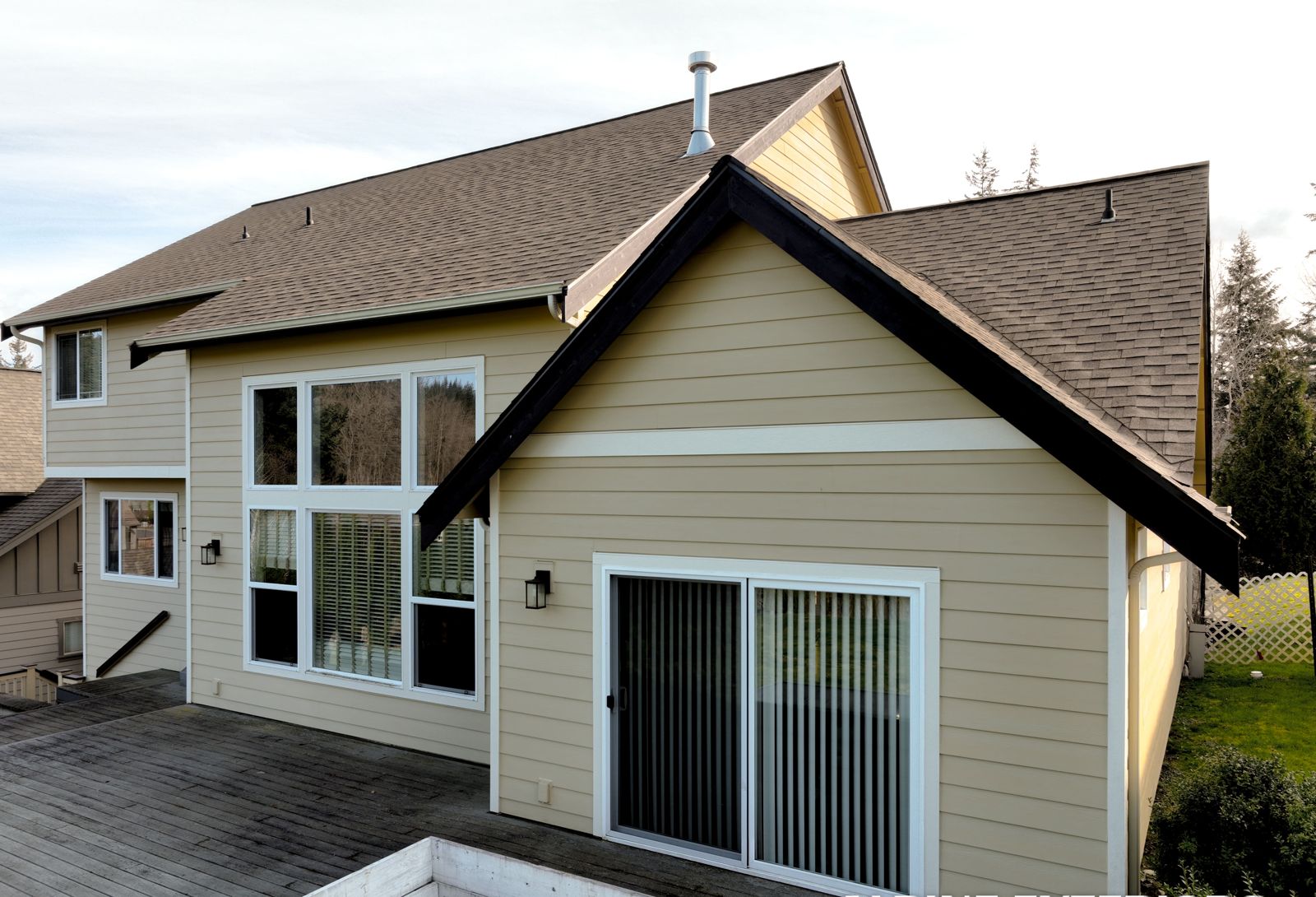
Samish isn't coastal in the way Blaine or Birch Bay are, but it isn't sheltered either. A few things specific to this part of Whatcom County change how siding ages here compared to drier climates:
The Washington State Energy Code also plays a role here, particularly on replacement projects. Current code requirements around continuous insulation and wall assembly performance mean that when a wall is opened up for a full re-side, the replacement assembly (weather-resistive barrier, insulation approach, cladding attachment) usually needs to meet a higher standard than what was originally installed decades ago. That's worth knowing going in, because it can change scope and cost on a project that started out looking like a straightforward like-for-like swap.
Start by getting close to the damage, not just looking at it from the yard. Press on suspect boards with a screwdriver handle or your fingers — sound wood resists; rotted wood gives or feels spongy. Check corners, the base of the walls, and anywhere a deck, porch roof, or downspout meets the siding, since those transition points fail first almost everywhere in this climate.
From there, the decision usually comes down to three questions:
On cost: contained repairs to a section of siding on a typical Samish home generally run in the low thousands of dollars, depending on how much trim and flashing work is involved. Full elevation or whole-house re-siding is a much larger investment, often well into five figures depending on square footage, siding material, and how much of the underlying wall assembly needs to be brought up to current energy code. Get more than one quote, and ask specifically whether the quote assumes the sheathing is sound or includes an allowance in case it isn't — that's the detail that most often turns a fixed-price estimate into a change order partway through the job.
Alpine Exteriors works on siding repair and replacement projects throughout Whatcom County, including Samish, Bellingham, Ferndale, Lynden, and the surrounding areas, and can walk a homeowner through which category their damage actually falls into before any work starts.
The honest answer depends on what's happening behind the boards, not just what you can see. If damage is limited to one area and the sheathing underneath is dry and firm, repair is usually sufficient. If you find soft or spongy sheathing, damage on more than one wall, or siding that's approaching the end of its expected lifespan across the whole house, replacement tends to be the more durable and often more cost-effective long-term choice, since repeated patch repairs on aging siding rarely hold up as well as a fresh installation.
Sometimes, but not always. If your siding is a common profile from a manufacturer still producing that same line, matching board width, texture, and paint color is usually achievable. If your home has older wood siding or a discontinued fiber cement profile, an exact match can be difficult, and even a close match may weather differently over time and become more visible as both areas age. In those cases, it's worth discussing whether a visible seam at a natural break point (a corner, a trim line) is preferable to a patch in the middle of a wall.
Shaded, north- or west-facing walls in Samish typically benefit from a gentle wash at least once a year, and sometimes twice on heavily treed lots. This isn't just cosmetic maintenance — moss and algae hold moisture against the siding surface longer than it would otherwise sit, which can accelerate rot at seams and butt joints over several seasons. Pressure washing should be done carefully and at a distance appropriate to the siding material, since aggressive washing can force water behind boards and cause the very problem you're trying to prevent.
It can, and it's worth planning for. When a wall assembly is opened up for a full re-side, current Washington State Energy Code requirements around wall insulation and continuous insulation often apply to the replacement work, even if the original siding wasn't installed under those standards. This can mean adding a continuous insulation layer or upgrading the weather-resistive barrier as part of the project. It's a detail worth asking a licensed contractor about during the estimate stage, since it affects both scope and cost.
Siding damage in Samish rarely gets better on its own, and the freeze-thaw and wind-driven rain patterns specific to this part of Whatcom County mean small problems tend to compound over a winter rather than stay static. Alpine Exteriors, licensed in Washington under contractor license ALPINI751OW, offers on-site assessments for homeowners in Samish and throughout Whatcom County to identify whether a repair or a fuller replacement makes sense for your specific siding and wall condition. If you're seeing cracked boards, staining, or soft spots on your exterior, reach out to Alpine Exteriors for a straightforward look at what's actually going on behind the siding before deciding on next steps.