
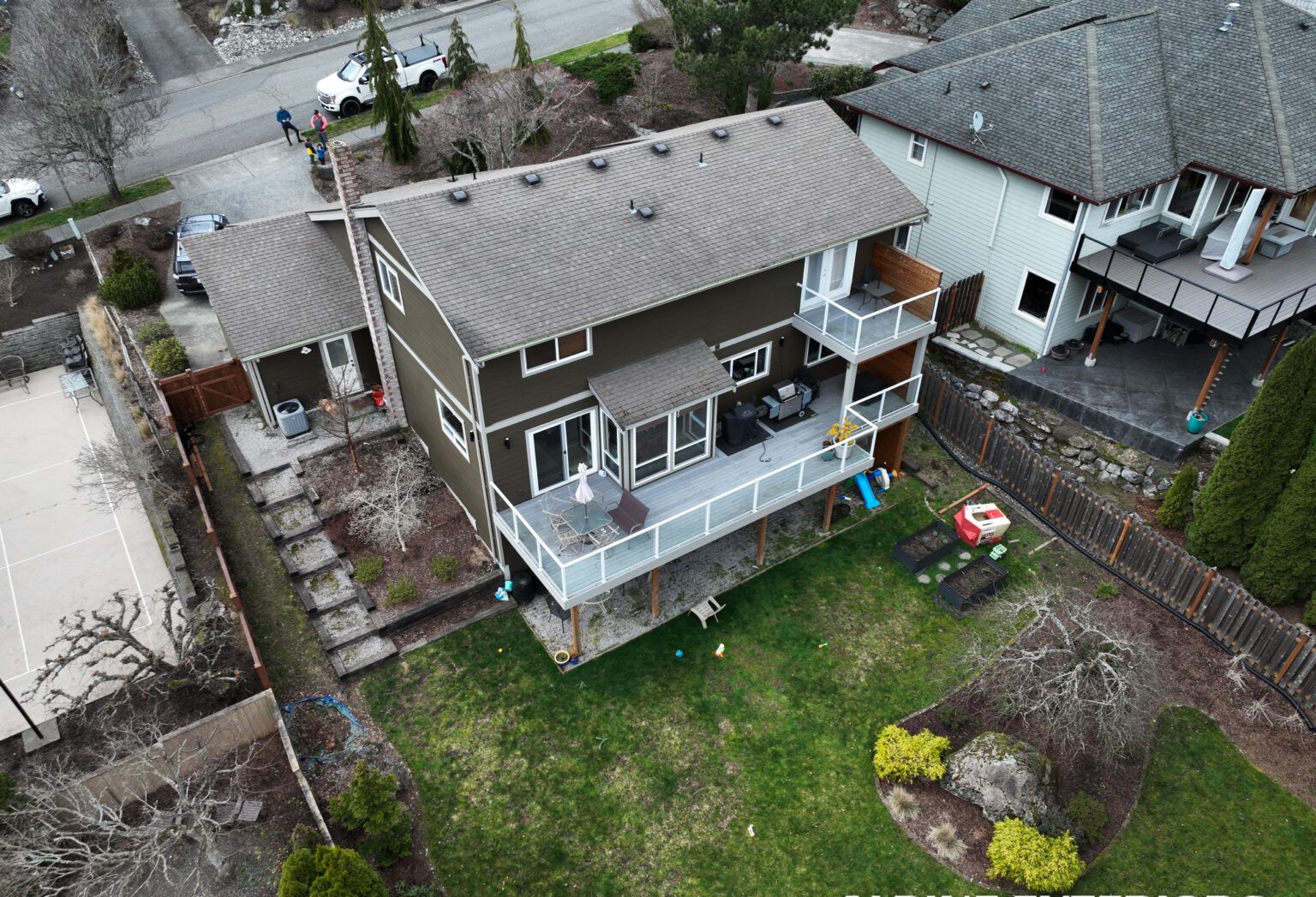
Semiahmoo sits on a spit between Drayton Harbor and the Strait of Georgia, which means houses here take on a different kind of weather load than homes a few miles inland in Bellingham or Lynden. This checklist walks through what to look at, why it matters in this specific stretch of Whatcom County, and what your next step should be depending on what you find. It's meant to be done from the ground with a pair of binoculars and, in a few spots, a stepladder — not a substitute for a contractor's full evaluation, but a way to catch problems while they're still cheap to fix.
Semiahmoo's siding problems rarely start with a single dramatic event. They start slow, from exposure that's constant rather than extreme. The peninsula gets direct, wind-driven rain off the Strait for much of the fall and winter, and that wind carries a fine mist of salt air that settles on siding, trim, and fasteners day after day. Add Whatcom County's long gray season — where surfaces can stay damp for days at a stretch — and you get ideal conditions for moss and algae to take hold on north- and west-facing walls, especially anywhere shaded by trees or a neighboring structure. That green-black film isn't just cosmetic; it holds moisture against the siding surface longer than bare material would.
Wood rot is the other recurring issue we see on inspections out here, particularly around window trim, butt joints, and anywhere caulk has failed and water has found a way behind the cladding. Homes closer to Sudden Valley and the county's foothill neighborhoods also deal with freeze-thaw cycling during cold snaps, which can widen small cracks in caulk or trim boards faster than a purely marine climate would. Semiahmoo itself is milder than the foothills, but it isn't immune — a hard freeze off the Strait a few times a winter is enough to stress any joint that was already compromised by moisture. None of this is hurricane-force weather; it's steady, patient exposure, and that's exactly why an annual walk-around pays off — small issues here tend to stay small if they're caught early, and get expensive fast if they aren't.
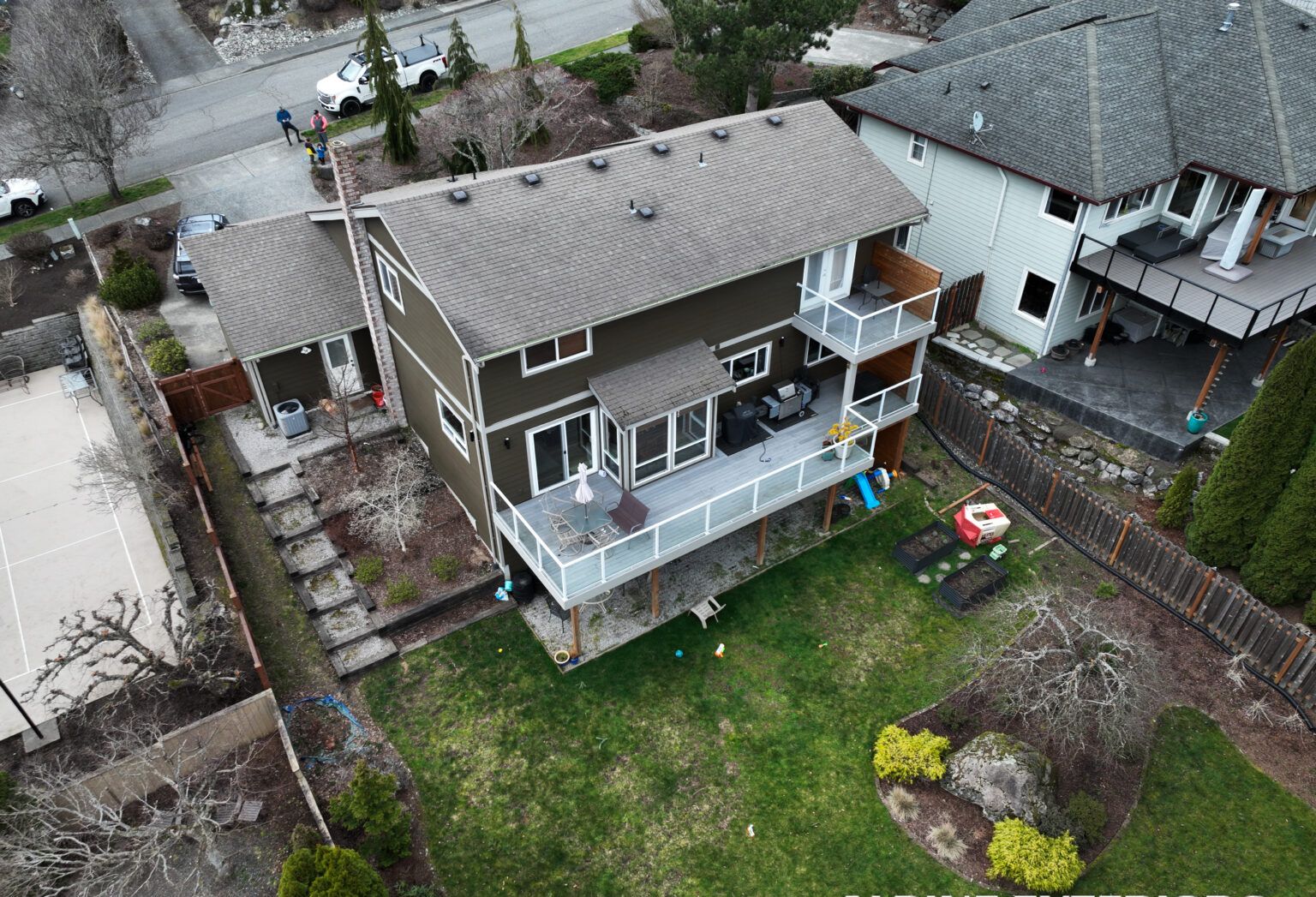
Not every failed item on this list means a full siding replacement. A patch of moss can often be treated with a gentle wash and a moss-inhibiting product, done carefully so you're not pressure-washing water up under the siding seams — that can cause more harm than the moss itself. A few popped fasteners or a run of failed caulk can sometimes be addressed as a maintenance item, provided the wood underneath hasn't already started to soften.
Soft or spongy siding, dark staining that traces back to a specific joint, or rust bleeding from multiple fasteners across a wall are different — those usually mean water has already gotten past the surface, and a cosmetic fix will just hide the problem instead of solving it. In those cases, the siding in the affected area typically needs to come off so the sheathing and framing underneath can be checked and dried out or repaired before new material goes back on. Trying to caulk over active rot or paint over a soft spot is a common shortcut that costs more in the long run, since it lets the damage keep spreading behind a surface that now looks fine.
If your inspection turns up gaps at penetrations, missing weep holes, or blocked ventilation, treat those as priority fixes even if the siding around them still looks good — they're the conditions that turn a healthy wall into a rotted one over the next few wet seasons.
Some findings are reasonable for a homeowner to handle with basic tools and a weekend; others aren't. It's worth calling a licensed siding contractor when you find soft or spongy siding anywhere on the house, staining or rot that shows up on more than one wall, visible daylight or gaps at seams and trim, or any sign that moisture has reached the interior side of an exterior wall. It's also worth a call before doing any repair that involves removing and replacing siding sections, since disturbing one area often reveals damage that extends further than what's visible from outside.
If your project involves replacing more than a small section of siding, it's also the point where the Washington State Energy Code comes into play — full siding replacement can trigger requirements for wall insulation, air sealing, or continuous insulation depending on the scope of work and how much of the wall assembly is exposed. A contractor who does this work regularly will know what applies to your project and can plan the repair so it meets code without turning a siding fix into a bigger renovation than it needs to be. Alpine Exteriors, WA contractor license ALPINI751OW, handles these evaluations for homeowners around Semiahmoo, Blaine, and the rest of Whatcom County, and can tell you honestly whether you're looking at a repair or a replacement before any work starts.
Once a year is a reasonable baseline, ideally in early fall before the wet season sets in, with a shorter follow-up look after any unusually strong windstorm off the Strait. Homes with a lot of shade or tree cover, where moss and algae tend to establish faster, may benefit from checking the north- and west-facing walls twice a year.
It's both, but the cosmetic part isn't the real concern. Moss and algae hold moisture against the siding surface for longer than bare material would, and over time that constant dampness can contribute to paint failure, wood softening, and rot underneath the growth — especially on wood or wood-composite siding. Vinyl and fiber cement are more resistant to the underlying damage but still look better without it.
Less than homes further inland or up toward the foothills, since the marine climate around Semiahmoo tends to moderate temperature swings. But the county does get occasional hard freezes in winter, and any caulk joint or trim gap that's already compromised by moisture can widen faster when it freezes and thaws even a few times. It's worth checking those spots after a cold snap, not just after a storm.
Not automatically — it depends on the scope of the project and how much of the wall assembly is opened up. The Washington State Energy Code has specific provisions that can apply once you're replacing a significant portion of exterior wall covering, covering things like insulation and air sealing. A contractor familiar with the code, such as Alpine Exteriors, can walk through what applies to your specific project before work begins.
A checklist can tell you where to look, but it can't tell you what's happening behind the wall. If this walk-around turned up soft spots, staining, or anything you're not sure about, Alpine Exteriors offers on-site inspections for homeowners throughout Semiahmoo, Blaine, Birch Bay, and the rest of Whatcom County. We'll give you a straightforward read on what's a maintenance item and what needs real repair — no pressure, just an honest assessment from a licensed local contractor (WA license ALPINI751OW).