
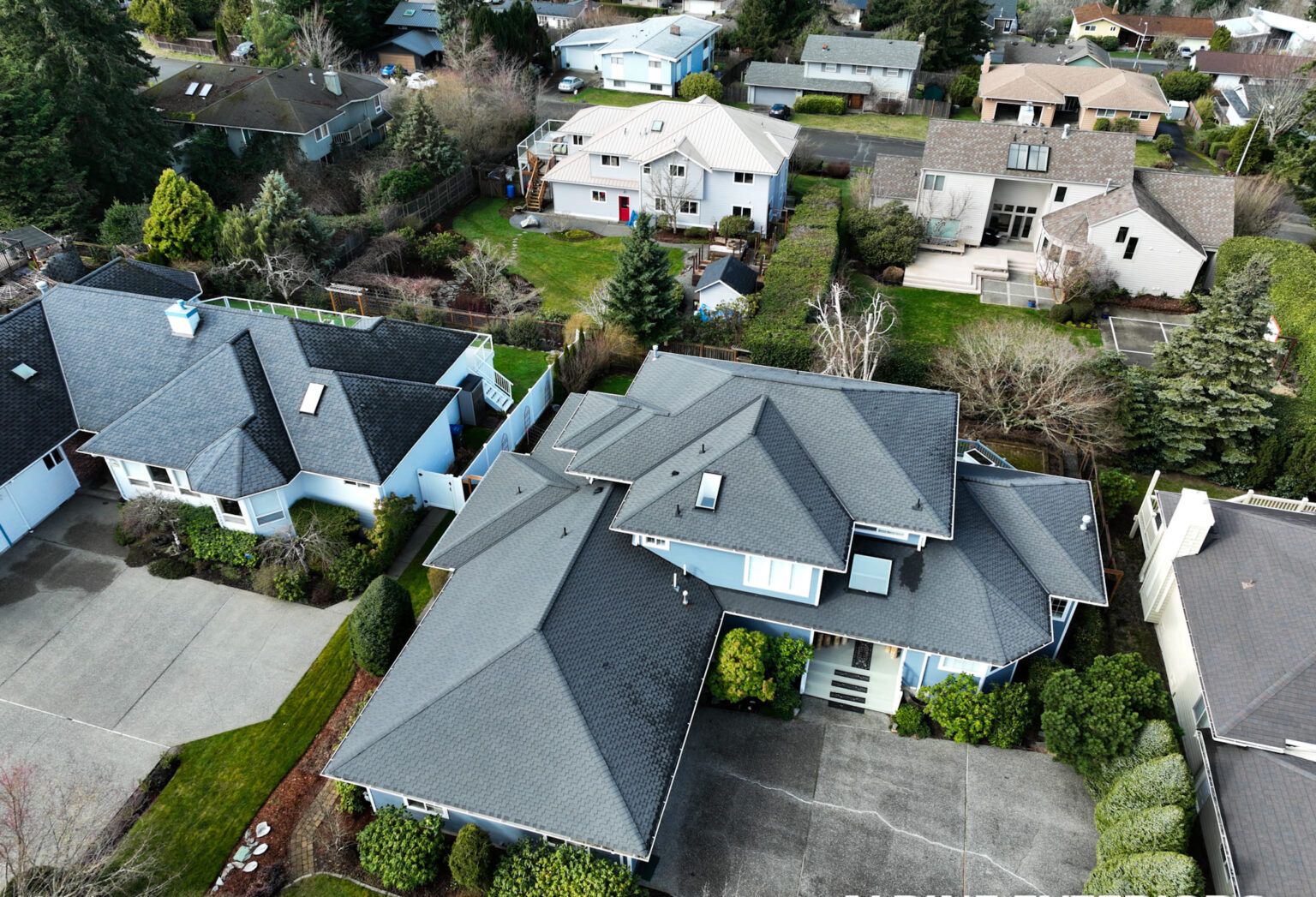
Custer sits in the open country between Ferndale and Blaine, close enough to Birch Bay and the Strait of Georgia that wind off the water reaches homes here with little to slow it down. Add Whatcom County's long, wet winters and the moss that grows on almost anything that holds still long enough, and siding here works harder than it does in more sheltered parts of the county. Most siding failures don't happen overnight. They start small — a soft spot near a downspout, a hairline gap at a corner board, a patch of paint that won't quite stay put — and get worse one rainy season at a time. Knowing what to look for, and how urgent it actually is, can be the difference between a repair you handle this fall and a much bigger project next spring.
On wood siding or older hardboard products, paint that's bubbling, cracking in sheets, or peeling away in strips almost always means moisture is trapped underneath the paint film rather than sitting on top of it. In a drier climate that moisture would evaporate out through the wood between storms. In Custer, with the Strait of Georgia and Birch Bay feeding steady humidity onto exposed walls and the wet season stretching from fall through spring, siding often doesn't get enough dry time between rain events for that moisture to leave. The paint job that once protected the wood becomes a lid that seals dampness in against it.
Press a gloved hand or the flat of a screwdriver handle against the siding near the bottom of a wall, around a hose bib, or under a window. If it gives, feels spongy, or the surface crumbles slightly, that's wood rot — a fungal decay process that needs sustained moisture to take hold. Custer's open, low-lying farmland and direct exposure to prevailing winds off the water mean certain walls get repeatedly soaked and don't fully dry before the next system rolls through. Engineered wood siding (LP-style products) is particularly vulnerable once the factory sealant at a cut end, nail hole, or butt joint has been compromised — water gets in from that one entry point and the panel swells and softens from the inside out, sometimes while the face still looks intact from ten feet away.
Vinyl siding that looks rippled or wavy, especially on a south- or west-facing wall, is usually reacting to heat and improper fastening — it was nailed too tight to allow for normal expansion and contraction, and repeated temperature swings have permanently deformed it. On wood or fiber cement siding, buckling more often points to water absorption: the board swells when wet, dries unevenly, and cups or bows as a result. Either way, warped siding rarely flattens back out on its own, and the fasteners or seams around a buckled section are usually working loose at the same time, giving wind-driven rain a new way in.
A green or black film on north-facing walls, or on any section shaded by trees, fences, or a neighboring building, is common on rural Custer lots where mature trees and drainage ditches keep the air damp longer than in more open, sun-exposed spots. Moss and algae aren't just cosmetic. Moss especially holds water directly against the siding surface like a sponge, keeping that section wet long after the rest of the wall has dried and accelerating rot or paint failure underneath. A wall that's visibly green is often further along in its decline than it looks.
Look closely at corner boards, window and door trim, and the horizontal seams where siding courses overlap. Caulk that's cracked, shrunk, or pulled away leaves a direct path for water — and wind-driven rain coming off the Strait and Birch Bay doesn't just fall straight down, it gets pushed sideways and even upward under laps that were only ever designed to shed water moving downward. Small gaps that would be harmless in a calmer climate become active leak points here during a windy winter storm. House settling over the years can also open seams that were once tight, particularly around additions or areas where different siding runs meet.
Siding isn't just a weather shell — it's the outermost layer protecting the water-resistive barrier, insulation, and air sealing that the Washington State Energy Code requires in the wall assembly behind it. When siding has failed, wind and moisture can compromise that barrier and the insulation it protects, and the wall stops performing the way it was built to. If a particular room feels drafty, a wall is noticeably cold to the touch, or heating costs have climbed without an obvious reason, failing siding on that side of the house is worth checking as a cause.
By the time moisture shows up as a smell, a stain, or a soft spot on the inside of a wall, it has usually already done real damage to the sheathing or framing behind the siding. This is the sign that tends to get discovered last, because the exterior symptom that caused it — a cracked seam, a soft panel, a gap at a corner — was often visible for a season or two before anyone connected it to what was happening inside.
Not every sign on this list means drop everything. Soft or spongy panels, any interior staining or musty smell, and siding that's visibly separating from the wall are urgent — they mean water is actively reaching structural wood, and rot spreads faster once it's established, especially through a wet Whatcom County winter. These are worth having looked at within a few weeks, not next spring.
Surface moss, light algae staining, and faded or lightly cracking paint on siding that's otherwise solid can generally wait for a planned project, though they shouldn't be ignored indefinitely — moss left to grow thicker each year eventually does become a moisture problem, not just a cosmetic one. The practical rule in this climate: get anything urgent addressed before the fall rains set in, and schedule cosmetic or preventive work in the drier months when repairs go faster and materials aren't going in wet.
Start with a basic walk-around on a dry day. Press-test any soft-looking areas, check the bottom courses near grade and around hose bibs and downspouts, and look closely at corner boards and window trim for gaps. Inside, check the attic and any accessible wall cavities for staining, and note any rooms that feel unusually cold or smell musty. Take photos as you go — they're useful for comparing seasons and for any contractor who comes to look at the house.
For anything beyond surface moss or minor caulk cracks, a professional inspection is worth it before deciding between a spot repair and a larger re-side. Spot repairs on a single section of wall often run in the low hundreds of dollars; a full tear-off and re-side on an average Custer home can run well into five figures depending on square footage, the siding material chosen, and how much sheathing underneath turns out to need replacing once the old siding comes off — that last number is usually the real unknown until a wall is actually opened up. Alpine Exteriors inspects siding across Whatcom County, including Custer, Ferndale, and Blaine, and can walk a homeowner through what's cosmetic, what's urgent, and what a realistic repair versus replacement looks like for that specific house. Alpine Exteriors holds Washington contractor license ALPINI751OW.
It generally comes down to how far the damage has spread and what's underneath. If soft spots, rot, or gaps are limited to one or two areas — a section under a window, one corner, a run near a downspout — a targeted repair that replaces the damaged boards and re-seals the area is often enough. If rot shows up in multiple spots across different walls, if the sheathing underneath is compromised in more than one place, or if the siding is old enough that matching materials is difficult, a full re-side usually ends up being more practical and cost-effective than chasing repairs one at a time.
In Custer, the side of the house facing the prevailing wind off the Strait of Georgia and Birch Bay typically takes the most direct wind-driven rain and dries out the slowest, so it's common for that elevation to show rot, paint failure, or moss well before the more sheltered sides. North-facing walls that stay shaded also tend to hold moisture longer and grow more moss and algae, even without heavy wind exposure.
It depends on the cause and the policy. Sudden damage from a specific storm event is more likely to be covered, while gradual deterioration from age, ongoing moisture exposure, or lack of maintenance — which describes most of the siding failures we see in this area — typically isn't. It's worth reviewing the specific policy language and, for anything that might qualify, documenting the damage with photos and dates before starting repairs.
It varies a lot by material and by how exposed a particular wall is. Well-installed fiber cement and vinyl siding can perform well for decades with normal maintenance, while wood and older engineered wood products tend to show problems sooner, especially on walls that take direct wind-driven rain. Age alone isn't the best indicator — a fifteen-year-old wall with poor drainage detailing can fail before a thirty-year-old wall that's well flashed and gets more sun exposure. That's why a physical check of the actual siding matters more than going by the calendar.
Siding problems in Custer rarely announce themselves loudly — they show up as a soft spot, a streak of moss, a slightly higher heating bill — and each wet season tends to make them a little worse. If any of the signs above sound familiar, it's worth having a straightforward, no-pressure look at the wall before committing to either a repair or a full re-side. Alpine Exteriors, Washington contractor license ALPINI751OW, works on homes throughout Whatcom County, including Custer, Ferndale, Blaine, and the surrounding areas, and can help sort out what's cosmetic, what's urgent, and what makes sense for your home and your budget.