
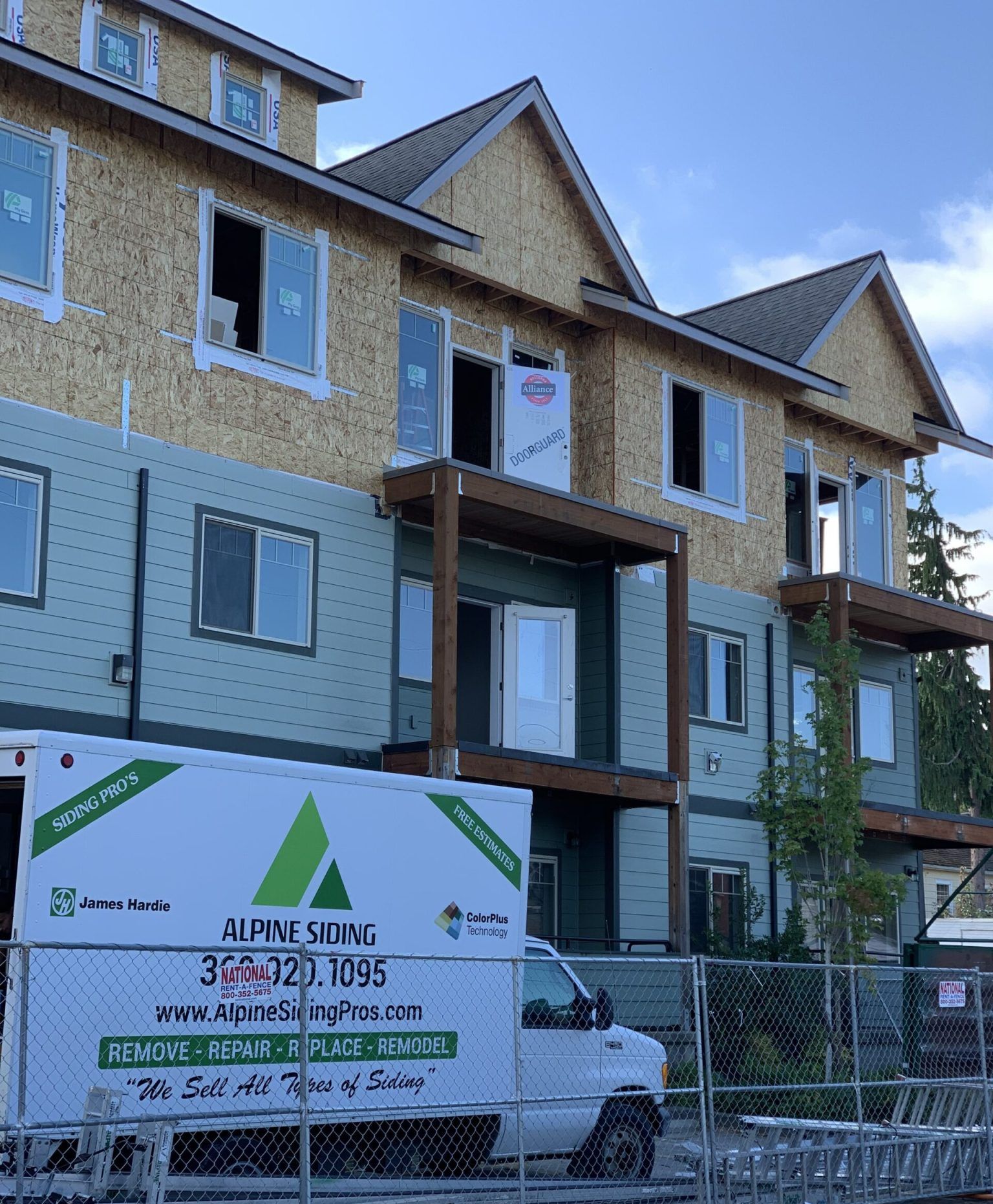
Everson sits back from Bellingham Bay along the Nooksack River, in the flatter farmland where the foothills start climbing toward Mount Baker. That location gives Everson homes a slightly different weather diet than houses right on the water in Blaine or Birch Bay — less direct wind-driven spray, but more standing damp from river-bottom humidity, more shade from surrounding trees and outbuildings that keeps siding wet longer after a storm, and colder overnight lows in winter that push freeze-thaw cycling harder here than in the more temperature-moderated coastal parts of the county. Add in Whatcom County's long, low-intensity rainy season — months of drizzle rather than short violent downpours — and siding here fails in a specific, recognizable pattern. This page walks through what that pattern looks like, why it happens on Everson homes in particular, and how to tell the difference between a cosmetic issue and something that needs attention this month.
Stand at the corner of the house and sight down a wall. Siding that's still sound reads as a flat, even plane. Siding that's failing shows waves, ripples, or spots where a panel has pulled loose from the wall behind it. On older lap siding this usually means moisture has gotten behind the panel and the wood or fiberboard substrate underneath is swelling and shrinking with every wet-dry cycle. In Everson, where humidity from the river bottom keeps the air damp longer after a rain than it stays in more open, breezy parts of the county, that wet-dry cycling happens more often per season than homeowners expect. Vinyl siding can also warp from heat exposure on south- and west-facing walls, but in this climate the far more common cause is trapped moisture, not sun.
Paint failure on siding almost always means water is trying to escape from inside the wall assembly rather than sitting on the outside. When moisture that's worked its way behind the siding tries to evaporate back out, it pushes against the paint film from underneath, and the paint bubbles, cracks, or peels in sheets rather than wearing evenly. On a house that's just weathering normally, you'd expect fading and chalking, not bubbling. If you're seeing bubbles concentrated around window trim, at the bottom courses near grade, or under roof eaves where runoff concentrates, that's a strong signal the siding itself — not just the paint job — needs a closer look.
This is the sign that worries us most, because it usually means rot has already set into the substrate. Press a gloved thumb or the handle of a screwdriver into a suspicious area — sound wood-based siding resists; rotted material gives way or crumbles. Wood and OSB-based siding products installed a few decades ago are especially prone to this once the factory finish and any protective sealant have worn through, and Whatcom County's persistent rain gives rot fungus exactly the sustained moisture it needs to establish itself. Once a section is spongy, patching the surface won't fix the underlying wood; the damaged material generally needs to come out.
Some moss and algae growth on the north side of any house in this county is close to unavoidable — it's a function of shade, humidity, and how much direct sun a wall gets during the drier months. What's a genuine warning sign is growth that keeps returning heavily within weeks of a wash, or that's established itself in a texture or coating that's clearly degrading underneath it. Moss holds moisture directly against the siding surface, which accelerates whatever failure is already starting. Houses tucked under mature trees or set close to outbuildings — common on the larger Everson lots — tend to see this worst on the shaded and downwind sides.
Caulking and seam sealant have a working life, and once they start failing, water finds its way behind the siding at exactly the joints, corners, and penetrations (hose bibs, light fixtures, vents) that were designed to keep it out. In a climate with this much cumulative rainfall, a gap that seems minor in July can be driving real water intrusion by the following winter. Cracked panels — from age, impact, or simple material fatigue — do the same thing on a smaller scale.
Siding isn't just a weather shell; on most Everson homes it's paired with a weather-resistive barrier and insulation that are supposed to work together to meet Washington State Energy Code performance targets. When siding has failed enough to let moisture or air past it, that barrier and insulation underneath often get compromised too — wet insulation loses much of its R-value, and gaps let conditioned air escape. If heating costs have crept up without an obvious cause, or a room near an exterior wall feels drafty even with the furnace running, it's worth having the siding checked, not just the furnace.
This is the sign that means water has already made it all the way through the wall assembly. A musty smell near an exterior wall, visible mold on interior drywall, or a mystery damp spot that shows up after heavy rain all point to bulk water intrusion behind the siding, not just surface weathering. By the time it's noticeable indoors, the damage outside has usually been developing for a while.
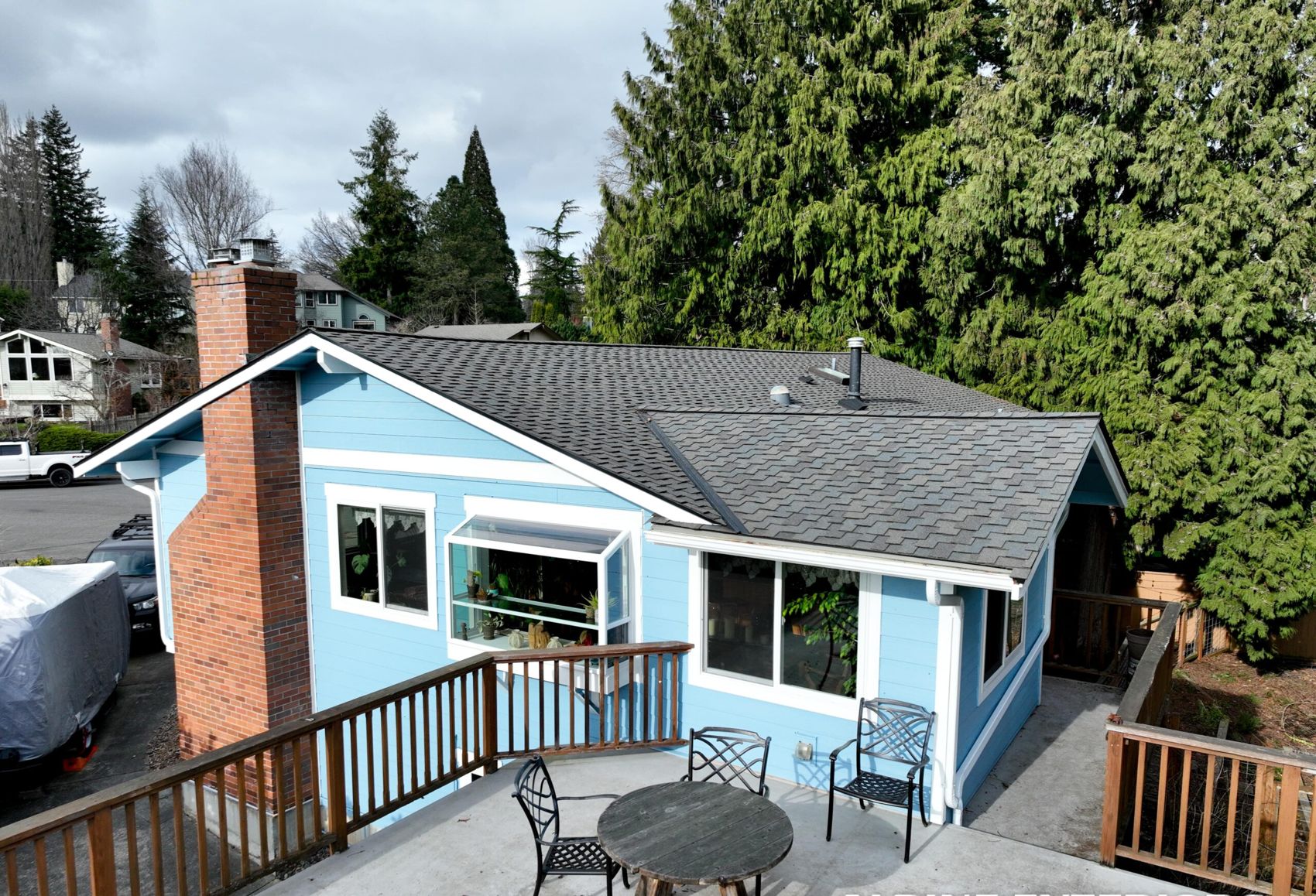
Not every sign on this list means drop everything. Some cosmetic issues can be scheduled around; others get worse — and more expensive — the longer they sit.
Treat as urgent: soft or crumbling panels, any interior mold or musty smell, gaps or cracks near window and door openings where water can track directly into the framing, and siding failure on a wall that also shows sagging or staining on the roofline above it, since that often means the problem started at the roof-wall intersection and has been feeding water into the siding for some time. Wait through another wet season with an active leak path and you're often looking at sheathing and framing repair, not just new siding.
Can generally wait for a planned project: moss and algae that responds to cleaning, minor paint fading or chalking without bubbling, and small isolated cracks that aren't near an opening or a known water path. These are worth monitoring and addressing on a normal maintenance or replacement timeline rather than as an emergency.
The honest caveat here: it's not always possible to tell from the outside how far moisture has traveled. A wall that looks like it has one bad panel sometimes turns out to have wet sheathing behind three or four panels once it's opened up, and a wall that looks rough can sometimes turn out to be surface-only. That's part of why a hands-on look matters more than a photo or a guess from the sidewalk.
Start with a walk around the exterior in dry weather, since wet siding can hide texture and softness that's obvious once it dries out. Note which walls and which specific areas show the signs above — shaded sides, areas under roof runoff, and anywhere near grade are the usual starting points in this climate. Take photos while conditions are dry so there's a record to compare against later.
From there, get an in-person assessment before deciding between a patch, a partial re-side, or a full replacement. A contractor who works in Whatcom County regularly should be able to tell you, section by section, what's cosmetic and what's structural, and should be willing to explain the difference rather than just quoting a full tear-off by default. Alpine Exteriors evaluates Everson homes on-site for exactly this reason — moisture patterns here don't always match what's happening two miles away in Bellingham or out at Birch Bay, and a fair assessment accounts for the specific exposure of your walls, your tree cover, and your lot's drainage. If replacement does turn out to be the right call, any new install on an Everson home should account for current Washington State Energy Code requirements around the water-resistive barrier and continuous insulation, since those details affect both how well the new siding performs and how the wall assembly handles the next few decades of rain.
Quite a bit. A visual walk-around in dry weather, a gentle thumb-press test on any suspicious soft spots, and a look at areas under roof runoff and near ground level will catch most of the obvious warning signs. What's harder to check yourself is what's happening behind the siding — whether moisture has reached the sheathing or framing — which usually requires removing a section or using moisture-metering tools a contractor would bring.
Not by itself. Some moss and algae growth on shaded, north-facing, or tree-covered walls is close to normal in this climate and doesn't mean the siding underneath is failing. It becomes a real warning sign when it keeps returning heavily right after cleaning, or when it's growing on top of a surface that's already showing cracking, softness, or paint failure underneath it.
It depends on how contained the damage is. Isolated soft spots, cracked panels, or failed caulking on an otherwise sound wall can often be repaired section by section. Widespread buckling, rot that's tracked along multiple panels, or moisture that's clearly reached the sheathing across a large area usually makes a partial repair a short-term fix at best — the labor to blend a patch into surrounding material can end up costing close to what a fuller replacement of that wall would run, without solving the underlying moisture path.
Everson gets less of the direct wind-driven rain that hits homes right along Bellingham Bay or out toward Blaine and Birch Bay, but it tends to hold humidity longer after storms because of its river-bottom location and typically has more mature tree cover shading walls. Winter nights also run colder here than on the water-moderated coastline, which means more freeze-thaw cycling on any siding that's already retaining moisture. The net effect is that Everson siding failure often shows up as rot and moss-driven deterioration in shaded, damp areas rather than as impact or wind damage.
If your Everson home is showing one or more of these signs, it's worth getting eyes on it before the next wet season adds another layer of damage. Alpine Exteriors, WA contractor license ALPINI751OW, provides on-site siding assessments across Whatcom County, including Everson, Lynden, and the surrounding foothills, with straightforward explanations of what's cosmetic, what's urgent, and what your options actually are — no pressure toward a full replacement if a section repair genuinely covers it.