
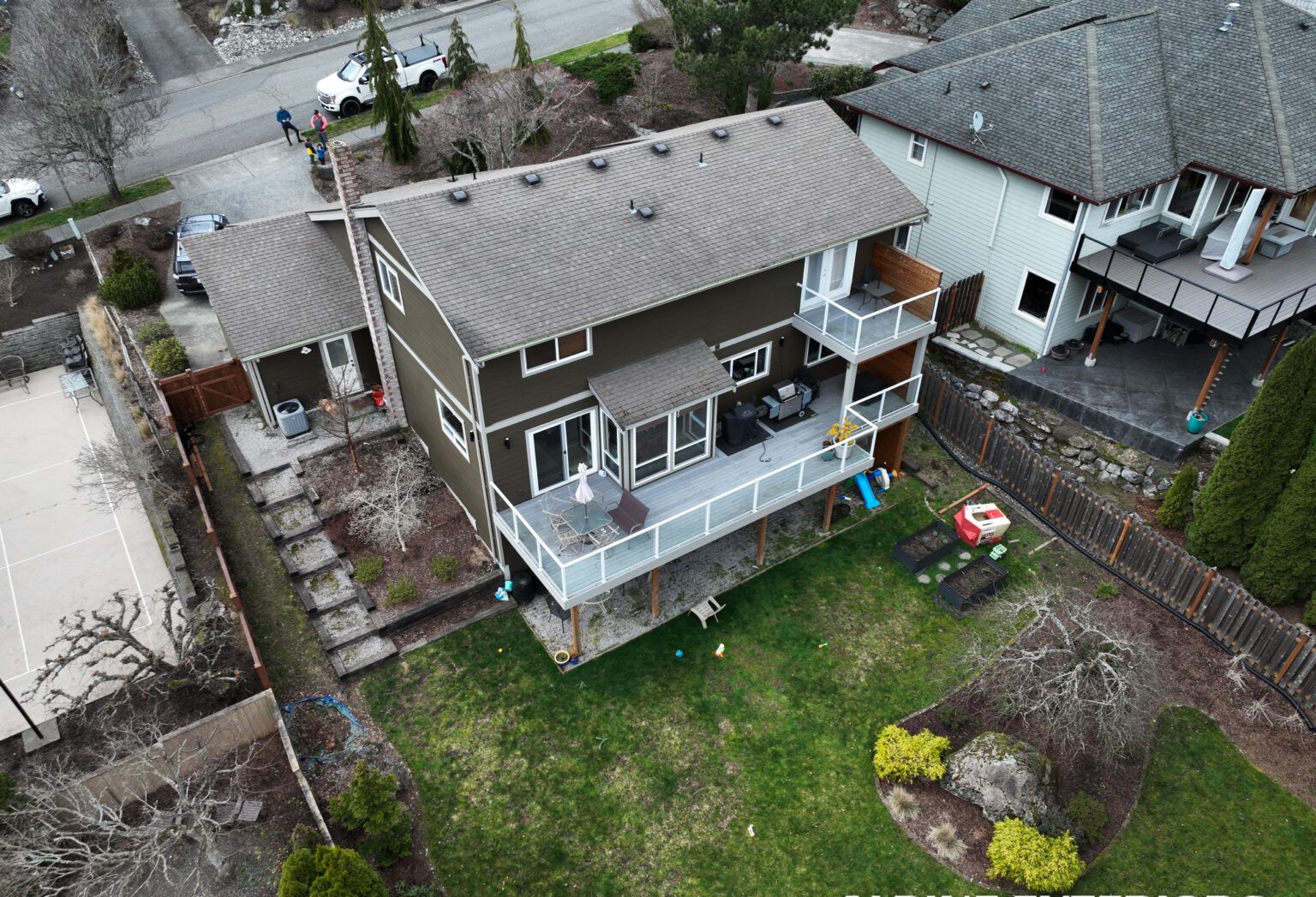
Blaine sits on the water — Semiahmoo Bay on one side, Boundary Bay and the Strait of Georgia close by — which means homes here take more wind-driven rain than almost anywhere else in Whatcom County. Add in the region's long wet winters, shaded lots that stay damp for days after a storm, and the freeze-thaw swings that show up in the colder months, and siding in Blaine works harder than siding almost anywhere inland. Most siding fails slowly, a little at a time, which is exactly why homeowners miss the early signs until a small problem has become an expensive one. Below is what to look for, what it usually means, and how to tell the difference between "watch it" and "call someone now." Alpine Exteriors has been walking Blaine roofs and walls for these same issues for years, and the patterns repeat often enough to be worth writing down.
When paint bubbles or peels in sheets rather than just fading, it's usually a sign that moisture is trapped underneath the surface and trying to push its way out. In Blaine, this shows up most on walls that catch wind-driven rain off the bay, and on the shaded north side of a house where surfaces stay damp long after the rest of the home has dried. If the paint is peeling in small, scattered spots, it may just need prep and a fresh coat. If it's peeling in large sheets, especially near seams or trim, that's usually water finding its way behind the siding, not just a surface paint failure.
Wood and engineered wood siding absorbs moisture and swells; when it dries out unevenly, it can warp or buckle instead of returning to flat. Vinyl siding can also warp if it's been exposed to reflected heat or if it was installed too tightly with no room to expand and contract. In Blaine's damp climate, warping is more often a moisture story than a heat story — siding that never fully dries out between rain events starts to lose its shape season after season. Once panels are visibly wavy, water is typically already getting behind them.
Small hairline cracks can be cosmetic, but cracks that run through a full panel, or gaps that have opened up at seams and corner trim, give wind-driven rain a direct path to the wall sheathing behind the siding. Freeze-thaw cycles in the colder months make this worse: water that seeps into a small crack expands when it freezes and widens the crack a little more each time. By spring, what was a hairline split in October can be wide enough to see through.
Some moss and algae growth is close to unavoidable on a Whatcom County exterior, especially under eaves, behind shrubs, and on north-facing walls that rarely see direct sun. Light surface growth on hard, sound siding is often just a cleaning issue. The concern is moss that's thick, spongy, or growing in a pattern that follows a seam or a low spot — that usually means water is sitting there longer than it should, and the moss is a symptom of trapped moisture, not just a surface nuisance.
Press firmly on suspect siding, particularly near the bottom courses, around window and door trim, and anywhere gutters have overflowed in the past. Wood, engineered wood, and even the wood sheathing behind fiber cement or vinyl can rot when water gets trapped against it for long enough. A soft or spongy feel under hand pressure almost always means rot has already started underneath, even if the surface still looks presentable from a few feet away.
By the time moisture problems on the outside start showing up on the inside — a musty smell near an exterior wall, a damp patch on drywall, discoloration around an outlet or baseboard — water has usually been getting past the siding for a while. These interior clues are worth taking seriously even if the siding still looks fine from the curb, because the failure point (a gap at a window flashing, a cracked panel, a seam that's opened up) is sometimes hard to spot from the ground.
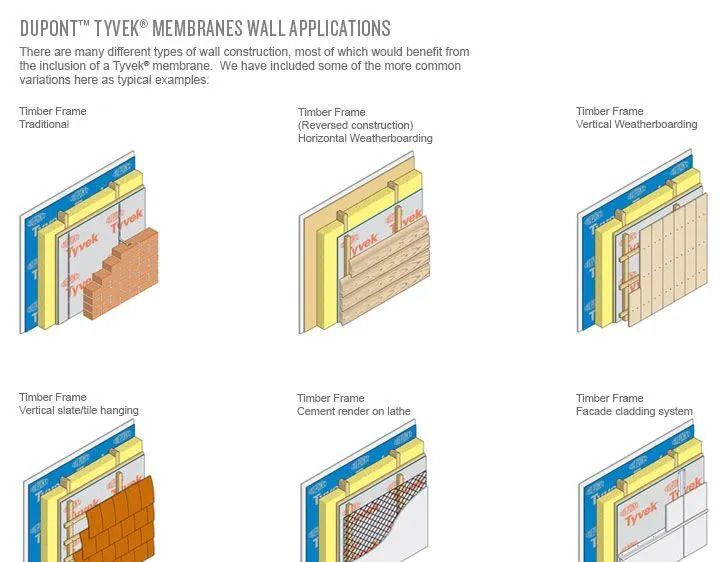
Siding is part of a home's weather barrier, and when it's failing, air and moisture can move through the wall assembly more freely than they should. Under the Washington State Energy Code, exterior walls are expected to hold a certain level of continuous insulation and air-sealing performance; siding that's cracked, gapped, or pulling away undermines that performance even if the insulation itself is intact. A creeping heating bill isn't proof of a siding problem on its own, but paired with any of the visible signs above, it's worth a closer look.
Rust streaks bleeding down from nail heads or screws, most common on fiber cement siding, usually mean the fasteners weren't corrosion-resistant to begin with, or that water is reaching them more than it should. In a coastal town like Blaine, with salt-tinged air off the bay, ordinary fasteners corrode faster than they would further inland. Once a fastener is compromised, the hold it provides for that panel weakens too.
This is the sign that gets attention fastest, and for good reason: a gap you can see daylight through, or a panel that flexes visibly in the wind, means the siding is no longer doing its main job of keeping water off the wall assembly. It often follows months or years of the smaller issues above going unaddressed — a cracked seam that widened, fasteners that rusted through, or repeated freeze-thaw cycling that loosened the panel's grip.
Not every sign on this list means a same-week emergency, and it's fair to be honest about that. A few isolated bubbles in old paint, or moss on a shaded corner that's otherwise solid, can usually wait until you're planning other exterior work. What changes the urgency is water actively getting behind the siding: soft or spongy spots, visible gaps or separation, cracked panels near a window or door, or any interior sign like a musty smell or a damp wall. Those should be looked at promptly, because wood rot spreads underneath the surface faster than it shows on top, and a section that could have been patched in the fall can turn into a section that needs full replacement by spring if it sits through a wet winter. When in doubt, a quick inspection is far cheaper than guessing wrong.
Start with a walk around the exterior on a dry day, paying particular attention to the walls that face the water and the corners that stay shaded, since those tend to show problems first in Blaine. Press on any suspect areas, check behind shrubs and under eaves, and note anything from the list above. For isolated, minor issues — a little surface moss, a small paint touch-up — regular cleaning and maintenance may be all that's needed. For anything involving softness, cracking, gaps, or interior moisture signs, it's worth having a contractor take a closer look before deciding between a repair and a full re-side. Alpine Exteriors, WA contractor license ALPINI751OW, inspects homes throughout Blaine, Birch Bay, Ferndale, and the rest of Whatcom County and can tell you honestly whether a section needs patching, a broader repair, or full replacement — not every failing spot means the whole house needs new siding, and it's worth getting that distinction right before spending money either way.
It varies a lot by material and how exposed the wall is to wind-driven rain. Vinyl and fiber cement generally hold up longest with routine maintenance, while wood and older engineered wood products tend to show wear sooner, especially on walls that face the bay or stay shaded most of the day. A well-installed, well-maintained siding system can last decades, but a poorly flashed or poorly ventilated wall can develop problems in a fraction of that time regardless of material.
Repainting can be the right call if the surface underneath is still sound and dry once the old paint is scraped back. It's the wrong call if the peeling is caused by trapped moisture, because new paint just seals that moisture in and the problem resurfaces, often worse, within a season or two. That's why it's worth checking for softness or rot before repainting rather than assuming a fresh coat will solve it.
Thin, even moss on hard siding that's otherwise sound is mostly cosmetic and can usually be cleaned off without much drama. Thick moss that follows a seam, sits in a low spot, or comes back quickly after cleaning is more of a concern, because it's often a sign that water is lingering there longer than it should be. The moss itself isn't what damages the siding — it's the moisture underneath it that does.
It usually comes down to how far the moisture damage has spread. If the affected area is limited to a panel or two and the wall sheathing underneath is still solid, a targeted repair is often enough. If soft spots, cracking, or gaps show up in multiple areas, or if an inspection finds rot in the sheathing itself, a full re-side tends to be the more cost-effective option over patching the same wall repeatedly. An in-person inspection is really the only reliable way to tell, since damage that looks minor from outside can be more extensive underneath.
If you've spotted one or more of these signs on your Blaine home, it's worth getting an honest, no-pressure look before deciding what to do. Alpine Exteriors serves Blaine, Birch Bay, Bellingham, Ferndale, Lynden, Sudden Valley, and the surrounding islands, and can walk your exterior with you, point out what's urgent versus what can wait, and lay out repair and replacement options in plain terms. Reach out to schedule an inspection and get a clear read on where your siding actually stands.