
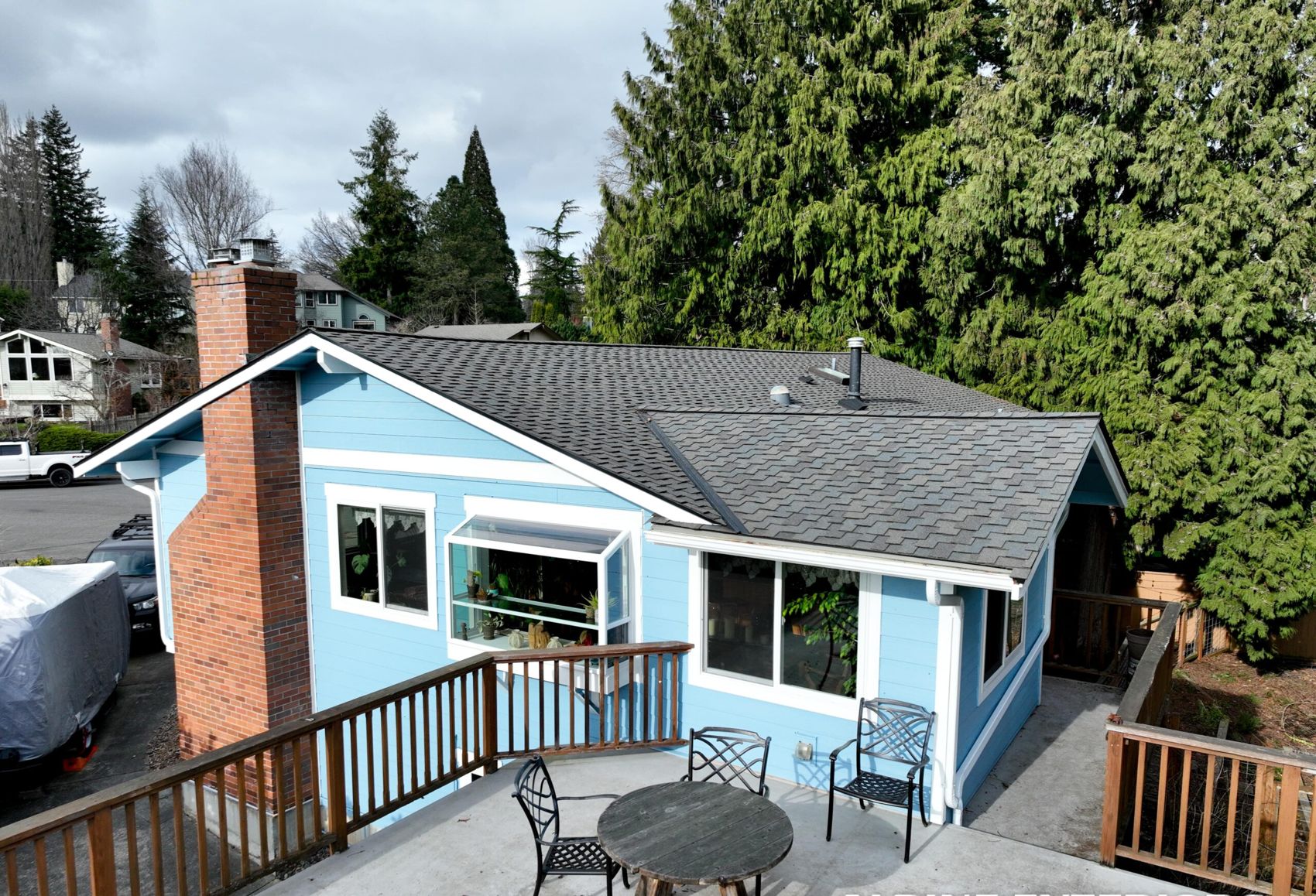
Point Roberts occupies an odd piece of geography — a five-square-mile peninsula cut off from the rest of Whatcom County by the international border, bounded on three sides by Boundary Bay and the Strait of Georgia. That setting is part of the appeal, and it's also why siding wears differently here than it does thirty miles inland in Bellingham or up in Lynden. Wind comes off open water from nearly every compass direction instead of one prevailing side, rain arrives sideways as often as it falls straight down, and a meaningful share of homes on the Point sit empty for stretches at a time between visits from owners who live across the line in Canada, across the water, or across the state. A siding problem that gets caught in week one on an occupied home in Ferndale can go unnoticed on the Point for a whole wet season.
Below is a practical rundown of what to look for, what's usually driving it in this specific location, and how to tell a problem that can wait from one that can't. Alpine Exteriors works on homes throughout Whatcom County, including Point Roberts, and we'd rather a homeowner catch a soft spot early than pay to rebuild a wall section because a small gap sat open through two or three winters.
Wood and engineered wood siding on the Point spends most of the year damp. Between the marine humidity and rain that doesn't let up for days at a stretch in fall and winter, boards absorb moisture, swell, and then dry out unevenly when a stretch of clear weather finally shows up. Do that enough times and the board cups, cracks along the grain, or pulls loose at the nailing line. On water-facing walls — the sides that catch the wind coming off Boundary Bay or the Strait — this shows up faster than on the more sheltered sides of the same house, so it's worth checking all four elevations, not just the one you see from the driveway.
Paint failure is rarely just a paint problem. When paint bubbles or caulk at a seam shrinks and pulls away, it usually means moisture is already moving through the material from behind, pushing the finish off from the inside rather than the finish simply wearing out from sun exposure. On the Point, where UV exposure is modest compared to drier parts of the state, paint that's failing after only a few years is a stronger signal of trapped moisture than of sun damage.
Press on a wall near the bottom courses, around a window sill, or below a deck ledger. If it gives at all — even slightly — there's a decent chance rot has already reached the sheathing behind the siding. This is one of the most reliable field tests a homeowner can do without any tools, and it's worth doing every year or two, especially on homes that sit vacant much of the winter, since soft spots don't announce themselves from the street.
Some moss and algae growth is close to unavoidable on any Whatcom County exterior given how much of the year stays damp and shaded. On its own, surface growth on a north-facing wall or under an overhang isn't an emergency — it's mostly cosmetic and can often be washed off. What matters is whether it keeps coming back heavier each time, or whether it's concentrated at a horizontal lap or seam rather than spread evenly across a shaded wall. Growth that clusters at a single joint usually means water is pooling there instead of shedding, which is a drainage problem, not just a cleaning problem.
Wind-driven rain doesn't need much of an opening. A gap that's opened up at a corner post, around a window flange, or where two courses of siding meet gives water a direct path behind the cladding, and the wind off the water here is often strong enough to drive rain into openings that would stay dry on a calmer inland site. These gaps are also where fasteners tend to back out first, so a quick visual check after a windy winter storm is worth the ten minutes it takes.
Salt-laden air off the Strait and Boundary Bay accelerates corrosion on fasteners that aren't rated for coastal exposure. Rust streaking down from a nail or screw head means the fastener is failing, and a failed fastener means the board it's holding is no longer secured the way it should be. This is more common on older homes built or re-sided before coastal-rated fastener requirements were standard practice, and it tends to show up first on the walls that take the brunt of the wind.
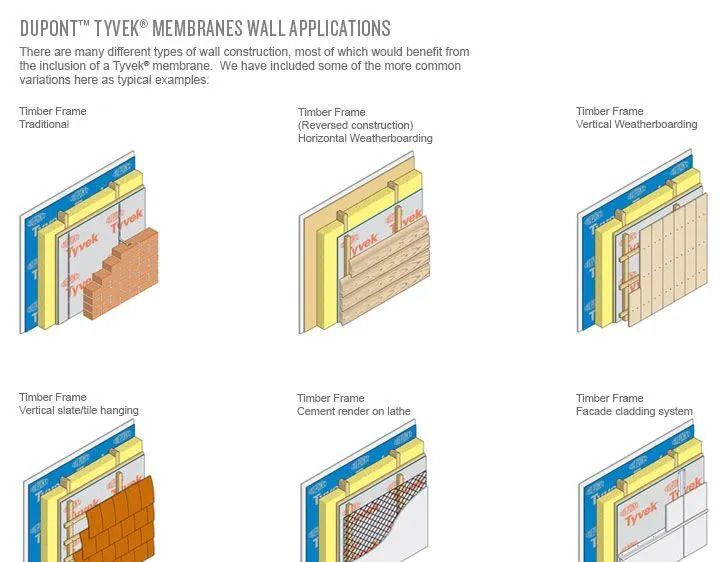
By the time moisture shows up on the inside of a wall — a musty smell in a closet on an exterior wall, a soft patch of drywall, or a faint stain near a baseboard — the siding has usually been letting water through for a while. This is also where the Washington State Energy Code becomes relevant: code-required wall assemblies depend on continuous insulation and a functioning water-resistive barrier working together, and once siding failure lets bulk water past that barrier, the insulation behind it gets wet, loses R-value, and can hold moisture against the framing long after the leak itself is fixed.
Wet insulation doesn't perform the way dry insulation does, so a jump in heating costs without an obvious cause — no new appliance, no change in how the house is used — can be a slower-moving version of the same moisture problem showing up on a utility bill instead of on the wall.
| Situation | Timeline |
|---|---|
| Soft or spongy siding, visible rot, or a musty smell inside near an exterior wall | Urgent — schedule an inspection now, before the next storm system |
| Fresh gaps at seams or corners on a wind-exposed wall | Urgent-ish — a temporary seal can buy time, but don't let it sit through a whole winter |
| Light surface moss or algae on a shaded wall with no soft spots | Can wait — clean it when convenient, recheck after cleaning |
| Minor paint fading or chalking with siding still firm underneath | Can wait — cosmetic touch-up on your own schedule |
| Rust streaks with no movement or looseness in the board | Worth monitoring — plan for fastener replacement at the next maintenance visit |
The general rule: anything that suggests water is already past the surface — softness, smell, staining, or a board that's come loose — is urgent, because Point Roberts' wet season doesn't give a small problem much of a break before it gets bigger. Anything that's purely cosmetic and confirmed dry underneath can reasonably wait for your next scheduled trip or a slower time of year.
If you're not on the Point full-time, start with a walk-around on your next visit: press on the lower courses, check all four elevations for gaps, and look closely at any wall that faces open water. Take photos so you have a record to compare against next time. If you find soft spots, active gaps, or interior staining, don't wait for the next trip across the border to deal with it — get a contractor out to open up a section and see how far the damage actually goes before deciding whether it's a patch repair or a larger re-siding job.
One honest caveat: because Point Roberts is only reachable by land through Canada, scheduling a contractor visit sometimes takes more lead time than it would for a home in Bellingham or Ferndale, simply because of the border crossing and logistics of getting crews and materials out to the peninsula. Building that lead time into your planning — rather than waiting until a problem is already urgent — makes the whole process smoother.
At least once each season if you can manage it, but at minimum before and after the wettest winter months. Homes that go unchecked for six months or more are exactly the ones where a small gap or soft spot has time to turn into sheathing damage before anyone notices.
Not necessarily. Light, evenly spread moss on a shaded or north-facing wall is common across Whatcom County and isn't a red flag by itself. It becomes worth investigating when it clusters heavily at one seam or joint, since that usually points to water pooling there rather than shedding off the wall the way it should.
It depends on how far the moisture has traveled. If the damage is caught early and confined to a board or two with dry sheathing underneath, a section repair is often enough. If the sheathing itself is soft or the framing shows signs of rot, a patch repair can end up hiding a bigger problem rather than fixing it, so it's worth having someone open the wall up before deciding.
Yes, though every material has tradeoffs. Wood needs the most maintenance and is most vulnerable to the wet-dry cycling common on the Point. Fiber cement and quality vinyl or engineered products generally hold up better against moisture and wind-driven rain, but installation detailing — flashing, fastener choice, and how seams are sealed — matters as much as the material itself, especially on walls that face open water.
If you've spotted any of these signs on a Point Roberts property, it's worth getting a second opinion before winter storms off the Strait make the problem worse. Alpine Exteriors is a licensed Washington contractor (ALPINI751OW) serving Whatcom County, including Point Roberts, Blaine, Birch Bay, and the rest of the coastline where wind and rain off the water put real stress on siding. We can take a look, tell you honestly whether you're looking at a small repair or something larger, and lay out realistic options — no guesswork, no pressure to re-side a wall that doesn't need it.