
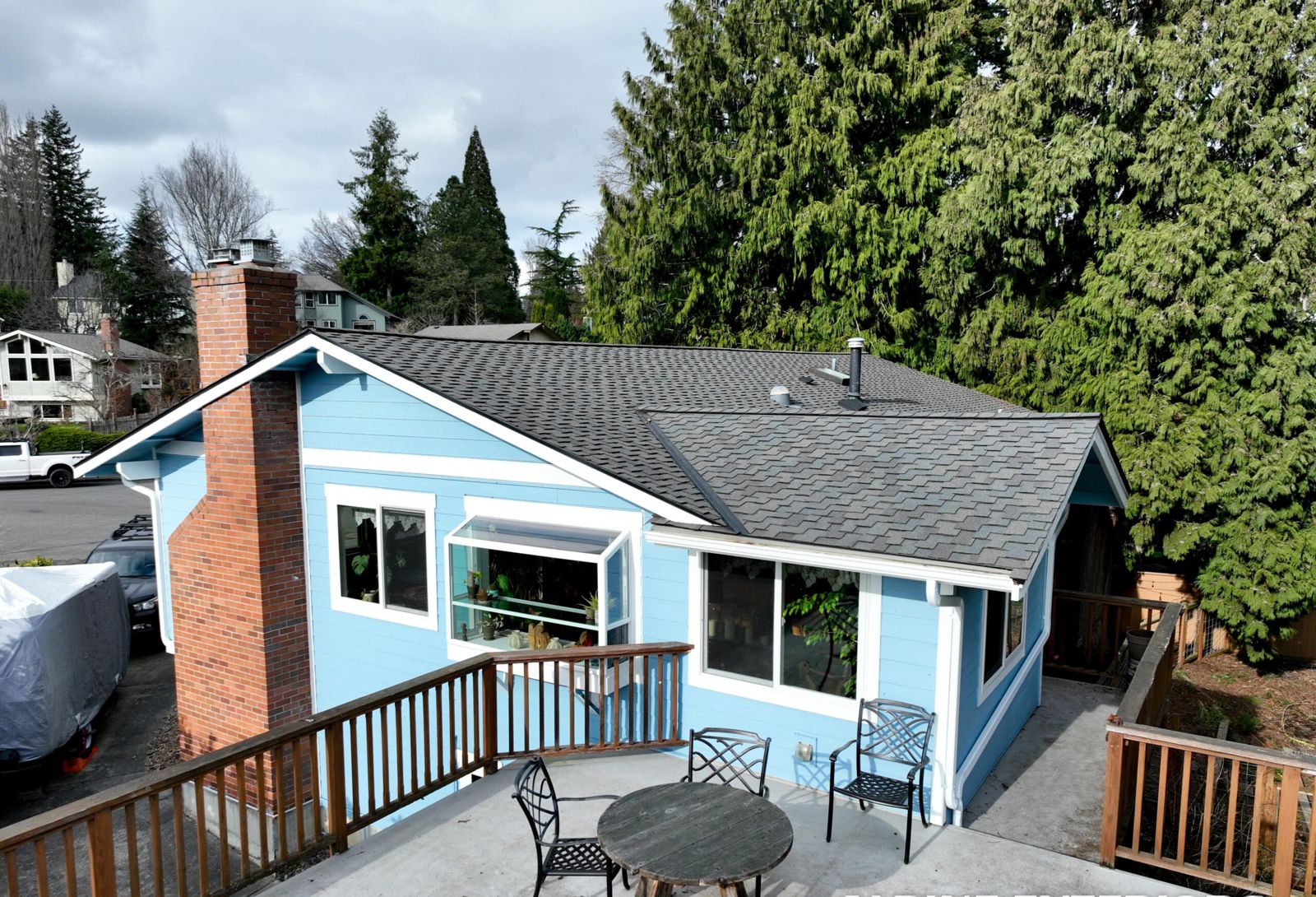
Silver Beach sits close enough to Bellingham Bay that houses here take a different kind of beating than homes a mile inland in the Puget or Sunnyland neighborhoods. Wind-driven rain comes straight off the water, tree cover holds moisture against north-facing walls, and older lap siding in this pocket of Bellingham has often been repainted several times without anyone checking what's happening underneath. We get calls every fall from Silver Beach owners who noticed something felt "off" about a wall and want to know if it's cosmetic or structural. This page walks through what to actually look for, what it means, and what's worth doing something about now versus later.
Paint failure on its own isn't automatically a siding failure — sometimes it's just an old paint job past its service life. But on Silver Beach homes, bubbling paint very often means moisture is trapped behind it, pushing outward as it tries to evaporate and having nowhere to go. This shows up most on walls that face the bay and take direct wind-driven rain, and on shaded north walls where things simply never dry out between storms. If the paint is failing in an even, all-over way, it's probably just due for a repaint. If it's failing in isolated patches — especially low on the wall, around windows, or under roof lines with poor flashing — that's moisture concentrating in one spot, and it's worth pulling a board to look underneath before repainting over it.
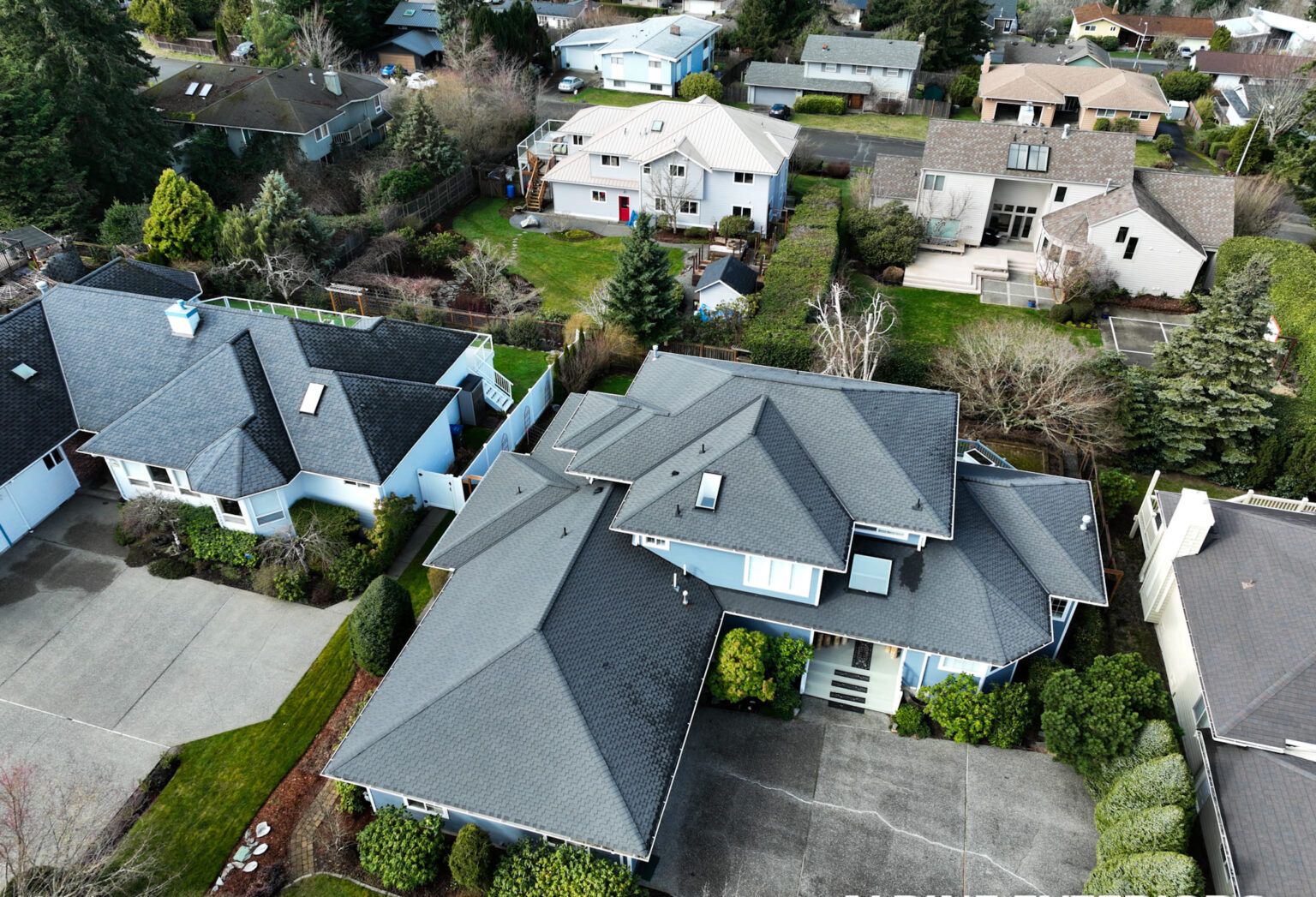
Press firmly on the siding with your palm, especially within a foot or two of the ground and under any window sills. Original wood siding and even some older engineered wood products will develop soft spots once water has been getting behind them for a while. This is one of the more reliable tells because it's hard to fake — sound wood pushes back, rotted wood gives. Whatcom County's wet season runs long, roughly October through April with only short breaks, so wood that's been absorbing moisture without a chance to fully dry can go soft well before it looks visibly damaged from a few feet away.
Look along the bottom edges of lap siding and at butt joints where two boards meet. Wood swells when it takes on water and shrinks again as it dries, and repeated cycles of that eventually warp boards out of plane or open gaps at the joints. Once a gap opens, it becomes an entry point for more water, which accelerates the whole problem. On a place like Silver Beach where wind off the Strait and the bay pushes rain sideways into walls rather than letting it run straight down, these gaps let water in horizontally in a way that siding on a more sheltered inland lot rarely deals with.
Some moss and algae growth on the north and west sides of a house is close to unavoidable here — Whatcom County's tree cover and rainfall keep siding damp long enough for organic growth to take hold, even on healthy siding. The distinction that matters is whether it's surface growth you can wash off and it stays off for a season, or whether it keeps coming back within weeks in the same spot. Recurring growth in one concentrated area usually means that section of wall is staying wetter than the rest of the house, which points to a drainage or flashing issue rather than just normal exterior grime.
By the time moisture from failing siding shows up inside the house — a musty smell along a baseboard, a soft patch of drywall, or a stain that appears after a heavy storm — the problem has usually been developing for a while. This is one of the signs we'd call urgent rather than cosmetic, because it means water has worked its way through the siding, through the weather-resistive barrier, and into the wall cavity itself.
Fasteners that back out slightly, or that show rust bleeding down the siding around them, tell you two things: the siding material has been swelling and contracting (a moisture cycling issue), and the fasteners themselves may be failing. On older homes in this area it's common to find fasteners that weren't hot-dip galvanized or stainless to begin with, which is a real problem in a climate with this much sustained dampness — plain steel fasteners simply don't hold up long-term here.
Siding isn't just a weather barrier, it's part of the wall assembly's insulation performance. When siding fails and lets moisture into the wall cavity, wet insulation loses much of its R-value, and homes built or re-sided to meet the Washington State Energy Code can end up performing well below what that code assumed. If your heating bills have crept up without an obvious explanation — no new appliance, no change in usage — deteriorating siding and wet insulation are worth ruling out, particularly on the walls that face the water.
Not every item on this list needs a same-week response. A single peeling patch on a south-facing wall that gets more sun exposure can usually wait for a normal repaint or spot repair scheduled over the next season. Isolated moss you can wash off is routine maintenance, not a red flag.
Treat it as urgent if you find soft or spongy wood, any interior sign of moisture (smell, stain, soft drywall), boards that have visibly separated from the wall, or rot you can see or probe with a screwdriver. Those conditions get worse every time it rains, and Whatcom County doesn't give you long dry stretches to put off a decision — the next atmospheric river event off the Pacific can push a lot more water into an already-compromised wall in a single weekend than months of routine drizzle. Framing behind the siding is what's at risk once water gets past the cladding, and that's a repair cost that grows the longer it sits.
Start with a visual and physical check of every exterior wall, paying closest attention to the water-facing side of the house and any north-facing walls under tree cover. Press on the siding in several spots per wall, not just one. If you find soft spots, active leaks, or interior moisture, it's worth having someone open up a small section to see what's actually happening in the wall cavity before deciding whether this is a patch repair or a larger re-side. Alpine Exteriors does this kind of assessment for Silver Beach and greater Bellingham homeowners regularly, and we'll tell you honestly if what you're seeing is cosmetic, a localized repair, or something that justifies a broader look at the wall assembly. We're not going to recommend replacing a whole elevation of siding over a paint problem, and we're not going to tell you a soft, rotted wall just needs caulk.
If a fuller inspection is warranted, expect it to include checking flashing above windows and doors, looking at how the siding terminates near grade, and checking whether the weather-resistive barrier behind the siding is doing its job. Repair costs vary a lot depending on how much wall assembly is affected — a localized board replacement is a very different project from replacing rotted sheathing behind a whole wall section — so get a specific, itemized look at your situation rather than assuming based on a neighbor's project.
A yearly walk-around, ideally in early fall before the wet season sets in, catches most problems while they're still small. Homes directly exposed to wind off the bay or shaded by heavy tree cover benefit from checking twice a year, since those conditions accelerate wear compared to a more sheltered, sun-exposed lot.
Light moss on shaded or north-facing walls is common throughout Whatcom County and doesn't by itself mean the siding is failing. It becomes a concern when it keeps returning heavily in one specific spot shortly after cleaning, which usually points to that area staying wetter than the rest of the wall due to a drainage or flashing issue rather than just ambient dampness.
It depends on how far the moisture has traveled. If rot is contained to a board or two and the sheathing behind it is still sound, a localized repair is often reasonable. If water has been getting in for a long time, the damage can extend further into the wall than what's visible from outside, which is why we recommend opening up a small section before committing to a repair scope.
It can. Wet insulation loses much of its effectiveness, and once water gets past the siding into the wall cavity, the insulation behind it can stay damp for extended periods given how much of the year Whatcom County spends in wet weather. If bills have risen without another explanation, it's worth checking siding and wall condition on the water-facing side of the house.
If you're seeing any of these signs on your Silver Beach or Bellingham home, it's worth having someone look before the next storm system pushes more water into it. Alpine Exteriors, WA contractor license ALPINI751OW, works throughout Whatcom County — Bellingham, Ferndale, Lynden, Blaine, Birch Bay, Sudden Valley, and the islands — and can give you a straightforward read on whether you're looking at a repair, a partial re-side, or nothing urgent at all.