
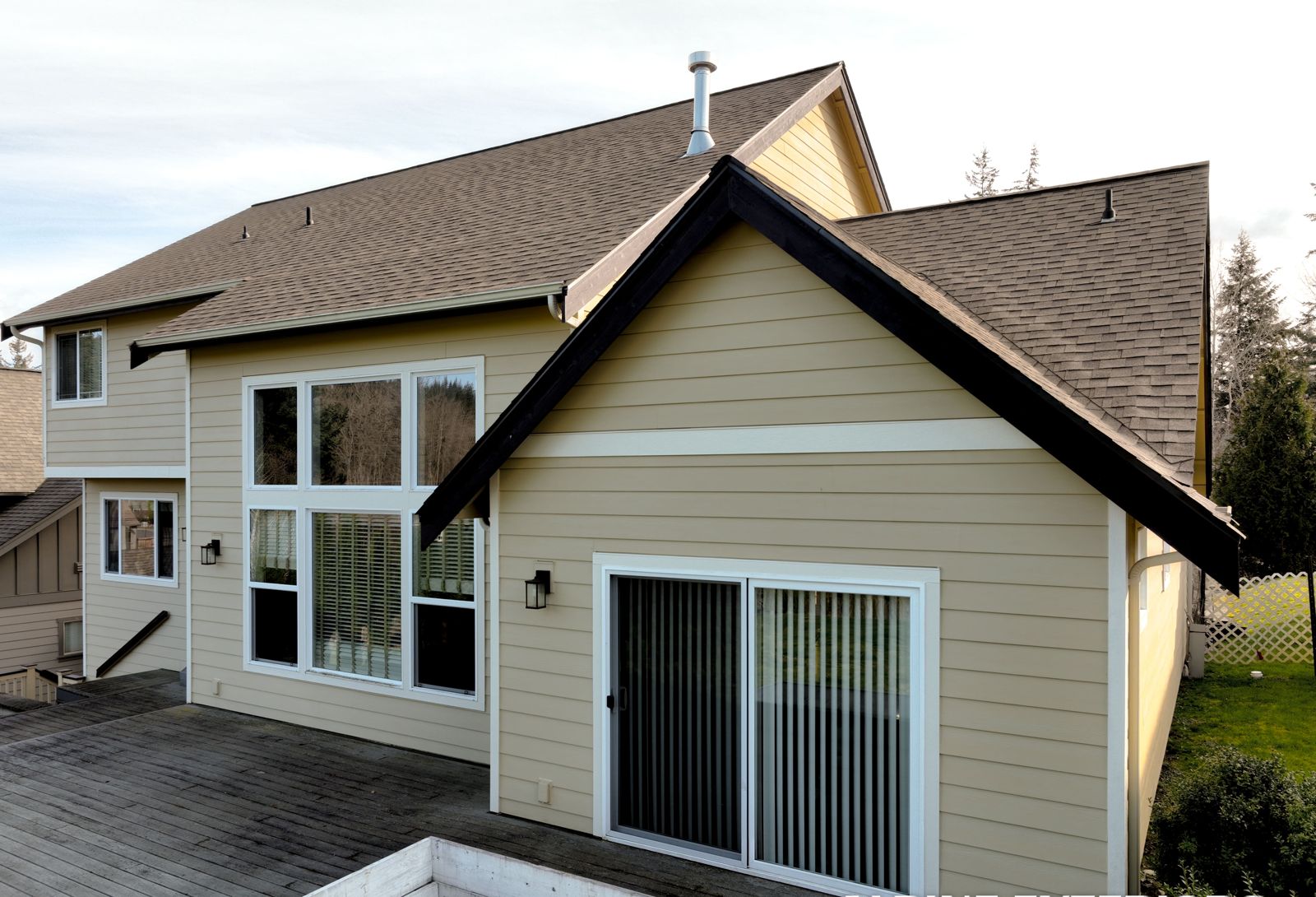
Sumas sits at the far eastern edge of Whatcom County, tucked into the gap between the Cascade foothills and the Fraser Valley just across the Canadian border. That location gives the town a weather pattern of its own: cold outflow wind funnels down through the Sumas Gap in fall and winter, temperatures swing further above and below freezing than they do closer to the coast, and low-lying land near the Sumas River and Nooksack floodplain stays damp long after a storm passes. Siding here works harder than siding in most of the county, and when it starts to fail, the causes are usually tied directly to those local conditions. This page walks through the warning signs, explains what's driving each one in Sumas specifically, and lays out what to do next — including when a problem is urgent and when it can reasonably wait.
Any one of these on its own might be minor. Two or three together, especially clustered on the same wall, usually mean water has been getting behind the siding for a while.
Warping shows up as a panel that no longer sits flat — it may ripple along its length or bow outward at the middle. On wood and engineered wood siding this is almost always moisture-driven: the material has absorbed water it can't shed fast enough and has swollen unevenly. Vinyl siding warps for a different reason locally — the freeze-thaw swings that are sharper in Sumas than in Bellingham or Blaine cause the plastic to expand and contract repeatedly, which over years works nail slots and locking channels loose and lets panels ripple. Either way, warping is a sign the siding is no longer doing its job as a flat, sealed drainage plane.
Cracks tend to run with the grain on wood or hardboard products and appear as straight hairline splits on fiber cement or vinyl. In Sumas, freeze-thaw cycling is the main culprit: water works into a seam or a small existing flaw, freezes overnight when temperatures drop below freezing in the foothills, expands, and widens the crack. Repeat that cycle across a winter and small cracks become open pathways for water. Impact damage — a stray baseball, a ladder, storm debris — can also crack siding, but weather-driven cracking is usually more widespread and follows a pattern across the wall rather than one isolated spot.
This is one of the more serious signs. If you can press a thumb or a key into a section of siding and it gives, or if a corner crumbles when you touch it, water has been sitting in that material long enough to break it down — wood rot on cedar or hardboard, or delamination on engineered products. This shows up most often near the bottom few feet of a wall, around window sills, and at any spot where siding meets a deck, porch roof, or grade — all places where Sumas's persistent rain and the property's proximity to low, wet ground give moisture more time to sit against the wall instead of running off.
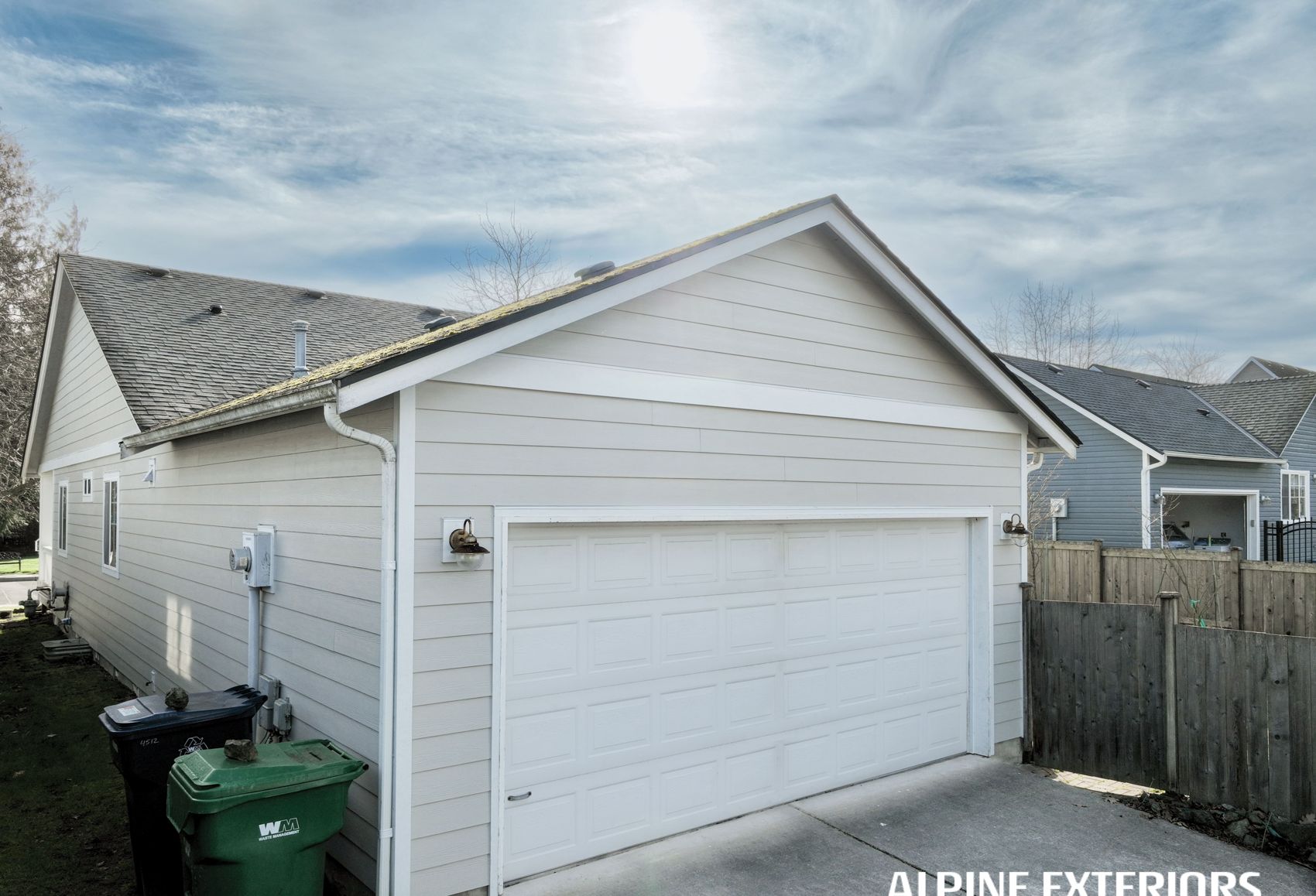
Green moss, gray-green algae film, or black streaking is common on north- and east-facing walls, under eaves, and anywhere shade keeps a wall from drying out between rains. It's cosmetic at first, but moss and algae hold moisture directly against the siding surface, and over a season or two that constant dampness accelerates rot underneath, especially on wood-based products. In Sumas, the combination of valley fog, shaded tree lines, and long stretches of overcast weather gives moss more time to establish than it would on a drier, sun-exposed wall.
Caulk and sealant have a limited lifespan, and the same freeze-thaw cycling that cracks siding also breaks down caulk joints faster here than in milder parts of the county. Once a joint fails, you'll often see a visible gap or a dark, damp line where water is tracking behind the panel instead of running down the face of it. Check especially around window and door trim, inside corners, and anywhere two different materials meet — those transitions are where failures usually start.
Paint that's bubbling or peeling off in sheets, rather than just fading evenly, is usually a sign of moisture pushing out from underneath the siding rather than simple sun wear. A chalky white residue that rubs off on your hand is more often just UV breakdown of an aging paint or finish coat and is less urgent on its own. The distinction matters: peeling and bubbling point to trapped moisture; chalking points to age and sun exposure.
If you notice a musty odor, a cool draft, or a soft or discolored patch on drywall near an outside corner, water has likely already gotten past the siding and the weather-resistive barrier behind it. This is the clearest sign that a problem has moved from cosmetic to structural, and it's worth investigating promptly rather than waiting for warmer weather.
Not every sign on this list needs an emergency call. Some genuinely can be watched through a season; others shouldn't wait.
Treat as urgent: soft or crumbling spots, any interior sign of moisture (musty smell, damp drywall, peeling interior paint near an exterior wall), large open gaps or missing sections of siding heading into fall or winter, and any damage near electrical service entrances or around window and door openings. These point to active water intrusion, and in Sumas's wet, freeze-prone winters, a small opening left alone in October can turn into a much larger repair by February as freeze-thaw cycles keep widening it.
Can reasonably wait for a planned repair: surface moss or algae with no soft spots underneath, minor chalking on older paint, small hairline cracks in a single panel with no sign of water behind it, and cosmetic fading. These are worth scheduling and monitoring, but they don't demand an immediate fix — though it's worth having someone confirm there's no hidden moisture before deciding to wait.
The honest complication is that some of the worst damage isn't visible from the ground. Rot can spread several feet beyond a visible crack or soft spot, and the only way to know how far is to open the wall up in a couple of spots or bring in a moisture meter. A siding contractor who's willing to tell you "this one section can wait" instead of pushing a full replacement is worth more than one who treats every job the same way.
Start with a visual walk around the house on a dry day, looking at each of the signs above, paying particular attention to north-facing walls, areas under eaves, and the lower few feet of every elevation. Photograph anything that looks questionable — soft spots, gaps, staining — so you have a record to compare against later.
From there:
Alpine Exteriors inspects homes throughout Whatcom County, including Sumas, and can tell you honestly whether you're looking at a patch repair, a partial re-side of the affected walls, or a full replacement — we don't default to the most expensive answer. Costs for siding repair or replacement vary widely depending on how much of the wall is affected, what material you choose, and whether there's rot in the sheathing underneath, so a written estimate after an actual look at the house is far more useful than a ballpark figure.
It depends heavily on material and installation quality more than a fixed number of years. Wood and hardboard siding tends to show problems soonest if it wasn't painted and caulked on a regular schedule, since Sumas's freeze-thaw cycling and steady rain punish any small gap in the finish. Vinyl and fiber cement generally hold up longer, but even those can fail early if they were installed with poor flashing or without a proper weather-resistive barrier behind them. A well-installed, well-maintained siding system on a Sumas home can last for decades; a poorly detailed one can show real problems within just a handful of years.
Often a repair is genuinely enough, especially if the damage is limited to one area and the sheathing underneath is still sound. The deciding factor is how far rot or water damage has actually traveled, which usually isn't visible from the outside. If moisture has spread into the sheathing across a wider area, patching over it just hides the problem temporarily, so it's worth having someone open up a section to check before committing either way.
Generally, no — gradual deterioration from age, moisture, or lack of maintenance is typically treated as a maintenance issue rather than a covered loss. Sudden, specific damage from a storm event or a fallen branch is more likely to be covered, but that's a question for your specific policy and adjuster rather than something a contractor can promise.
If you're dealing with active gaps, soft spots, or any sign water is already getting in, it's worth addressing before winter rather than letting a Sumas winter's freeze-thaw cycles and steady rain work on the problem for several more months. If the issues are cosmetic and stable, spring or summer is often a more practical time to schedule a larger project, since drier weather makes for a cleaner installation and gives new caulk and finishes time to cure properly.
If your Sumas home is showing any of the signs above, it's worth having someone look before another wet winter makes the problem worse. Alpine Exteriors (WA contractor license ALPINI751OW) serves Sumas and the rest of Whatcom County — from Bellingham and Ferndale out to Lynden, Blaine, and the county's rural east side — and can walk your property, tell you honestly what's cosmetic and what's not, and lay out repair versus replacement options with a real estimate rather than a guess. Reach out to Alpine Exteriors to schedule an inspection.