
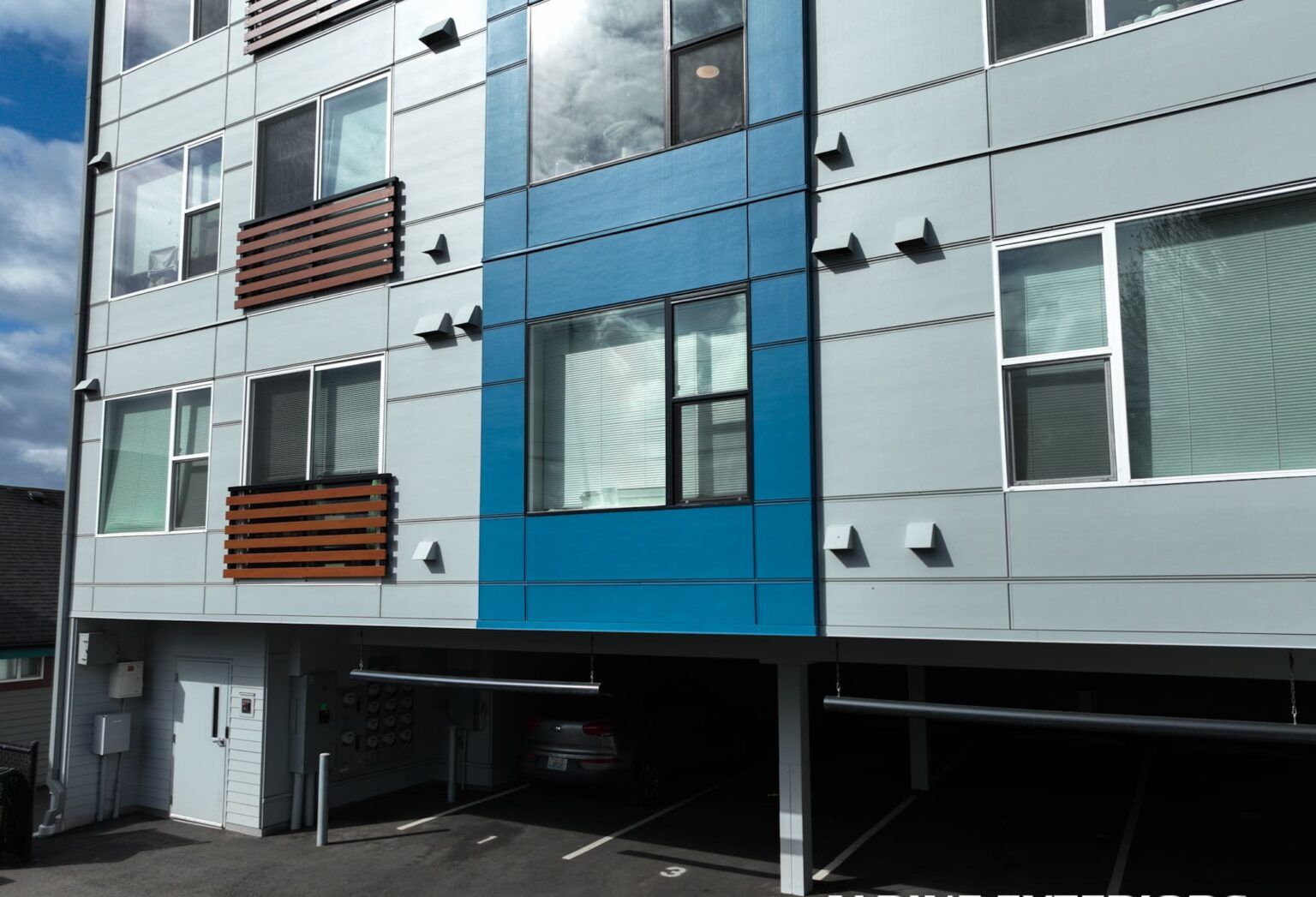
Most siding damage in Sumas comes down to trapped moisture, not the storm event that seems to have caused it. If a section of lap siding is cracked, buckled, or soft to the touch, the fix depends on whether the water stopped at the siding or got behind it into the sheathing — the first is a repair, the second usually isn't.
Small, isolated damage — a cracked plank from a fallen branch, a woodpecker hole, a popped nail, a corner knocked loose by a trailer or mower — is almost always repairable on its own. Damage that shows up in multiple places on the same wall, especially the lower courses or anywhere below a roofline that dumps water, is more often a sign the whole wall assembly needs attention, not just the visible board.
Whatcom County gets a long, wet fall-through-spring stretch, and Sumas sits inland from the coast where fog, ground moisture, and shaded tree lines around the foothills keep siding damp longer after a storm than it would stay in a more open, sunny spot. That extra dry-time is where most of the damage starts. Wood and engineered wood siding that stays wet against the sheathing for days at a time begins to swell, delaminate at the edges, or soften from the inside out — often long before it looks bad from the ground.
The common damage patterns we see around Sumas break down into a few categories:
Deciding repair versus replace comes down to three questions: how far did the water travel, how old is the siding, and can the product even be matched. If a contractor pulls a damaged board and finds dry, sound sheathing underneath, a spot repair is legitimate and often the right call financially. If the sheathing is soft, discolored, or smells musty, patching the visible siding without addressing what's underneath just hides a problem that will resurface, usually worse, within a season or two.
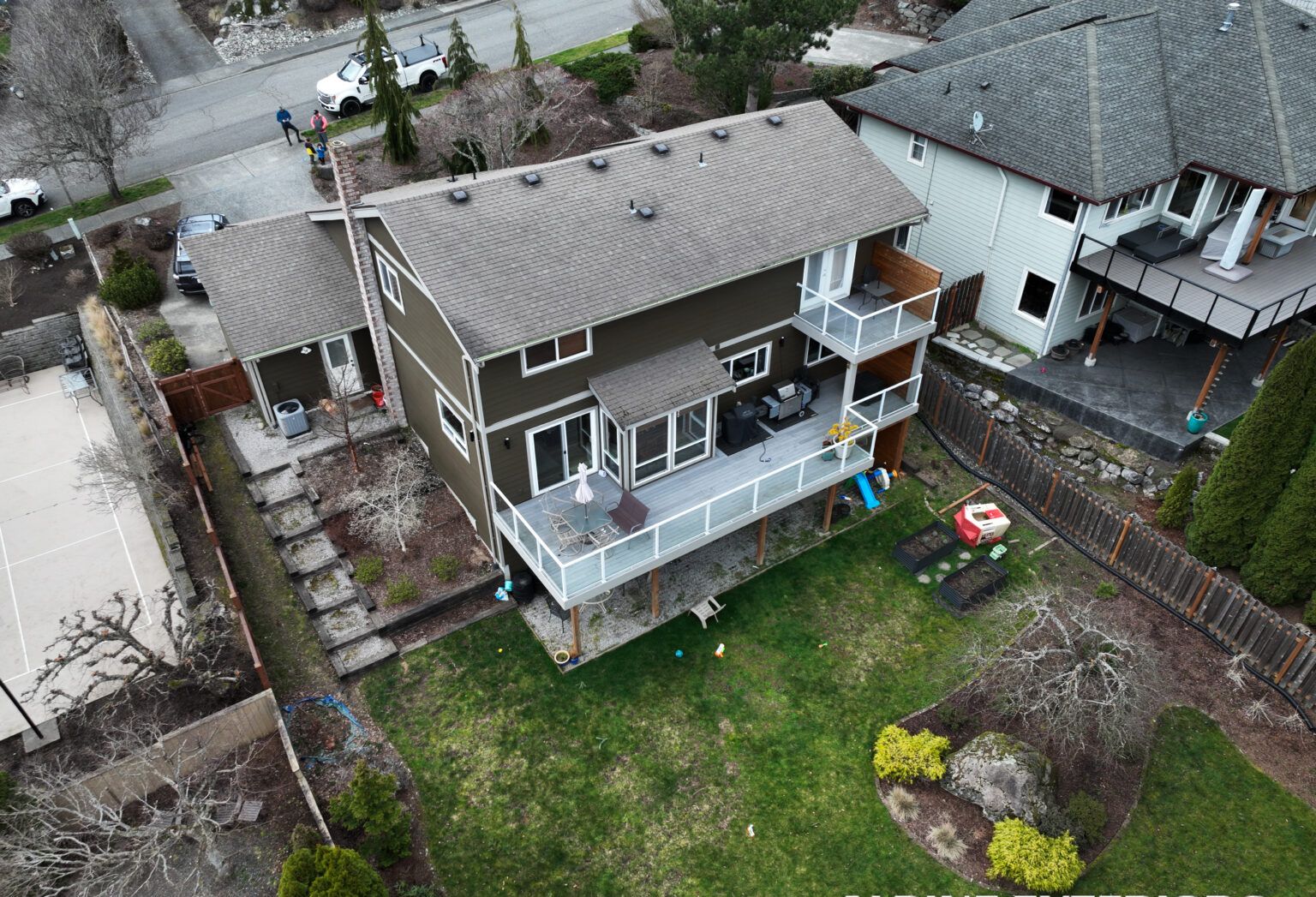
Sumas isn't coastal, and it doesn't need to be treated like the wind-exposed shoreline properties in Blaine or Birch Bay that take direct wind-driven rain off Bellingham Bay and the Strait of Georgia. But Sumas has its own weather quirk that homeowners further south don't deal with as often: it sits almost directly in the path of the Fraser Valley outflow. When cold, dense air builds up over the interior of British Columbia, it funnels down through the Fraser Valley and spills into Whatcom County right around Sumas and Everson, often faster and colder than the weather a few miles south. That produces sharp overnight temperature drops, occasional icing, and freeze-thaw cycling on building materials that doesn't hit Bellingham or Ferndale nearly as hard.
For siding, freeze-thaw cycling matters because any water that has already gotten into a crack, a seam, or behind a loose panel expands when it freezes and pries the damage open wider. A hairline crack that would just sit there in a milder microclimate can turn into a split board after a few outflow events in a row. Combine that with Sumas' proximity to the Nooksack River floodplain — ground moisture and humidity tend to linger longer here than in better-drained parts of the county — and you get siding that's exposed to more freeze-thaw stress on top of the standard Pacific Northwest wet season.
The other regional factor is tree cover. A lot of Sumas properties back up to timber, brush, or the lower slopes of Sumas Mountain, which means more shade, more debris landing on roofs and gutters (and running down onto siding), and more wildlife activity than you'd see on an open lot in town. None of this is dramatic on its own, but it adds up to siding that ages a bit differently here than it does in the flatter, more open parts of the county.
Start by getting an honest look behind the damaged section, not just an estimate based on what's visible from the driveway. A worthwhile inspection includes pulling at least one damaged board to check the condition of the weather-resistive barrier and sheathing behind it. If that area is dry and intact, a repair is reasonable. If it's soft, stained, or has visible mold, plan for a larger repair that includes replacing sheathing and barrier, not just siding.
Next, be realistic about matching. Siding products change over time — fiber cement manufacturers like James Hardie periodically discontinue colors and plank profiles, cedar weathers and fades unevenly the older it gets, and vinyl fades enough over a decade that a brand-new panel next to twelve-year-old siding will look like exactly what it is: a patch. On a home with siding more than eight to ten years old, it's worth asking your contractor directly whether a true match is realistic, or whether the more honest path is replacing a full wall or elevation so the color and texture read as one continuous surface instead of a visible seam. This is a real cost trade-off, and a contractor who tells you a partial patch won't blend in is doing you a favor, not upselling you.
If you're re-siding a section or a full wall in Washington, remember that the Washington State Energy Code governs more than the visible product — it sets requirements for continuous insulation and the weather-resistive barrier assembly behind new siding on most residential re-sides. That's not a reason to avoid a repair, but it does mean a proper repair or replacement on an older home sometimes needs more than a like-for-like swap of the exterior layer.
Finally, get someone out before the wet season sets in if you can. A repair scheduled in a dry stretch goes faster, costs less in labor, and lowers the odds that more water gets behind the wall while the work is scheduled. Waiting until spring runoff or the next outflow event to deal with a cracked or loose panel just gives the damage more time to spread. Alpine Exteriors serves Sumas as part of our Whatcom County service area and can walk a homeowner through what's actually salvageable before committing to a full re-side.
The visible damage is only half the picture — the real answer depends on what's behind it. If a contractor pulls back the damaged board and finds dry, solid sheathing and an intact weather barrier, a targeted repair is usually enough. If the sheathing is soft, discolored, or smells musty, or if similar damage is showing up in more than one spot on the same wall, that points to a wall-level problem that a single-board patch won't solve for long.
Not always, and it's worth planning for that honestly. Fiber cement colors and profiles get discontinued, cedar and vinyl both fade unevenly with age, and a brand-new panel next to older siding will usually stand out somewhat even with a close color match. On siding under a few years old, a patch often blends in fine. On older siding, replacing a full wall or elevation instead of a small patch usually gives a more consistent result, even though it costs more upfront.
Sumas sits in the path of Fraser Valley outflow events, which bring sharper cold snaps and more freeze-thaw cycling than areas further south and west in the county. Any existing crack or gap in siding tends to get worse through a winter of freeze-thaw, so damage spotted in fall is worth addressing before winter rather than waiting. Scheduling repairs during a drier stretch also reduces the chance of moisture getting behind the wall while work is in progress.
It depends on the scope. Small, like-for-like spot repairs typically don't require a permit, but larger jobs — replacing significant portions of siding, changing the wall assembly, or work that falls under Washington State Energy Code requirements for insulation and weather barriers — often do. Requirements can vary depending on whether the property is inside city limits or in unincorporated Whatcom County, so it's worth confirming with your contractor or the local building department before work starts rather than after.
If you're looking at damaged siding on a Sumas home and aren't sure whether it's a quick repair or a sign of something bigger behind the wall, Alpine Exteriors can take a direct look and give you a straight answer, including cost ranges for both a repair and a full replacement so you can compare. Alpine Exteriors holds Washington contractor license ALPINI751OW and works throughout Whatcom County, including Sumas, Bellingham, Ferndale, Lynden, Blaine, Birch Bay, and Sudden Valley. Reach out to schedule an inspection before the next wet stretch makes the decision harder than it needs to be.