
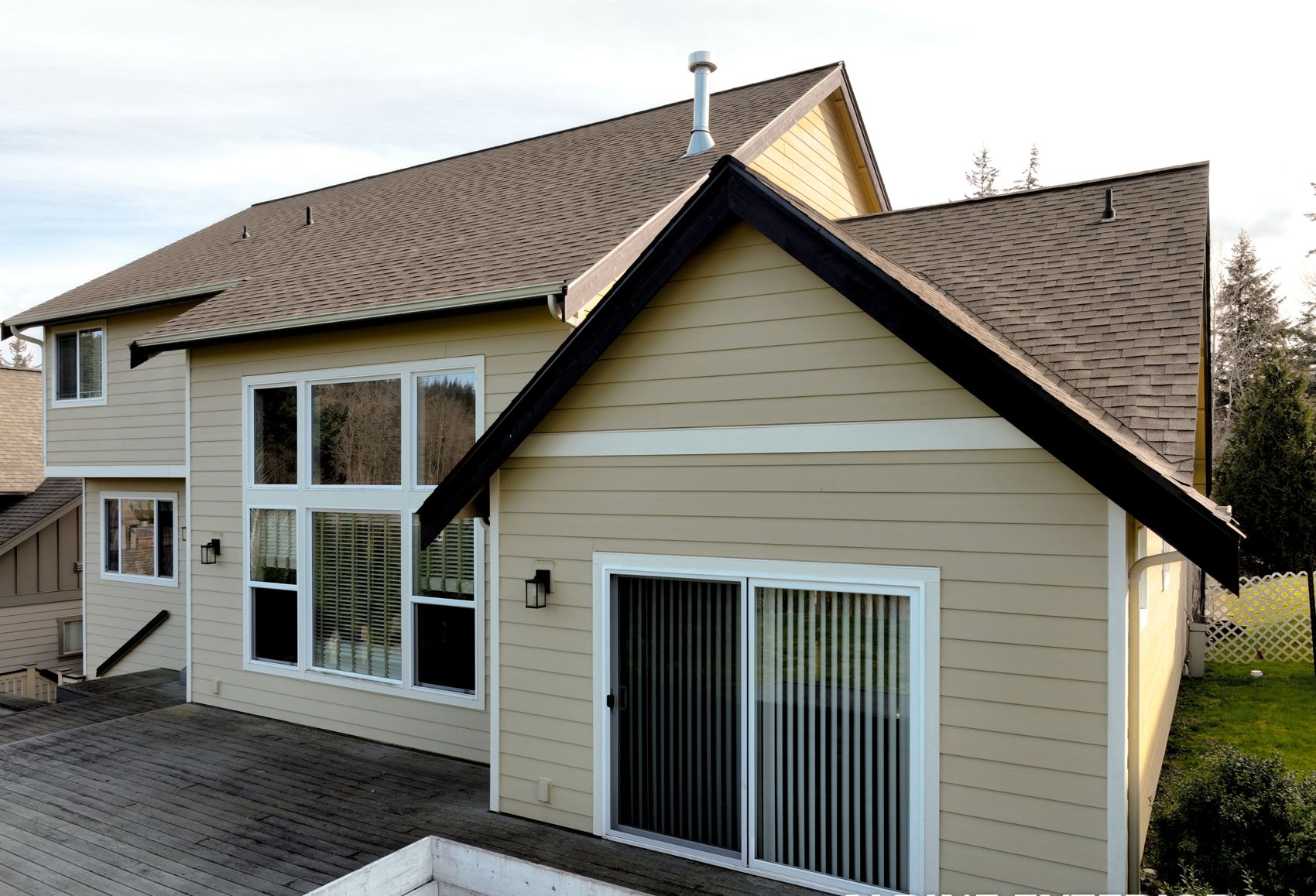
Most siding damage in Toad Lake and the rest of Whatcom County can be repaired if it's caught early and limited to a few boards or panels. Once rot has spread behind the siding, or the damaged area is wider than a section or two, full replacement of that wall — or the whole house — usually costs less over time than patching the same spot again in two or three years.
The honest answer depends on what's underneath the visible damage, not just what you can see from the driveway. A single cracked piece of lap siding is a repair. Soft, spongy siding along a whole wall, especially near the ground or under a window, is often a sign that water has already gotten past the surface, and that changes the math.
Siding damage around Toad Lake tends to show up in a handful of recognizable patterns, and each one points to a different cause and a different fix.
In every case, the visible siding is only part of the story. Behind it is a water-resistive barrier (housewrap or building paper) and, on most homes built or re-sided after the current code took effect, a layer of rigid insulation. If water has been getting behind the siding for a while, that barrier and the sheathing underneath it can be damaged too — and that's not something you can evaluate from a photo or from the ground.
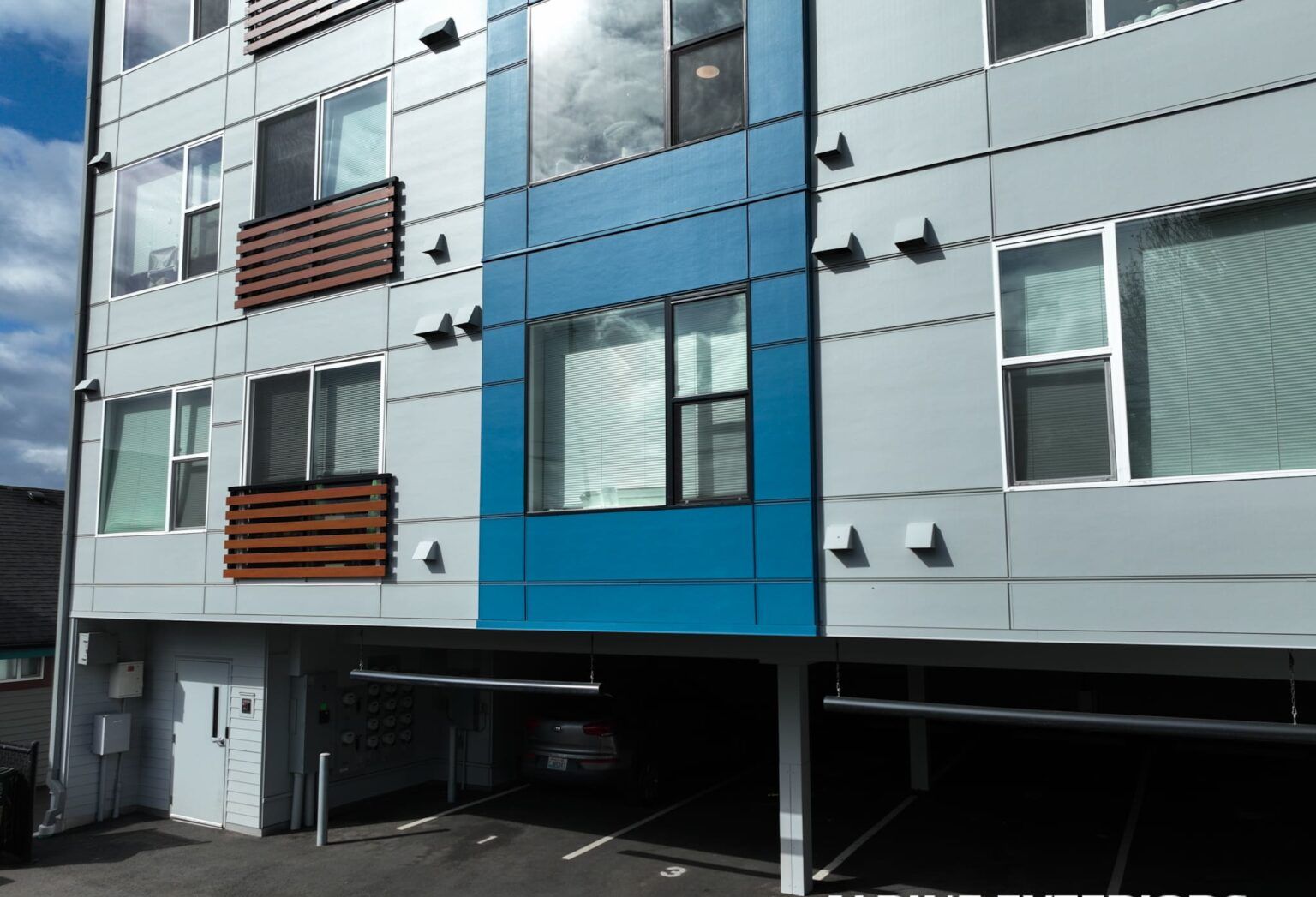
Toad Lake sits just northeast of Bellingham, close enough to Bellingham Bay and the Strait of Georgia that homes here deal with a specific combination of conditions that doesn't match what siding manuals written for the rest of the country assume.
First is simply the amount of rain and how long it sits. Whatcom County gets a long, wet season rather than occasional heavy storms, and that persistent moisture is what drives moss and algae growth on north- and west-facing walls, under eaves, and anywhere tree cover keeps a wall shaded most of the day. It's also what turns a small paint failure into a rot problem — a crack that would dry out in a week in a drier climate here can stay damp for a month.
Second is wind-driven rain. Storms coming off the Strait and across Bellingham Bay don't need extreme wind to push water sideways into lap joints, around window trim, and up under J-channel. On homes with west- or northwest-facing exposure — common around Toad Lake and along the lakeshore — that wind-driven rain is often the real reason a repair that looked fine from outside turns out to be wet on the inside once the siding comes off.
Third, homes at slightly higher elevation or in the foothills toward Sudden Valley and Lake Whatcom see more freeze-thaw cycling in winter than homes right in downtown Bellingham. Water that's worked its way into a seam or a crack expands when it freezes, which widens the gap and lets in more water the next time it rains. It's a slower process than storm damage, but over several winters it turns a hairline crack into a real opening.
Finally, any full re-siding project in Whatcom County has to account for the Washington State Energy Code, which sets minimum requirements for wall insulation and air sealing on the exterior envelope. That matters for repair-versus-replace decisions because if you're replacing more than a small section, the continuous insulation and house wrap detailing underneath often need to be brought up to current code as part of the job — not just the visible siding on top. It's one more reason a "quick swap" on an older wall sometimes turns into a bigger project than the homeowner expected.
Start by looking at scope and cause, not just appearance. Walk the exterior after a dry stretch of a few days and press on suspect areas — window sills, the bottom two or three courses near grade, anywhere a deck or porch roof meets the wall, and any spot where moss has been sitting for more than a season. Spongy or soft material means water intrusion, not just surface weathering.
Second, figure out whether the damage is isolated or systemic. A single soft board under a leaking gutter is a repair, and fixing the gutter matters as much as fixing the board. Soft siding in multiple, unrelated locations — one side of the house near the ground, another near an upstairs window, a third near a chimney — usually points to a barrier or flashing problem that's been letting water in for years, and that's a replacement conversation, not a patch job.
Third, be realistic about matching. If your siding is vinyl or fiber cement and it's more than about ten years old, the exact profile and color may no longer be manufactured. A patch that doesn't quite match in color or shadow line is a cosmetic compromise worth deciding on up front, not discovering after the work is done. Sometimes the more sensible move is re-siding the whole elevation, or even the whole house, so everything matches rather than living with a visible seam between old and new material. This is also where it's worth being honest about the drawbacks: full replacement costs more upfront, takes longer, and disrupts landscaping and gutters attached to the old siding — it's not automatically the better answer just because matching is hard.
Fourth, get underneath the siding before committing to a number. Any competent estimate for a repair larger than a board or two should include pulling back the damaged section to look at the sheathing and house wrap, not just quoting off what's visible. Alpine Exteriors builds that inspection step into repair estimates in Toad Lake and the rest of Whatcom County specifically because the visible damage and the actual scope of work are so often two different things in this climate.
Cost is going to vary a lot based on what's found once the siding is opened up. A clean repair — a few boards, no hidden rot, straightforward matching — is a modest job, often a few hundred to a couple thousand dollars depending on material and access. A repair that turns into sheathing replacement, housewrap correction, or insulation upgrades to meet current energy code requirements is a different scope entirely, running well into the thousands, and a fair estimate should say so rather than guessing low and adjusting later.
Scope and hidden damage are what decide it, not how bad the siding looks from the street. If the affected area is small, the material is sound elsewhere, and there's no soft or spongy wood behind it, a repair is usually reasonable. If the soft or damaged area spans a large section of wall, shows up in more than one unrelated spot, or the material (like older hardboard) is known for failing broadly once it starts, replacement of that wall or the whole house is typically the more durable and cost-effective choice, even though it costs more up front.
Whatcom County's long, wet season keeps shaded and north- or west-facing walls damp for extended periods, and moss thrives in exactly that condition. It's usually more of a cosmetic and maintenance issue on vinyl and fiber cement, but on wood or hardboard siding it's worth taking seriously, because trapped moisture under moss is one of the more common early causes of rot in this region.
Yes, in most cases. If a project involves re-siding a significant portion of the exterior wall assembly rather than a small spot repair, the continuous insulation, air sealing, and water-resistive barrier work involved typically need to meet current Washington State Energy Code requirements for the wall assembly. This is one of the reasons a repair that starts small can end up including work on the wrap and insulation layer, not just the top siding material.
Sometimes, but not always exactly. If the original siding profile and color are still in production, a close or exact match is often possible. Older vinyl colors and some discontinued hardboard or lap profiles can't always be matched precisely, which is why, for larger repairs on older homes, re-siding the full elevation or the whole house is sometimes the more visually consistent option, even though it's a bigger project than a patch.
If you're looking at damaged, soft, or moss-covered siding on a home in Toad Lake or anywhere else in Whatcom County — Bellingham, Ferndale, Lynden, Blaine, Birch Bay, or Sudden Valley included — the most useful next step is an in-person look at what's actually happening behind the surface, not a guess based on photos. Alpine Exteriors, WA contractor license ALPINI751OW, inspects the damaged area, checks the sheathing and water barrier underneath, and gives a straight recommendation on repair versus replacement before any work starts. Reach out to schedule a siding inspection and get a scope-based estimate for your home.