
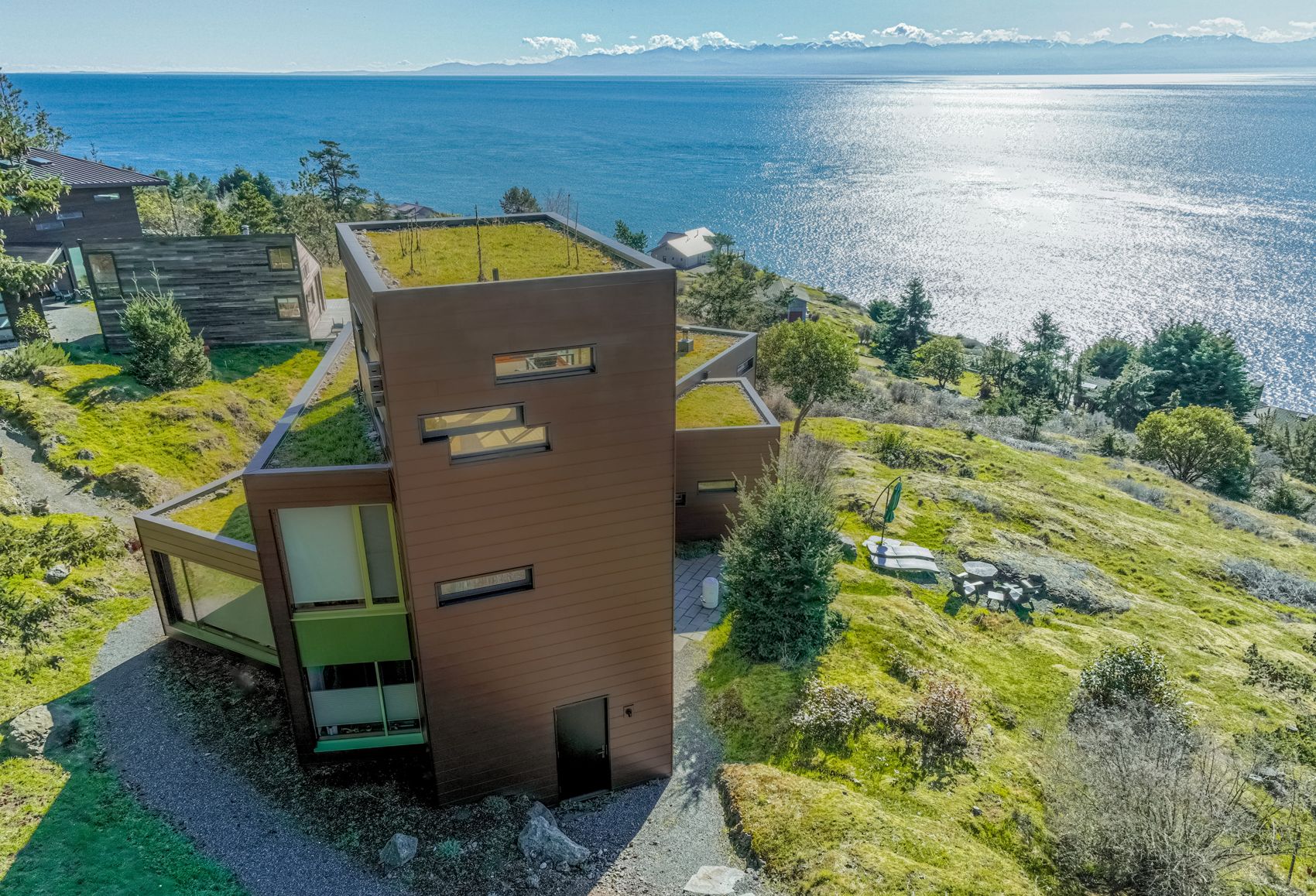
Alabama Hill sits above downtown Bellingham with a mix of older single-family homes, 1970s-80s construction, and newer infill on sloped lots, many with a clear line of sight toward Bellingham Bay and the Strait of Georgia. That exposure matters more than most homeowners realize: siding on the west and southwest faces of an Alabama Hill house takes a steady beating from wind-driven rain, while north-facing walls under mature fir and cedar canopy stay damp long enough to grow moss and algae most of the year. Add Whatcom County's genuinely wet climate and the freeze-thaw cycles that show up in the foothills during cold snaps, and it's easy to see why siding here fails from the inside out - trapped moisture and slow wood rot - long before it looks bad from the curb. This page walks through what actually happens during a siding replacement project in this neighborhood, in the order it happens, so there are no surprises once the crew shows up.
For a typical single-family home in Alabama Hill - say 1,800 to 2,800 square feet with one or two stories - a full siding tear-off and replacement generally runs somewhere between two and four weeks from the first day of demolition to the final walkthrough, weather permitting. That's the on-site work window, not the total project timeline. Add design and material selection time, permitting, and material lead times on the front end, and a homeowner should plan for six to twelve weeks between signing a contract and the crew arriving with dumpsters and scaffolding.
Several things stretch that window in Whatcom County specifically. Rain days are the biggest variable - fiber cement and engineered wood products generally cannot be installed in active rain or against a wet substrate, so a wet October or a string of Pacific fronts rolling in off the Strait can push a three-week job into four or five. Complex rooflines, dormers, and the rot repair that often turns up once old siding comes off (more on that below) are the next most common causes of delay. A straightforward one-story rambler with simple gable ends moves faster than a two-story home with multiple bump-outs, bay windows, and a wraparound porch.
Most siding replacement in the city of Bellingham and unincorporated Whatcom County requires a building permit, particularly when the work includes removing sheathing, replacing the weather-resistive barrier, or changing the wall assembly to meet current code. A licensed contractor should pull this permit and coordinate any required inspections rather than leaving it to the homeowner. Alpine Exteriors handles permitting as part of the contract on jobs that require it, and confirms with the local jurisdiction whether a given Alabama Hill parcel needs anything beyond a standard residential siding permit.
Any wall assembly changes also need to meet the Washington State Energy Code, which sets minimum continuous insulation and air-sealing requirements for exterior walls on remodels of this scope. In practice this usually means adding or verifying rigid foam or an equivalent continuous insulation layer behind the new siding, and installing a code-compliant weather-resistive barrier with properly lapped and taped seams - not just stapling building paper over the studs the way it may have been done decades ago.
Several pockets of Alabama Hill fall inside platted developments with design covenants or an active homeowners' association, and some have exterior color or material approval requirements even for a like-for-like siding replacement. It is worth checking your CC&Rs or HOA architectural guidelines before ordering material, since a color or product change can require a written approval and a review period that adds real time to the front end of a project.
Material lead times are the other planning variable. Standard fiber cement lap siding and trim are often available in a few weeks, but specialty profiles, board-and-batten in non-stock widths, or matched trim for an older home can take six to ten weeks to arrive, longer if a color has to be custom-matched at a factory finishing line. Ordering material as soon as the design is finalized, rather than waiting until the crew is scheduled, is one of the biggest things a homeowner can do to keep the project on schedule.
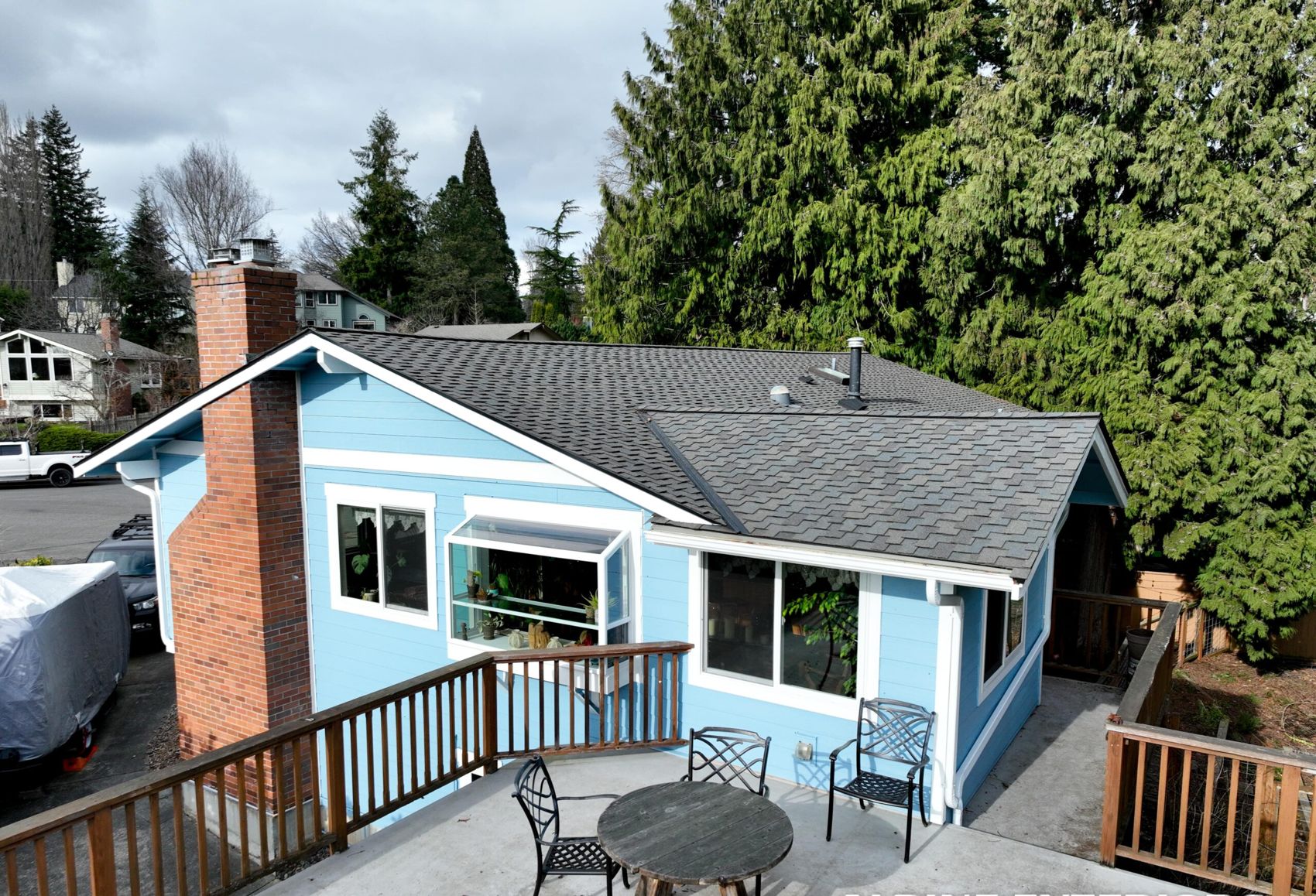
Every home is different, but a typical Alabama Hill siding replacement moves through the same general sequence:
A little preparation on the homeowner's end keeps the crew efficient and avoids delays:
Once the weather-resistive barrier and flashing are installed, and again once siding is complete, most Whatcom County jurisdictions require a building inspection before the project can close out - this is one more reason to work with a contractor who pulls and manages the permit directly rather than leaving that step to the homeowner. Daily cleanup during the job should include gathering cut-offs, nails, and packaging material; a magnetic sweep of the yard and driveway for stray fasteners is standard practice before a crew leaves for the day, and especially important where kids or pets use the yard.
At project close, the final walkthrough should cover the whole exterior systematically: consistent reveal and alignment on lap siding, tight and properly caulked trim joints, correctly flashed windows and doors, paint or finish matching between original and replaced sections, and a final debris and nail sweep of the entire property, not just the areas directly under scaffolding. This is the right time to point out anything that doesn't look right - a reputable contractor will walk the house with the homeowner and address punch-list items before calling the job finished.
New siding in this climate still needs some ongoing attention. Moss and algae will eventually return on shaded, north-facing walls regardless of the product installed, since that's a function of the Pacific Northwest's damp, low-light conditions rather than a defect in the material - an annual gentle wash (low-pressure, not a power washer aimed directly at seams) keeps growth from taking hold and staining the finish. Caulked joints at trim and penetrations should be checked every year or two, since caulk is one of the first things to fail as a house settles and temperatures cycle through the freeze-thaw swings that reach the foothills in winter. Gutters should be kept clear so overflow doesn't run down the face of the new siding, which is one of the more common causes of premature staining and wear on homes below the tree line.
Warranty coverage on a siding job typically has two parts: a manufacturer's product warranty covering material defects, and a workmanship warranty from the installing contractor covering the labor and installation. These are separate documents with separate terms, and it's worth reading both rather than assuming one covers the other - a manufacturer will not warranty a leak caused by improper flashing, and a contractor's labor warranty won't cover a defective panel. Alpine Exteriors provides both types of documentation at project close so homeowners know exactly what's covered and for how long.
Most single-family homes in this size range take two to four weeks of active work, but that estimate assumes reasonably dry weather. A wet stretch during fall or winter installation can add several days to a couple of weeks, since fiber cement and most engineered wood siding products should not go on over a wet substrate or in active rain.
On homes more than 20 to 25 years old, it's common to find some degree of rot at window sills, corner boards, or the bottom of the wall where water has tracked behind old siding over the years. A good contractor will show you the damage, explain the repair, and get sign-off before proceeding rather than simply covering it back up - repairing it now is far cheaper than dealing with a failed wall assembly again in a few years.
No - most manufacturers require a dry substrate and dry conditions during installation, and reputable contractors won't install over wet sheathing or a wet weather-resistive barrier. Given how much of the year Whatcom County sees rain, scheduling with some flexibility, and expecting occasional weather delays, is realistic rather than a sign of a problem with the crew.
In most cases within Bellingham and Whatcom County, yes, particularly if sheathing or the weather-resistive barrier is being replaced or the wall assembly changes to meet current energy code. Requirements vary by jurisdiction and project scope, so it's worth confirming with your contractor before work begins rather than assuming a small job is exempt.
Every Alabama Hill home carries its own combination of sun exposure, tree cover, and wall condition, so the right approach - and the right timeline - depends on an actual look at the house rather than a generic estimate. Alpine Exteriors is a licensed Washington contractor (license ALPINI751OW) serving Bellingham, Ferndale, Lynden, Blaine, Birch Bay, Sudden Valley, and the islands, and can walk your Alabama Hill property, point out what's driving wear on the current siding, and lay out a realistic timeline and scope before any work begins. Reach out for an on-site evaluation to get a straightforward picture of what your project will involve.