
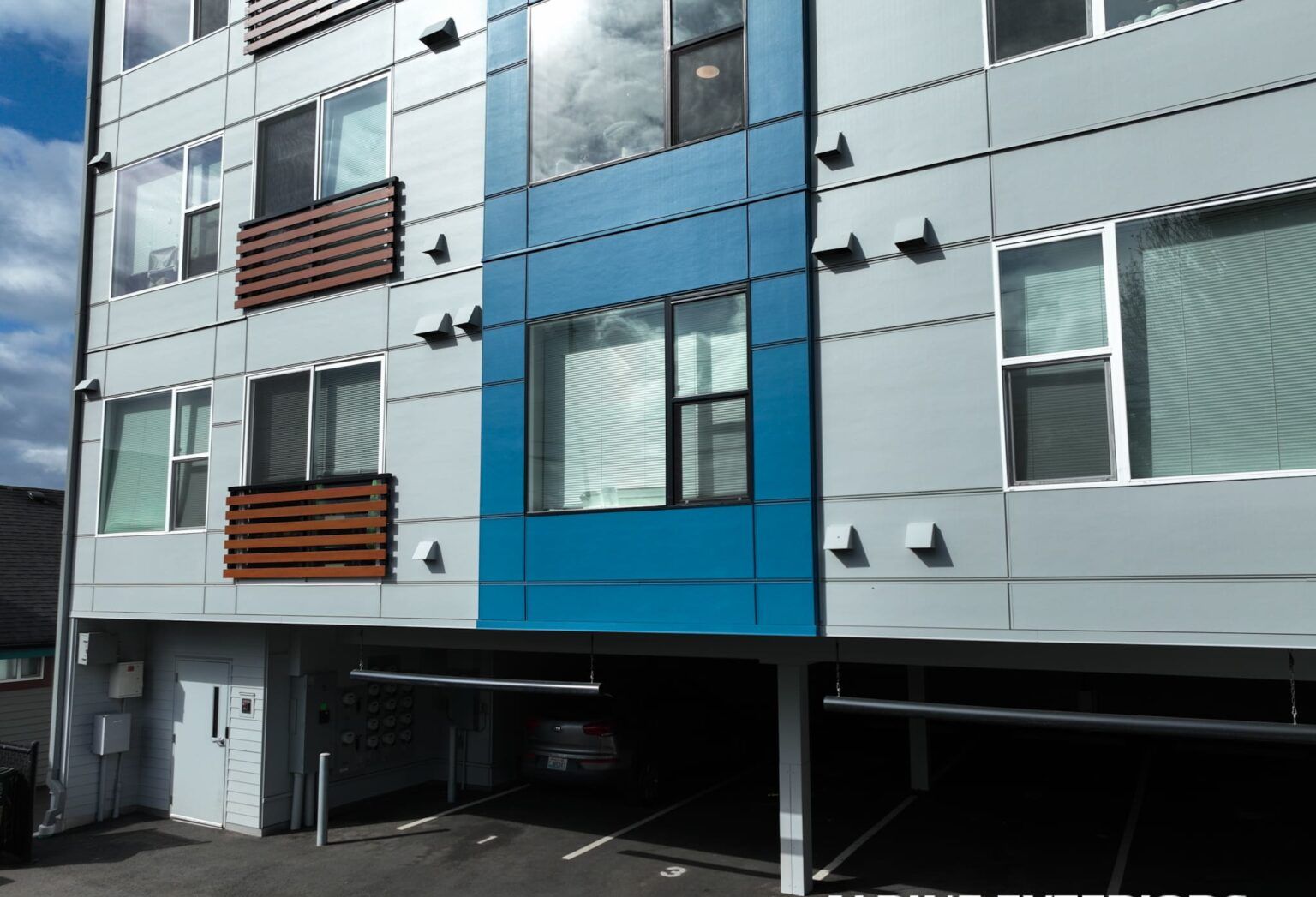
Kendall sits up against the foothills along the Mount Baker Highway corridor, east of Bellingham and well inland from the Strait of Georgia. That location changes what a siding job here needs to survive: fewer wind-driven storms than the county's shoreline towns, but more days of standing damp, more shade from second-growth timber, and sharper overnight temperature swings once you're up near the base of the foothills in fall and winter. A straightforward siding replacement on an average single-family home in Kendall — tear-off, house wrap, trim, and new siding on a rancher or two-story with a couple of dormers — typically runs somewhere between one and two-and-a-half weeks of active on-site work once the crew starts. Homes with extensive wood rot hidden under old siding, multiple stories, or detailed trim packages can run longer. That's the on-site portion only; from signed contract to first day of demo, plan on several weeks to a few months depending on material lead times and the permit queue, which we'll get into below.
It's worth being upfront that this is not a one-day facelift. Siding replacement is disruptive — there will be noise, dust, staging in the yard, and at least a few days where sections of your exterior wall are open to the weather overnight under protective wrap. A contractor who tells you otherwise is glossing over the real process. What Alpine Exteriors can promise is a clear sequence, honest scheduling, and materials matched to what actually holds up in this part of Whatcom County rather than a one-size-fits-all install.
Whatcom County requires a building permit for most full siding replacements, particularly when the job includes removing sheathing, replacing water-resistive barrier, or altering flashing details — which is nearly always the case on a full tear-off. Simple re-side-over-existing jobs sometimes fall into a lighter review category, but that decision is made by the county's permit desk based on scope, not by assumption, so we submit for review rather than guess. Because Kendall is unincorporated Whatcom County, permitting runs through the county rather than a city building department, and turnaround can vary with how busy the office is that season. We build permit lead time into the schedule up front rather than treating it as a surprise delay.
Any exterior work also needs to meet the ventilation, moisture-barrier, and insulation continuity requirements in the Washington State Energy Code. This matters more than it sounds like on paper: the code's requirements around continuous water-resistive barriers and proper rain-screen or drainage-gap detailing exist specifically because western Washington gets so much sustained rain. Cutting corners on that layer is one of the most common causes of hidden rot behind old siding, and it's exactly what we're inspecting for during tear-off.
If your property is part of a homeowners association — some of the newer developments closer to town, and a handful of platted subdivisions in the Kendall area, carry HOA covenants — check your CC&Rs for exterior color and material approval requirements before ordering anything. HOA review can add a week or more if a color sample needs to be submitted and approved separately from the permit.
Material lead time is the other variable that's easy to underestimate. Fiber cement siding, certain vinyl profiles in less common colors, and custom trim boards are often special-order items, and depending on the manufacturer's backlog, lead times have run anywhere from two to ten-plus weeks in recent seasons. We place material orders as soon as a color and profile are finalized so the crew isn't standing around waiting on a delivery truck once demo starts.
Once permits are approved and materials are on site, the work generally follows this sequence:
A little preparation on your end keeps the job moving. Clear a path around the perimeter of the house — move patio furniture, potted plants, and anything hanging on exterior walls (house numbers, hose reels, light fixtures that aren't being replaced) at least a few feet back. If you have exterior cameras or motion lights mounted to the siding, expect them to come down and go back up, and let us know in advance if any wiring runs are hidden behind the wall so we can route around them. Pets that spend time in the yard should be kept inside or in a fenced area away from the work zone during business hours — ladders, nail guns, and open trenches near the foundation aren't a good mix with a curious dog. Inside the house, expect some vibration and noise near exterior walls, and if you have anything fragile hanging on interior walls that back up to the work area, it doesn't hurt to take those down for the week. Given the frequency of rain here, also expect the crew's schedule to flex around weather — a heavy rain day may pause tear-off or trim work even if it doesn't stop everything, because we're not going to leave a wall assembly exposed if we can avoid it.
Once the county permit requires it, the work is signed off by a building inspector at the appropriate stage — often a mid-job check on the water-resistive barrier and flashing before it's covered, plus a final inspection once siding is complete. Daily cleanup during the job means nails, cut-offs, and packaging get cleared from the yard and driveway at the end of each work day, not left in a pile until the end. At project completion, we do a full site cleanup, including a magnetic sweep for stray nails around the perimeter and any areas where ladders were set. The final walkthrough is done with you, elevation by elevation, checking siding lines, caulking, trim details, and touch-up paint, with a chance to flag anything before we call the job finished.
New siding in Kendall's climate still needs periodic attention. Moss and algae will eventually try to re-establish, especially on north-facing walls and anywhere shaded by trees, so an annual rinse with a garden hose (avoid high-pressure washing directly at seams) goes a long way toward keeping growth from taking hold again. Caulking at trim joints and penetrations should be checked every couple of years, since it's the first line of defense against moisture intrusion and the part most likely to need minor upkeep over time. Manufacturer warranties on the siding material itself vary by product line and are handled directly through the manufacturer's paperwork, which we provide at project close. Alpine Exteriors separately stands behind our installation workmanship, and as a Washington-licensed contractor (license ALPINI751OW) we're accountable for the work we perform under that license. If something related to our installation comes up after the job is done, we want to hear about it rather than have you live with it.
If the damage is limited to one or two boards or a small section around a leak, a repair can make sense. But once moss and algae staining has been present for years, or if you can see soft spots, bubbling paint, or dark streaking at seams, there's a good chance moisture has already reached the sheathing underneath, and patching over that doesn't solve the underlying problem. A closer inspection during an estimate, including probing a few suspect spots, usually makes the right call clear.
Work can proceed through most of the year, but we schedule around forecasted rain more carefully outside the drier summer stretch, and jobs in the wetter months sometimes take a bit longer because sections of exposed sheathing can't be left open overnight ahead of a storm. If your timeline is flexible, late spring through early fall gives the most consistent working days, but it's not a hard requirement.
New siding alone isn't an insulation upgrade, but the process of removing old siding is a real opportunity to add or improve the water-resistive barrier and address air gaps at windows, doors, and penetrations in line with Washington State Energy Code requirements. Combined with proper insulation behind the wall assembly, homeowners often notice fewer drafts and more even indoor temperatures, though we won't promise a specific dollar savings since that depends on your existing insulation, windows, and heating system too.
In our experience, it's almost always a combination of sustained moisture and inadequate drainage detailing from the original install — old or missing house wrap, flashing that directs water into the wall instead of away from it, or siding installed tight against trim with no way for trapped water to escape. Add in the amount of rain and shade many Kendall properties get, and any weak point in that original barrier has years to do quiet damage before it shows on the surface.
If you're weighing a siding replacement on a Kendall property, Alpine Exteriors can walk your home's exterior with you, point out what we see from the outside, and give you a realistic scope and cost range before anything is signed. We serve Kendall alongside the rest of Whatcom County — Bellingham, Ferndale, Lynden, Blaine, Birch Bay, Sudden Valley, and the islands — and we're happy to talk through permits, material options, and timeline before you commit to a project.