
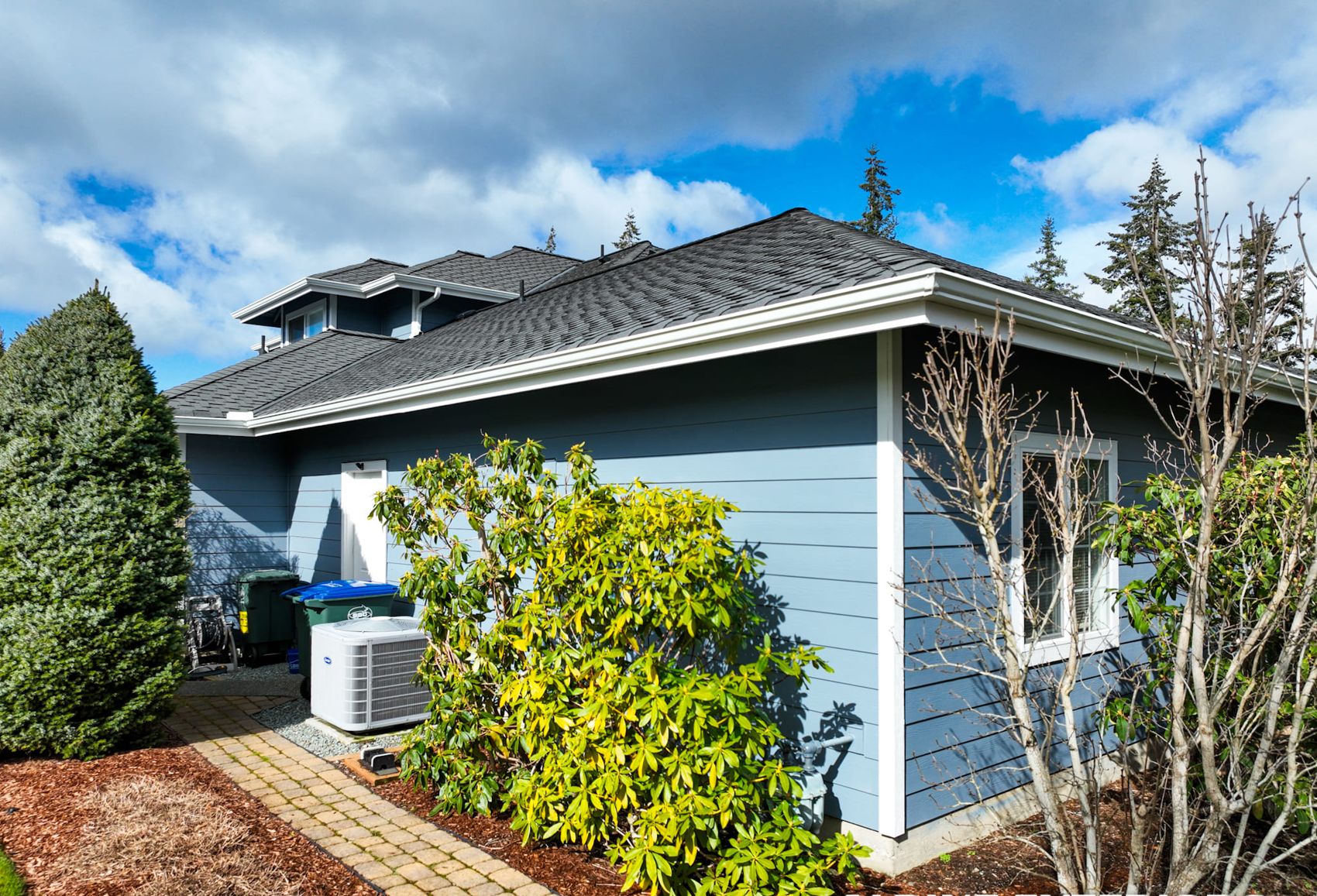
Point Roberts is a five-square-mile exclave hanging off the bottom of the Tsawwassen peninsula, cut off from the rest of Whatcom County by water and by the Canadian border. That geography shapes almost everything about how a siding project runs here, from how materials arrive to how a crew plans its week. For a typical single-family home in the 1,800 to 3,200 square foot range with a full tear-off and re-side, a realistic window is two to four weeks of active work, plus whatever time is needed up front for permitting and material lead times. Homes with extensive wood rot, multiple stories, or complex rooflines with a lot of dormers and cut-in trim run longer.
That timeline assumes normal weather. Point Roberts sits right where wind-driven rain off the Strait of Georgia and Boundary Bay hits the peninsula with little to break it up, so a stretch of blustery, sideways rain in October or November can shut down siding work for days at a time — you can't install siding or seal flashing over wet sheathing and expect it to perform. Alpine Exteriors builds a few weather-contingency days into every Point Roberts schedule rather than promising a hard finish date, because a contractor who ignores that reality in this climate is setting a homeowner up for disappointment or, worse, for water intrusion behind the new siding.
Point Roberts is unincorporated, so building permits for siding replacement run through Whatcom County Planning and Development Services rather than a local city hall. A straightforward like-for-like re-side sometimes qualifies for a simpler permit path than a project that also touches structural sheathing, window flashing, or adds exterior insulation, so it's worth confirming scope with the county before ordering materials. If your property sits within one of Point Roberts' platted communities or a homeowners' association, check the CC&Rs for exterior color and material restrictions before you finalize a product — some associations limit siding colors or require board approval, and that review can take longer than the permit itself.
The border adds a wrinkle most Whatcom County jobs don't have. Point Roberts has no direct road connection to the rest of Washington; supply trucks carrying siding, trim, and house wrap have to route through British Columbia via the Peace Arch or Pacific Highway crossing and back into the U.S. at the Point Roberts port of entry. Border wait times and standard customs processing for goods in transit mean delivery dates need more cushion than they would in Bellingham or Ferndale, and it's one more reason to lock in materials early rather than counting on a quick reorder if a color or profile is out of stock.
Material lead times vary by product. Fiber cement siding (James Hardie is the most common brand specified in this region) often runs three to eight weeks for less common colors or profiles, since it's typically special-ordered through a regional distributor. Vinyl siding is usually faster to source but has real limits in a marine climate — it can look chalky or brittle faster than fiber cement under years of damp, mossy exposure. Engineered wood products are available but need careful attention to end-cuts and caulking to hold up to the rain here. Whatever product is chosen, the installation has to meet the Washington State Energy Code, which sets requirements for continuous insulation and a properly detailed weather-resistive barrier behind the cladding — this isn't optional in new siding work, and it's one of the things an inspector will check.
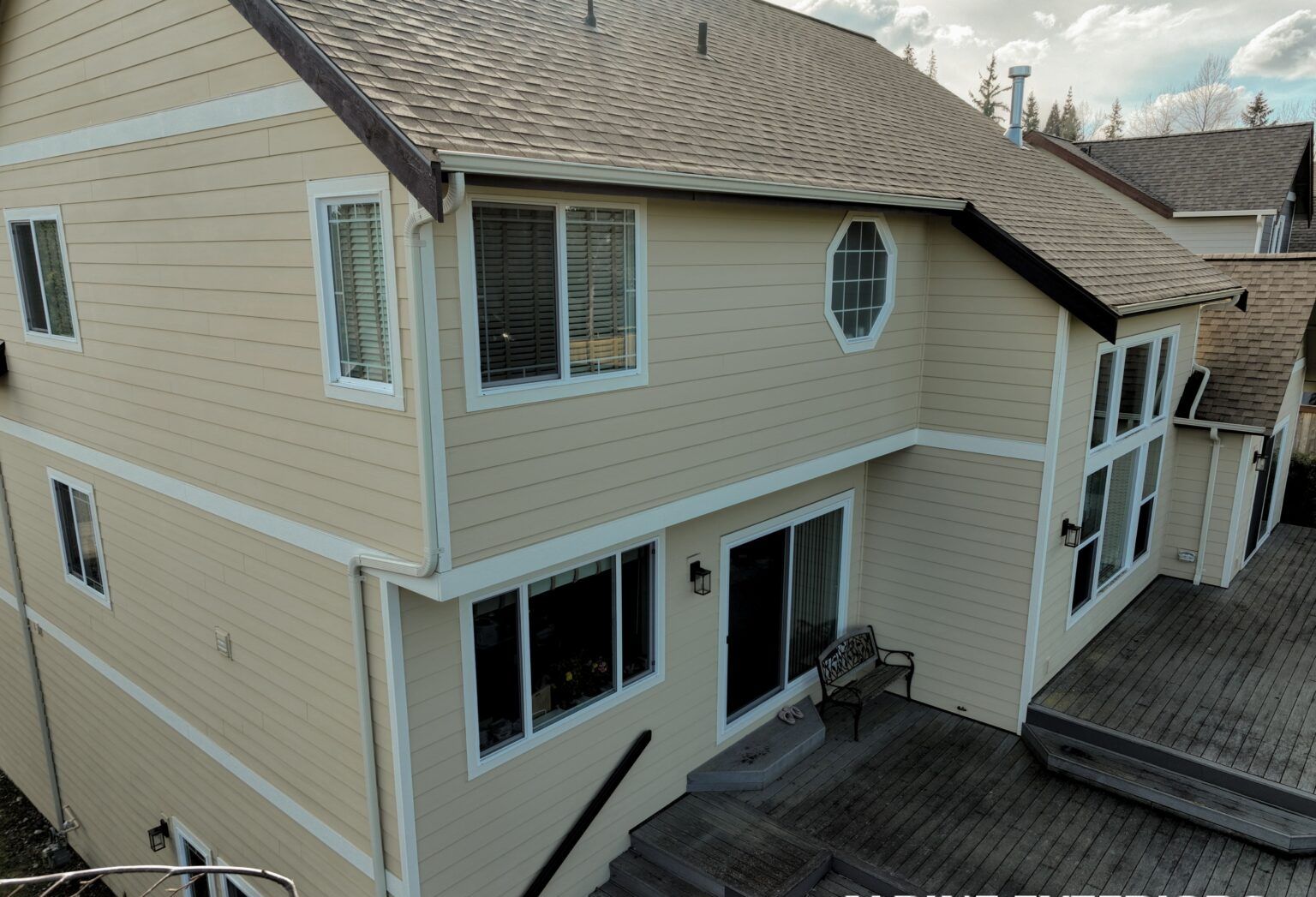
A siding replacement in this climate follows a fairly fixed sequence, because each layer has to be right before the next one goes on.
A little preparation on the homeowner's side keeps the project moving and protects your own belongings. Move vehicles out of the driveway closest to the work area, and bring in or relocate anything mounted to or leaning against exterior walls — hose reels, string lights, wall-mounted planters, satellite dishes, security cameras, and doorbell cameras all typically need to come down temporarily. Trim back shrubs, hedges, and tree branches that touch the siding so crews have clear access on all sides of the house; this also gives Alpine Exteriors a better look at any hidden rot or moss buildup before tear-off begins.
Expect noise, dust, and stray fasteners in the yard during active work — pets and small children should be kept away from the work perimeter, and it's worth covering or moving anything under eaves that debris could fall on. If you have an exterior alarm sensor, wifi camera, or irrigation controller mounted on the walls being re-sided, let the crew know in advance so it can be temporarily removed and reinstalled rather than damaged or simply worked around. Because of Point Roberts' isolated location, crews may commute in daily across the border rather than staying locally, so exact start times can shift slightly with border traffic — building in a little flexibility on both sides keeps the schedule realistic.
Where the permit scope requires it, Whatcom County inspectors sign off at defined points — commonly after sheathing repairs and weather barrier installation are in, and again at final completion. Alpine Exteriors schedules these inspections as part of the project rather than leaving them for the homeowner to chase down. Daily cleanup includes a magnetic sweep of the yard and driveway for stray nails and screws, along with hauling old siding and packaging debris off site; a full dumpster or debris trailer removal typically happens at the end of the job or when it fills up, whichever comes first.
At the end of the project, the crew walks the exterior with the homeowner, checking reveal consistency, caulking, trim alignment, and any touch-up paint needs. This is the time to point out anything that doesn't look right — a slightly proud nail, a gap at a corner, a spot where the color doesn't quite match — before the crew demobilizes. A punch list of any remaining items gets addressed on a follow-up visit rather than left open-ended.
New siding comes with two layers of coverage worth understanding: the manufacturer's product warranty (terms vary by brand and product line, so ask for the specific document for whatever siding was installed) and Alpine Exteriors' own workmanship warranty covering the installation itself. Keep your paperwork, including the invoice and any product registration, since manufacturer warranties are sometimes tied to registering the installation within a set window.
Ongoing care in this climate is mostly about moisture and growth control. Whatcom County's damp, often shaded conditions are good for moss and algae, and siding on the north side of a house or under tree cover will develop green or black staining faster than siding in full sun. A gentle rinse — plain water and a soft brush, or a low-pressure wash — once a year or so, avoiding high-pressure washers that can force water behind seams, keeps most homes looking clean without damaging the finish. It's also worth a quick annual look at caulking around windows, doors, and trim, since UV exposure and temperature swings between summer heat and winter freeze-thaw cycles in the foothills-adjacent parts of the county can eventually crack sealant that needs to be refreshed before it lets water in.
On cost: a full siding replacement on a home this size, depending on product choice, amount of wood rot repair needed, and trim complexity, commonly falls somewhere in the range of $18,000 to $45,000-plus. Fiber cement runs toward the higher end of that range compared with vinyl, largely because of material and labor cost, but it also tends to hold up better against the moss, algae, and constant dampness this area sees year-round.
For most single-family homes in Point Roberts, active work runs two to four weeks from tear-off to final trim and cleanup, though extended rain or wind off the Strait can add days here and there. Homes with significant hidden wood rot discovered during tear-off, or with complicated rooflines and lots of trim detail, tend to run toward the longer end of that range.
Most siding replacements in Point Roberts need a permit through Whatcom County Planning and Development Services, since the area is unincorporated. Alpine Exteriors pulls and manages the permit as part of the project scope, including scheduling any required inspections, so the homeowner isn't left navigating county paperwork alone.
It's common, especially on older homes or walls that have been shaded or exposed to trapped moisture for years. The affected sheathing or framing gets documented, discussed with the homeowner, and replaced before the weather barrier and new siding go on — proceeding over rotted material would undermine the whole project, so this step isn't skipped even if it adds a day or two.
Because Point Roberts has no direct road link to the rest of Washington, siding and trim materials have to be trucked through British Columbia and back across the border at the Point Roberts port of entry. Border wait times and standard customs handling for goods in transit add time that doesn't apply to deliveries elsewhere in Whatcom County, which is why Alpine Exteriors builds extra lead time into Point Roberts material orders.
If your Point Roberts home has aging, moss-covered, or storm-worn siding, Alpine Exteriors can walk the property with you, point out what's driving the wear, and lay out a realistic timeline and product plan that accounts for this exclave's permitting and delivery logistics. Alpine Exteriors holds Washington contractor license ALPINI751OW and works throughout Whatcom County, including Bellingham, Ferndale, Lynden, Blaine, Birch Bay, Sudden Valley, and the islands. Reach out to schedule an on-site evaluation and a written estimate before your next stretch of dry weather closes.