
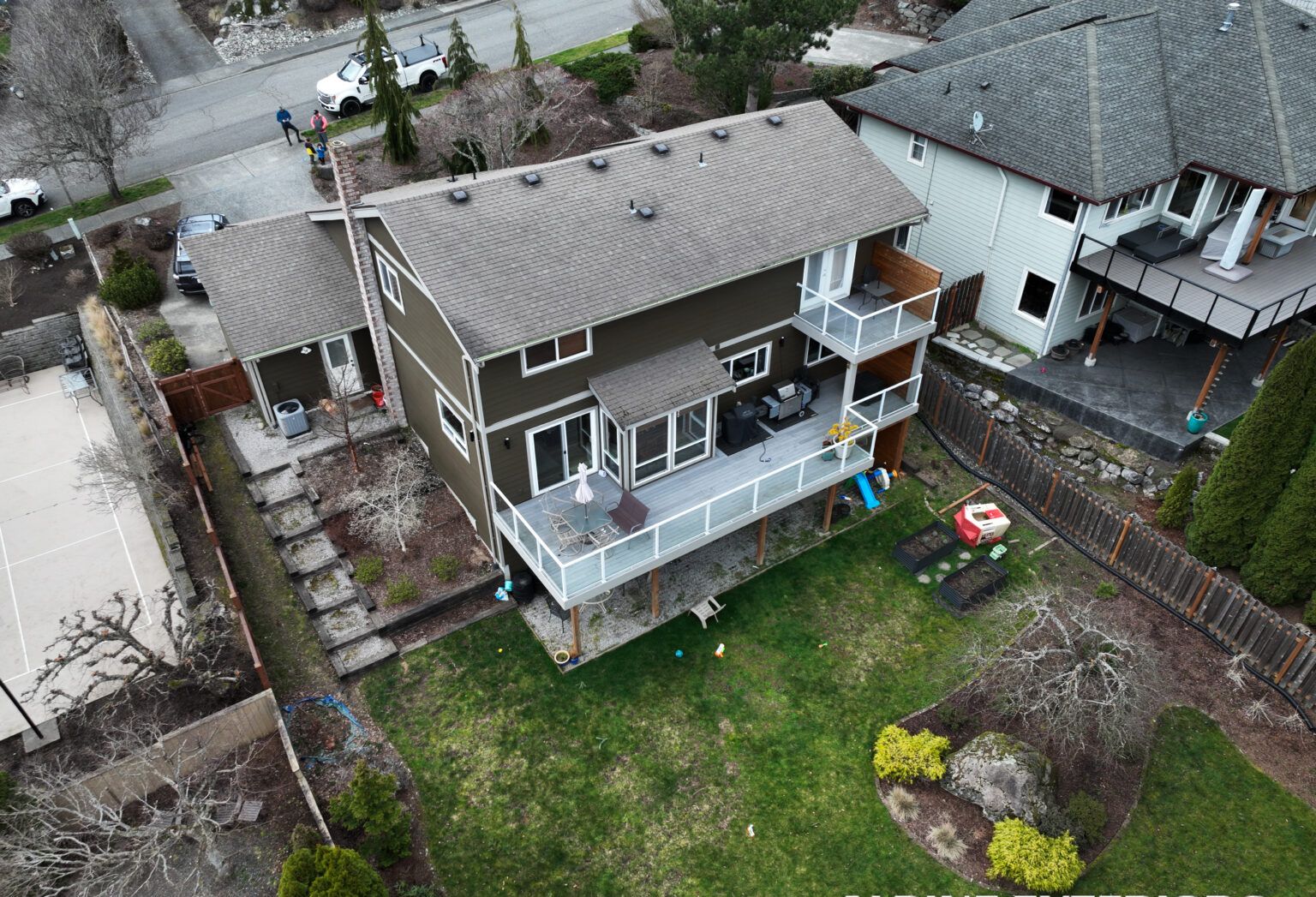
Homeowners in the Columbia neighborhood of Bellingham and across Whatcom County — from Ferndale and Lynden out to Blaine, Birch Bay, Sudden Valley and the islands — eventually face the same siding decision: James Hardie fiber cement or vinyl. Both are legitimate, widely installed products in this region, and both can perform well when installed correctly for our climate. The right answer depends less on brand preference and more on how much rain your walls actually see, how long you plan to own the house, and what you're willing to spend up front versus over time. This guide walks through both materials in plain language, with a straight comparison and a regionally specific recommendation, so you can make a grounded decision before you call a contractor.
If your home takes direct wind-driven rain off Bellingham Bay or the Strait of Georgia, sits under overhanging trees prone to moss and algae growth, or has a history of wood rot at trim and butt joints, James Hardie fiber cement is generally the better long-term investment — it holds paint, resists moisture intrusion, and doesn't soften or delaminate the way older or lower-grade wood-based sidings do. If your budget is tighter, you're working on a rental or short-hold property, or the home is in a more sheltered spot away from direct weather exposure, vinyl siding remains a reasonable, lower-cost option, provided it's installed with proper flashing and house wrap detailing for our wet climate. Neither product is wrong — they solve for different priorities, and a lot of well-built homes in Whatcom County wear either one successfully.
James Hardie siding is a cement-based composite — a mix of cement, sand, and cellulose fiber pressed into planks, shingles, or panels and then factory-primed or pre-finished with a baked-on coating. It's manufactured to hold its shape and finish through repeated wetting and drying cycles, which is exactly the stress that Whatcom County's persistent rain and marine humidity put on exterior walls for most of the year.
The main draw for this climate is moisture stability. Fiber cement doesn't absorb water the way wood siding does, so it's far less prone to the soft, rotting corners and butt joints that show up on older wood-clad homes here after a decade or two of exposure. It also resists the moss and green algae staining that builds up on north-facing walls and shaded siding throughout Bellingham, Ferndale, and the wooded lots around Sudden Valley — the surface stays harder and less porous, so organic growth has less to grip onto, though it isn't immune and still benefits from an occasional wash.
Fiber cement is heavier and more rigid than vinyl, which helps it hold a flatter, straighter reveal along a wall and lets it accept a wider range of paint colors and finishes, including deep, saturated tones that would cause vinyl to warp from heat absorption. It also stands up well to wind-driven rain, since the plank profile and required flashing details are built around shedding water rather than just deflecting it.
The tradeoffs are real. Installed cost is higher than vinyl, in large part because it requires specialized blades and fasteners, more labor time, and a crew that knows the manufacturer's installation requirements — improper installation is the single most common cause of Hardie siding failures, more than any flaw in the material itself. It also needs to be repainted eventually, typically on a longer cycle than wood but not never, and if a plank does need to be replaced, matching an aged paint color can be a minor cosmetic challenge.
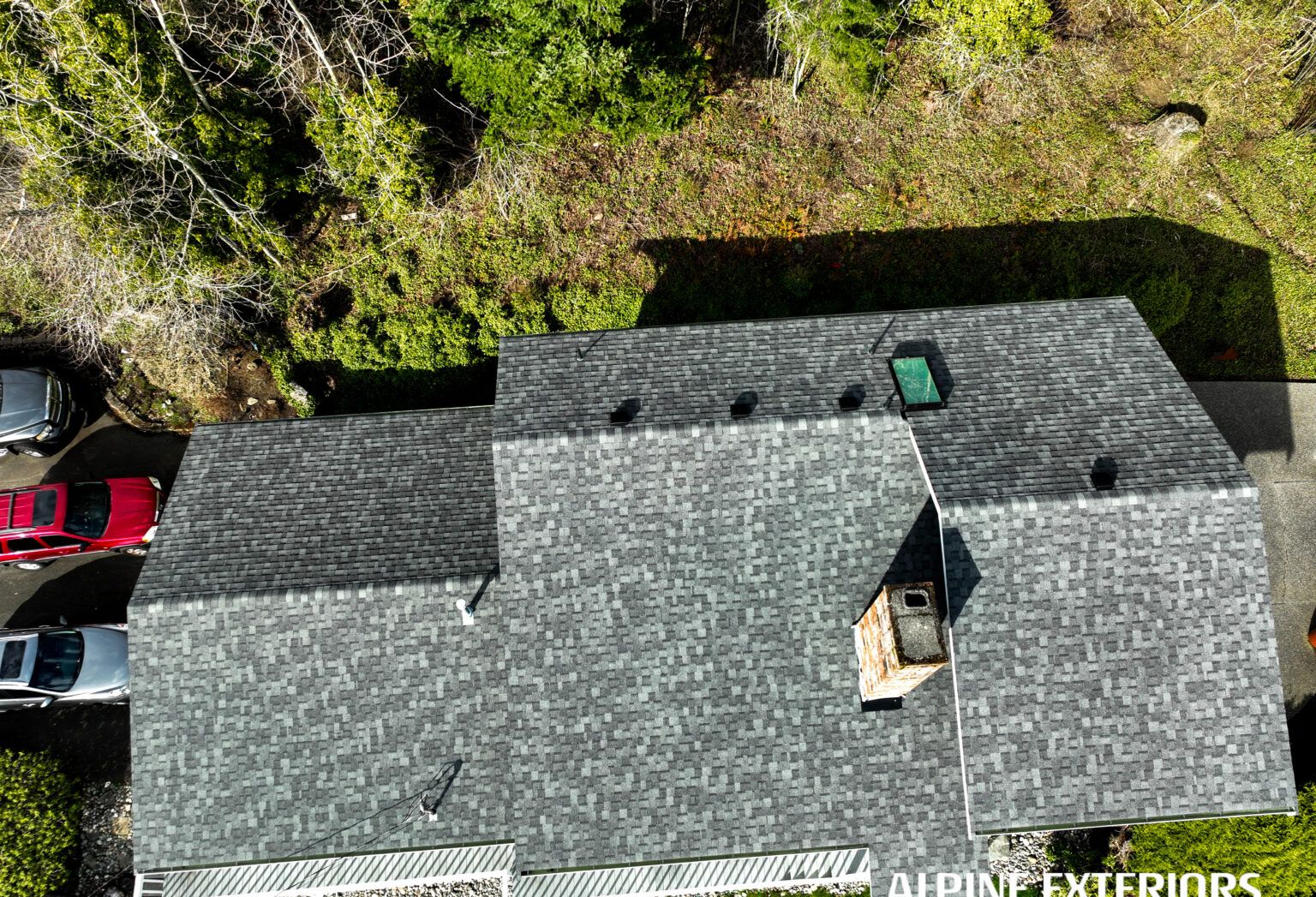
Vinyl siding is an extruded PVC product, available in a wide range of profiles and a factory-baked color that runs through the material rather than sitting on top of it. It's the most commonly installed siding in the country for a reason: it's affordable, install labor is faster, and modern vinyl products have improved substantially in impact resistance and color retention compared to what was on the market a couple of decades ago.
For Whatcom County, vinyl's biggest practical advantage is that it never needs painting and never rots, because it isn't an organic material to begin with. On a budget-conscious remodel or a rental property in Ferndale or Lynden, that lower material and labor cost, combined with essentially zero refinishing maintenance, makes vinyl an easy sell.
Where it falls short in our specific conditions is at the seams and behind the panel. Vinyl siding is installed in overlapping sections with expansion gaps, and if the underlying house wrap, flashing, and window detailing aren't done correctly, wind-driven rain off Bellingham Bay and the Strait can find its way behind the panels — this is a moisture-management problem more than a vinyl problem, but vinyl's loose-hung installation style leaves less margin for error than fiber cement's more rigid, tightly fastened assembly. Vinyl also tends to hold moss and algae in its horizontal laps and textured surface, so shaded, damp-prone elevations common on tree-lined lots can develop visible green staining faster than a smoother fiber cement surface would. In the foothill areas that see occasional hard freezes, cheaper, thinner vinyl can also become brittle and crack on impact in cold weather, though mid- and upper-grade vinyl products are formulated to resist this better.
| Factor | James Hardie Fiber Cement | Vinyl Siding |
|---|---|---|
| Installed Cost | Higher material and labor cost; specialized tools and skilled crews add to the price | Lower material and labor cost; faster to install |
| Lifespan | Multiple decades of service life when installed and maintained correctly | Long service life for the panel itself, though color fading and brittleness can shorten practical lifespan |
| Maintenance | Needs periodic repainting over its life; resists rot and holds paint well between cycles | No painting required; occasional washing to manage moss, algae, and pollen buildup |
| Moisture & Rot Resistance | Very good; dense composite resists water absorption and wood-style rot | Good for the panel material itself, but seams and laps are more dependent on correct flashing to stay dry |
| Appearance | Crisp, flat profile; accepts a wide range of paint colors including dark tones | Wide range of colors and textures, but limited to lighter tones to avoid heat warping |
| Cold-Weather Performance | Stable and rigid through freeze-thaw cycles in the foothills | Can become brittle and crack on impact in colder microclimates unless a higher-grade product is used |
Columbia sits close enough to Bellingham Bay that homes on higher ground or more exposed lots regularly take wind-driven rain straight off the water, and the same is true for waterfront and near-waterfront properties in Birch Bay, Blaine, and parts of the San Juan and Lummi island communities. For those homes, fiber cement's resistance to water absorption and its rigid, well-flashed assembly make it the more durable long-term choice, even with the higher upfront cost. The same logic applies to older homes in this area that already show signs of wood rot at trim, corner boards, or butt joints — replacing failing wood siding with vinyl over compromised sheathing just delays the same rot problem, while fiber cement paired with correct house wrap and flashing gives the wall assembly a genuine fresh start.
Inland and more sheltered lots — parts of Lynden, Ferndale away from direct bay exposure, and interior sections of Sudden Valley — see less direct wind-driven rain, and for those homes, well-installed vinyl can be a perfectly sound, budget-friendly choice, particularly on rental properties or homes where the owner plans a shorter hold. The foothill areas that see occasional hard frost are worth a second look regardless of siding choice, since freeze-thaw cycling rewards materials and fasteners that stay dimensionally stable through temperature swings — fiber cement generally has the edge here, but a quality mid-to-upper-grade vinyl product with proper installation can still hold up.
Any siding job in Whatcom County also needs to meet the wall assembly and insulation requirements in the Washington State Energy Code, which governs continuous insulation, air sealing, and vapor control behind the cladding — this matters more to how the wall performs than which cladding material sits on the outside, and it's worth confirming with your contractor regardless of which siding you choose. Alpine Exteriors evaluates each home's exposure, existing sheathing condition, and code requirements before recommending fiber cement or vinyl, rather than defaulting to one product for every house.
It resists it better in most cases, mainly because its surface is denser and less textured than vinyl's overlapping laps, giving organic growth fewer places to establish. It isn't immune, and shaded, damp walls under mature trees in places like Sudden Valley will still develop some moss or algae over time on either material — periodic washing helps regardless of which siding you choose.
Not automatically, but it takes more care. Homes with direct exposure to wind-driven rain off the bay or the Strait put extra stress on the seams, laps, and flashing details vinyl relies on to stay dry, so if you go with vinyl in an exposed location, make sure the installer is meticulous about house wrap, window flashing, and panel overlap — cutting corners there is where problems start, not the vinyl material itself.
It varies by product line, original finish quality, and sun and moisture exposure, but it's meaningfully longer than most wood siding repaint cycles. It is not a never-paint product like vinyl, so budget for a repaint at some point in its life, even though that interval is typically measured in many years rather than a handful.
Yes, and it's a common approach for managing cost — some homeowners use fiber cement on the most weather-exposed elevations, like the side facing the water or prevailing wind, and vinyl on more sheltered elevations. It takes a contractor who can detail the transition points correctly so water doesn't get trapped where the two materials meet.
Every lot in Whatcom County sees slightly different exposure to rain, wind, and shade, and that exposure should drive the siding decision more than a generic rule of thumb. Alpine Exteriors, WA contractor license ALPINI751OW, can walk your specific property in Columbia or anywhere else in the Bellingham, Ferndale, Lynden, Blaine, Birch Bay, or Sudden Valley area, look at your current siding condition, and give you an honest recommendation between James Hardie fiber cement and vinyl based on what your walls actually face — not a one-size-fits-all pitch. Contact Alpine Exteriors to schedule an on-site evaluation and get a real cost comparison for your home.