
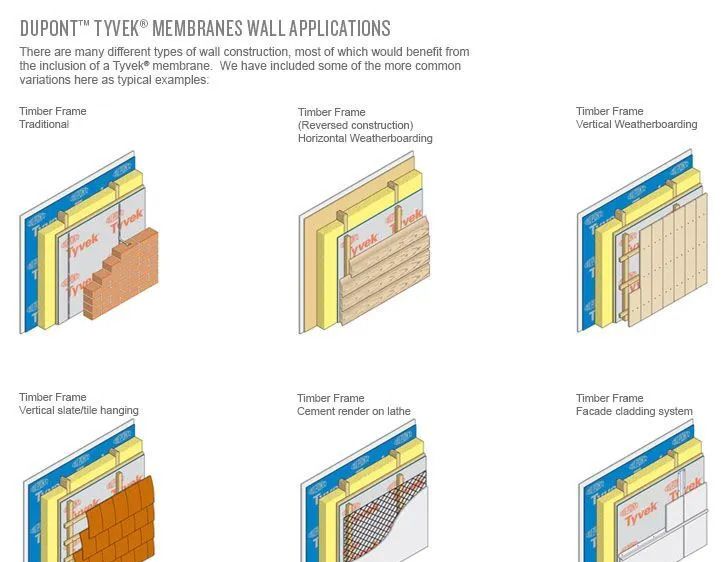
For most homes in Custer, James Hardie fiber cement is the siding that holds up best over time, especially on farmhouses and rural properties that sit exposed to open fields and wind-driven rain coming off the Strait of Georgia and Boundary Bay. Vinyl siding is a reasonable choice when the budget is tight, the home is newer with sound wall assemblies, and the lot has some natural wind shelter from trees or neighboring structures. Neither product is wrong for Whatcom County — the right pick depends on how exposed the site is, how long you plan to own the home, and how much you want to spend up front versus over the life of the siding. Alpine Exteriors installs both materials across Whatcom County and can walk a specific Custer property to help decide which one actually fits, rather than defaulting to whichever is easier to sell.
James Hardie siding is made from a mix of cement, sand, and cellulose fiber, pressed into planks or panels and cured. It doesn't absorb water the way wood does, it won't feed mold or moss the way some organic siding materials can, and it's rated non-combustible, which matters to some insurance carriers even in a region that isn't wildfire-prone the way eastern Washington is. Hardie's HardieZone system assigns products by climate, and homes in Whatcom County fall into the HZ10 zone, which is engineered specifically for wetter, milder Pacific coastal conditions rather than the freeze-heavy interior of the state.
The factory-applied ColorPlus finish is a real advantage here: it's baked on and warranted against fading and peeling for a period of years, which matters in Custer's persistent damp weather where a site-applied paint job on wood trim can start failing within a handful of seasons. Fiber cement also stands up well to the moss and algae that colonize north-facing walls and shaded eaves throughout the county — it doesn't stop growth outright, but the surface doesn't degrade from it the way wood siding does when moss holds moisture against the substrate.
The tradeoffs are real. Hardie board is heavier than vinyl, so installation is slower and labor makes up a larger share of the total cost. It has to be installed with the correct fasteners, proper clearances above grade and roof lines, and factory-specified caulking and flashing details — get those wrong and you can trap moisture behind the boards, which defeats the point of choosing a rot-resistant material in the first place. It also costs more upfront than vinyl, typically landing somewhere in the $9 to $14 per square foot installed range depending on plank style, trim complexity, and site access, though a full quote depends on the specific home.
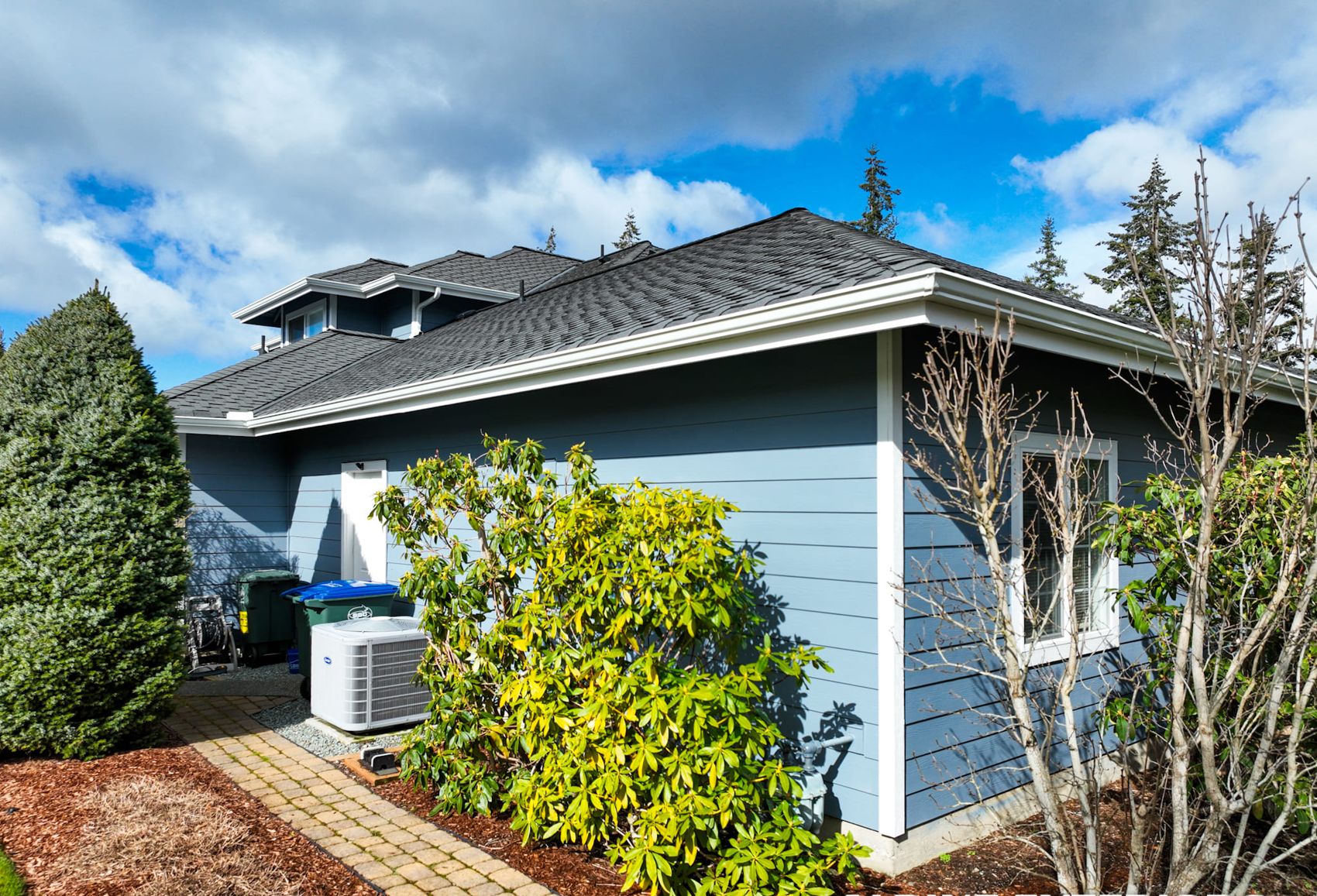
Vinyl siding is extruded PVC, usually installed in overlapping panels over house wrap and sheathing. Its biggest strengths are cost and low maintenance — there's no painting, ever, and a rinse with a hose handles most surface grime. Installed cost usually runs somewhere in the $4 to $9 per square foot range, which makes it attractive for rental properties, flip projects, or homeowners stretching a renovation budget across several priorities at once.
In Whatcom County's climate, vinyl has a few specific weak points worth naming honestly. It can become brittle in cold snaps, and while Custer doesn't see the hard, sustained freezes of the foothills or the Cascades, a cold, windy night combined with an accidental impact — a ladder, a thrown branch in a windstorm — can crack a panel that would have just dented in warmer weather. Vinyl is also a rain-screen-dependent product: it's not watertight on its own, it's designed to shed the bulk of water while letting some pass behind the panels to drain out the bottom. That works fine when the house wrap, flashing, and weep points are installed correctly, but on older homes with aging wrap or poor flashing at windows, moisture can work behind vinyl for years without being visible, quietly rotting the sheathing underneath. Because vinyl hides that kind of damage so well, problems are often only found during a re-side or a remodel, well after they've spread. Color is baked into the material rather than painted on, which resists peeling, but sun and weather exposure over many years can still cause fading and a slight color mismatch if a panel ever needs individual replacement.
| James Hardie Fiber Cement | Vinyl Siding | |
|---|---|---|
| Installed cost | Roughly $9–$14 per sq. ft., varies by trim and access | Roughly $4–$9 per sq. ft., varies by profile and thickness |
| Typical lifespan | Several decades with proper installation and upkeep | Two to three decades, shorter if impact-damaged or poorly ventilated |
| Maintenance | Occasional wash for moss/algae; repaint only if not using ColorPlus finish | Occasional wash; panels can't be repainted without affecting warranty |
| Moisture/rot resistance | High — doesn't absorb water or feed wood rot | Moderate — depends heavily on correct house wrap and flashing behind it |
| Wind-driven rain performance | Strong when flashed and caulked per Hardie spec | Adequate on sheltered walls; more prone to gaps opening on exposed corners over time |
| Appearance | Wood-grain or smooth finishes, deeper shadow lines, holds color well | Wide style and color range, can look and feel less substantial up close |
| Impact resistance | Good; can chip if struck hard but resists cracking in cold | Can crack on cold days or under sharp impact |
Custer sits in open farmland north of Ferndale, close enough to the Strait of Georgia and Boundary Bay that wind off the water can drive rain sideways into west- and north-facing walls with little in the way of tree cover or neighboring buildings to break it up. That combination of open exposure and near-constant fall-through-spring moisture is exactly the condition fiber cement was built for: it doesn't matter to a Hardie board whether rain hits it straight on or at an angle, because the material itself isn't the weak point — the installation details are, and those can be controlled.
A lot of the older farmhouses and outbuildings around Custer were originally sided in wood, and many have already gone through at least one round of wood rot repair at corners, sills, and anywhere water collects. For those homes, moving to fiber cement removes the recurring rot cycle entirely rather than just delaying it. For newer construction on a sheltered in-town lot — say, a home with mature trees or other structures breaking the prevailing wind — vinyl can perform well for many years and keep the project budget in a more manageable range, particularly on rental or investment properties where the owner is optimizing for return rather than a multi-decade hold.
Either material can be installed to meet the wall assembly and continuous insulation provisions of the Washington State Energy Code, which governs exterior wall performance statewide — the code doesn't favor one siding type over the other, it governs what's underneath (insulation, air sealing, vapor control), so the siding choice comes down to durability and maintenance rather than code compliance. Alpine Exteriors builds every wall assembly, vinyl or Hardie, to meet that code as a baseline, not an upsell.
The honest middle-ground answer: if the home is on an exposed lot, has a history of moisture problems, or the owner plans to stay put for the long haul, fiber cement's higher upfront cost tends to pay for itself in avoided repairs and repainting. If the lot is sheltered, the home is newer, or the budget has to stretch across other priorities this year, vinyl remains a legitimate option as long as the crew installing it gets the house wrap and flashing right — which is where Alpine Exteriors' Whatcom County experience matters regardless of which product ends up on the wall.
It can, though Custer doesn't see the deep, sustained freezes that cause the worst vinyl cracking further inland. The bigger risk locally is a cold, windy night combined with an impact — a stray branch, a ladder, or hail — since cold vinyl is more brittle and less forgiving than it is in summer temperatures. Thicker, higher-grade vinyl panels resist this better than budget-grade product.
For most exposed properties, yes, particularly if the home has any history of wood rot or sits on a lot with little windbreak from the water. The higher installed cost is offset over time by lower maintenance, better resistance to wind-driven rain, and a finish that holds color longer than repainted wood or trim. On a sheltered lot with a tighter budget, the math is closer, and vinyl becomes a more reasonable trade-off.
Yes. The energy code governs the wall assembly — insulation levels, air sealing, and continuous insulation where required — not the siding material itself. Both fiber cement and vinyl can be installed over a code-compliant wall assembly. The siding choice is a durability and maintenance decision, not a code compliance one.
It depends on the size of the home, the amount of trim and detail work, and weather windows, since siding crews need reasonably dry conditions to install house wrap and flashing correctly. A straightforward single-story home might take one to two weeks; a larger home with more corners, dormers, or extensive trim work can run longer. Alpine Exteriors provides a project-specific timeline as part of every estimate rather than a generic figure that doesn't account for the actual house.
Deciding between James Hardie and vinyl siding isn't a one-size-fits-all call, and it shouldn't be made without someone actually looking at the exposure, the existing wall condition, and the budget. Alpine Exteriors, WA contractor license ALPINI751OW, serves Custer along with Bellingham, Ferndale, Lynden, Blaine, Birch Bay, Sudden Valley, and the islands, and can put together a side-by-side estimate for both materials on your specific home so the decision is based on your property, not a generic recommendation. Reach out to schedule a walkthrough and get pricing for both options before committing to either one.