
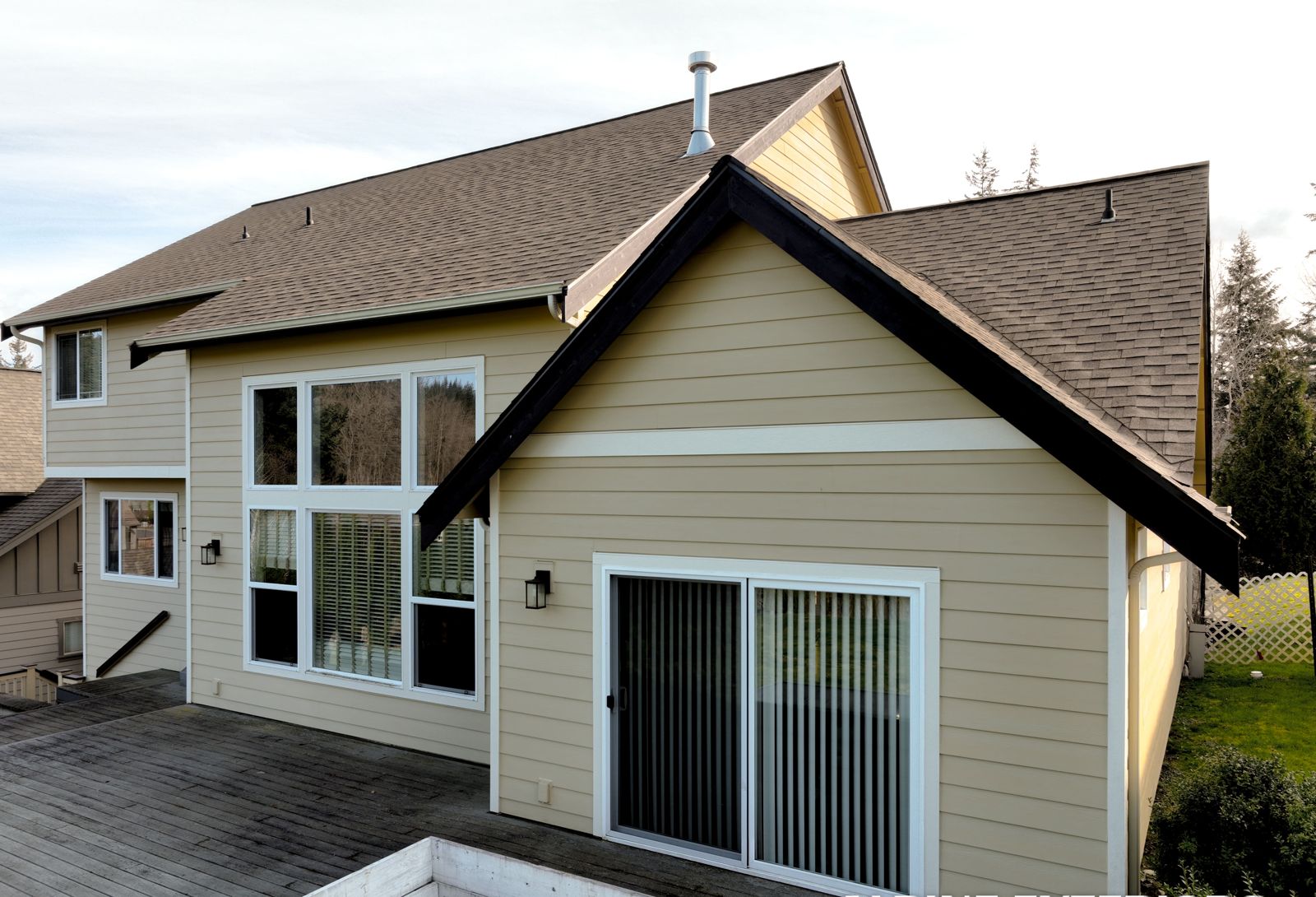
Acme sits back in the foothills along the North Fork Nooksack, east of Deming and well inland from the bay, and it has its own personality when it comes to siding. Homes here tend to be older, tree-shaded, and set on longer gravel driveways than a typical Bellingham lot, and that combination shapes both what siding fails first and what it costs to fix it right. When Whatcom County homeowners ask what James Hardie fiber cement siding runs in Acme, the honest answer is that there is a real range, not a single number, and the range is wide enough that it is worth understanding what pushes a project toward the low end or the high end before a crew ever shows up with a trailer.
Most installed James Hardie projects in this part of Whatcom County price out somewhere in the neighborhood of nine to sixteen dollars per square foot of wall area, with the low end reserved for straightforward one-story homes with sound sheathing and the high end reflecting steep or forested lots, extra trim detail, or a full tear-off of old, water-damaged siding. On a typical Acme home, that translates into a whole-project range that often lands somewhere between the high twenty-thousands and the mid fifty-thousands, though larger homes, detached shops, and outbuildings common on rural Acme parcels can push a project beyond that. These are planning ranges, not a quote, and any contractor worth hiring, Alpine Exteriors included, should walk the property before putting a number in writing.
| Cost Factor | Pushes Toward the Low End | Pushes Toward the High End |
|---|---|---|
| Siding profile and plank width | One consistent lap profile throughout | Mixed profiles, shingle-style accents, board-and-batten gables |
| Tear-off and disposal of old siding | Single layer of vinyl, easy removal | Old wood or aluminum siding, multiple layers, extra dump runs |
| Sheathing and rot repair | Sheathing and framing are sound underneath | Soft sheathing at corners, window returns, or roof-wall intersections |
| Trim, corner boards and accessories | Simple gables, minimal trim package | Extensive trim, custom corner boards, frieze detail |
| Paint or finish system | Factory ColorPlus baked-on finish | Field-painted after installation or a custom color match |
| House size, stories and site access | Single story, flat lot, easy staging near the house | Two-plus stories, steep or wooded driveway, scaffolding required |
| Permits and code compliance | Straightforward re-side, no wall assembly changes | Added exterior insulation or a new water-resistive barrier triggered by Washington State Energy Code requirements when the wall assembly is opened up |
Acme's climate and setting create a specific set of pressures that show up in a siding bid whether or not a homeowner has thought about them yet.
Persistent rain and shade are the biggest factor. Acme gets the same steady Whatcom County rain as Bellingham and Ferndale, but a lot of Acme homes sit under heavy tree cover along the river valley, which means walls stay damp longer after a storm than they would on an open lot. That damp, shaded exposure is exactly the environment where moss and algae take hold on north- and west-facing walls, and it is also where old wood or hardboard siding tends to have hidden rot by the time a crew pulls it off. Fiber cement will not rot the way wood does, but the tear-off itself often uncovers soft sheathing or rotten framing at corners and window returns that has to be repaired before new siding goes up, and that repair work is priced separately from the siding itself because nobody can quote it accurately until the old siding is off the wall.
Freeze-thaw cycling matters more here than it does closer to the water. Acme sits at a higher elevation in the foothills than Bellingham or the shoreline towns, so it sees more frequent freeze-thaw swings through the winter. That stresses caulk lines, paint film, and wood trim over time, which is part of why fiber cement's dimensional stability is attractive here, but it also means installers need to leave the manufacturer's specified clearances and use the correct fastening pattern so the panels can expand and contract without cracking caulk joints prematurely.
Wind-driven rain off Bellingham Bay and the Strait is a bigger factor for waterfront and near-shore communities like Blaine, Birch Bay, and parts of Sudden Valley than it is for inland Acme, and it would be misleading to price an Acme job as though it faced the same wind-driven exposure as a bluff-top home in Birch Bay. That said, the underlying flashing and water-management details, correct head flashing over windows, proper weather-resistive barrier lapping, and sealed penetrations, matter on every home in the county regardless of how exposed the site is, and a crew that gets sloppy with those details on an easy inland lot will get sloppy with them anywhere.
Finally, the Washington State Energy Code comes into play whenever a re-side involves enough wall assembly disturbance to trigger prescriptive requirements. Depending on the scope of work, that can mean adding a continuous water-resistive barrier or exterior insulation where none existed, which adds material and labor cost but also improves the home's performance going forward.
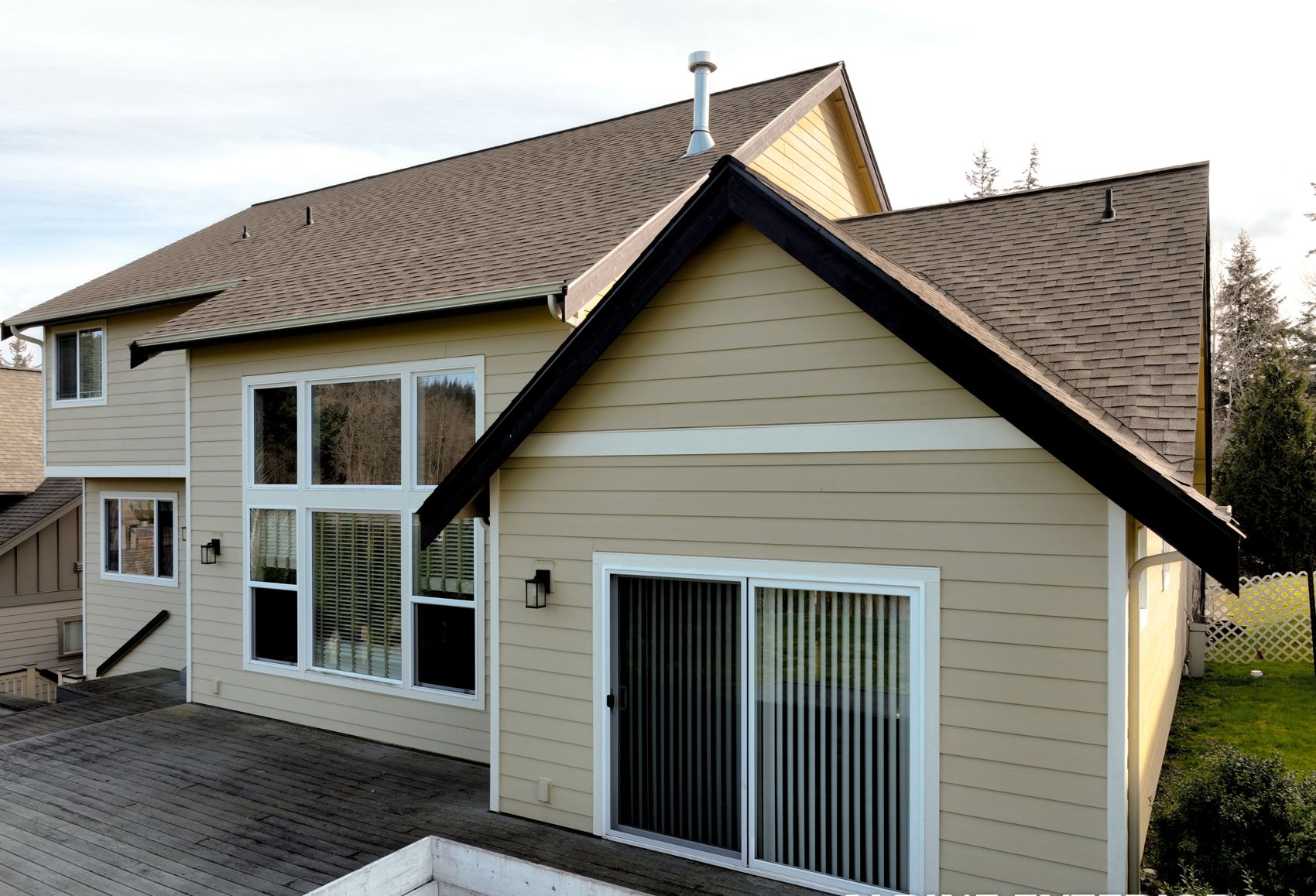
A written James Hardie quote should spell out enough detail that a homeowner could hand it to a different contractor and get a fair comparison. At minimum, look for:
The bottom-line number on a siding bid means very little without the scope behind it. Two bids that are a few thousand dollars apart can represent very different jobs if one includes a full tear-off, a sheathing repair allowance, and factory-finished panels, while the other assumes the existing sheathing is fine and prices field paint instead. Ask each contractor to itemize labor, materials, tear-off, repair allowances, and trim separately rather than handing over a single lump sum, and ask specifically whether the bid assumes any rot repair or if that would come back later as a change order.
It is also worth asking whether the crew doing the work is a James Hardie-certified installer, since Hardie's own training program covers fastening patterns, clearances, and flashing details that affect both appearance and how well the siding holds up through Whatcom County's wet winters. A contractor who cannot answer basic questions about nailing pattern, gapping at butt joints, or how they handle inside and outside corners is one to be cautious about, regardless of price. Alpine Exteriors walks homeowners through each of these line items before work starts, in part because siding disputes almost always trace back to scope that was never written down in the first place.
Most homeowners paying for a full re-side use some combination of savings, a home equity line of credit, or contractor-arranged financing through a third-party lender, and several regional and national lenders offer financing programs built specifically for exterior remodeling work that a contractor can help set up during the quoting process. Terms, rates, and approval depend on the lender and the homeowner's credit, so it is worth comparing at least two financing options rather than accepting the first one offered.
On the insurance side, fiber cement siding is non-combustible, which some homeowners insurance carriers take into account when underwriting a policy, particularly for properties near wooded areas like much of Acme where wildfire exposure is part of the underwriting conversation. Any potential premium impact should be confirmed directly with the homeowner's insurance carrier rather than assumed, since it varies by company and policy. Separately, if a re-side is being done in connection with storm or water damage that may be covered by an existing claim, it is worth getting that documented with a contractor's estimate before work begins so the paperwork lines up with what the insurer expects to see.
Most Acme re-siding projects fall somewhere between the high twenty-thousands and the mid fifty-thousands for an average-size single-family home, with the final number depending heavily on how much tear-off and sheathing repair the old siding is hiding, how much trim detail is involved, and whether the finish is factory ColorPlus or field paint. A firm number only comes after a contractor has walked the property and seen the condition of the walls underneath the existing siding.
Fiber cement typically costs more upfront than vinyl, but it holds paint and color better over time, resists moss and algae growth better than many wood alternatives, and does not rot the way wood siding can in a damp, shaded environment like much of Acme. Whether that upfront cost is worth it depends on how long a homeowner plans to stay in the home and how much they value lower long-term maintenance over the lowest possible install price.
Yes, tear-off and disposal add a meaningful amount to most Acme projects, and the cost climbs further if the old siding turns out to be covering rotten sheathing or framing, which is common enough in older Whatcom County homes that most honest bids include a repair allowance rather than assuming the walls underneath are in good shape.
Timelines vary with home size and weather, but fiber cement installation requires reasonably dry conditions for cutting, fitting, and sealing joints properly, so a project scheduled during a wet stretch of fall or winter can run longer than the same job scheduled in summer simply because of rain delays. A contractor familiar with the local weather pattern should build some buffer into the schedule rather than promising a fixed date that assumes clear skies.
The only way to know what a James Hardie project actually costs on a specific Acme property is to have someone look at the walls, the site access, and the condition of what is underneath the existing siding. Alpine Exteriors, WA contractor license ALPINI751OW, serves Acme along with the rest of Whatcom County, from Bellingham and Ferndale to Lynden, Blaine, Birch Bay, Sudden Valley, and the islands, and can walk a property, explain what is driving the estimate, and put the scope in writing before any work begins. A short conversation upfront about site conditions, existing siding, and finish preferences is usually enough to turn a rough range into a real number.