
Silver Beach sits along the south shore of Lake Whatcom, tucked under a heavy canopy of Douglas fir, cedar, and hemlock, with light that filters green and gray through the trees most of the year. That setting changes how siding color actually reads on a house here versus, say, a wide-open lot in Ferndale or a windswept property near Blaine. It also changes how a color performs — filtered shade slows fading but invites moss, while the damp, wooded lot conditions common around Silver Beach and Sudden Valley keep siding wet longer after every rain. This guide walks through the colors that hold up best in this specific setting, the ones we'd steer you away from, and why.
For most Silver Beach homes, our top picks are deep forest green, charcoal or slate gray, and warm greige (a gray-brown blend). These three consistently work well here because they visually harmonize with the conifer backdrop and lake views that define the neighborhood, they don't show algae streaking as readily as pale colors do, and they tend to clear architectural review committees without objection since they read as natural, low-contrast tones rather than statement colors. None of them is maintenance-free — nothing is, in a climate this wet — but they age more gracefully than the alternatives we cover below.
Color choice for siding isn't just an aesthetic call in Whatcom County; it's a practical one. We weighed each option against five conditions that actually show up on Silver Beach homes:

Forest green is close to a default good choice for wooded Whatcom County lots, and Silver Beach is about as wooded as it gets. It sits naturally against fir and cedar, it doesn't clash with lake views, and because it's already a mid-to-dark green, a light dusting of algae or moss on a shaded wall blends into the color rather than standing out as a stark contrast. The tradeoff: true forest green pigments can shift subtly warmer or cooler over years of UV and moisture exposure, so panels replaced later for repair work may not match perfectly. It also reads as fairly conservative — if you want your house to stand out from the tree line, this isn't the color for that.
Charcoal has become a popular choice across Bellingham and the surrounding towns, and for good reason in this climate — it hides water staining at seams and around window flashing better than almost any other color, and it has a modern look that photographs well for listings. The downside is heat and glare in the rare stretches of strong summer sun off the lake; dark siding on a west-facing wall can run noticeably hotter than lighter colors, which is worth discussing with your contractor if that wall also needs to meet Washington State Energy Code insulation targets. Charcoal also shows dust and pollen film more than people expect, especially in spring, though it rinses off easily.
Greige — a gray-brown blend — is the compromise color for homeowners who want something that reads warmer than charcoal but still hides grime better than a true light color. It performs reasonably well against moss, though not as well as forest green or charcoal on deeply shaded elevations, and it tends to be one of the safest choices for HOA review since it's neither bold nor stark white. Its main weakness is that cheaper greige formulations can look slightly pink or slightly green depending on the light, which shows up more under Silver Beach's filtered tree-canopy light than it would in open sun — it's worth seeing a large sample panel outdoors, in shade, before committing.
For homeowners who want the look of natural wood without the maintenance burden of actual cedar siding, a woodgrain-textured fiber cement panel in a cedar-tone brown is worth considering. It fits the wooded Lake Whatcom aesthetic well and ages gracefully because the tone is already earthy. The honest drawback is that these finishes can look artificial up close if the woodgrain texture is too uniform, and true wood-tone stains (versus factory-baked finishes) require more frequent maintenance in a climate this wet — repeated moisture cycling is exactly the condition that leads to wood rot on untreated or poorly maintained wood-look products, so the finish quality matters more here than the color itself.
White and near-white siding gives a home a clean, bright look that stands out nicely against the dark green tree line, and it's a legitimate option for open, sunnier lots. In shaded, damp settings like much of Silver Beach, though, it's the color most likely to show moss and algae streaking clearly, particularly on north-facing walls and under roof overhangs where rain runs down but sun rarely reaches. It's not disqualifying — many owners like the contrast and are willing to pressure-wash more often — but go in with realistic expectations about wash frequency.
Black works well as a trim, window, or accent color — window frames, fascia, entry doors — rather than as a full-body siding color in this climate. Used sparingly, it adds contrast against a green or gray field and photographs beautifully against the lake backdrop. As a dominant color across large wall areas, it runs into the same heat-absorption and glare tradeoffs as charcoal, only more pronounced, and it can look severe against the natural, softer palette that most Silver Beach architectural committees expect.
A few choices consistently cause regret on Whatcom County homes near the lake and shoreline, and it's worth naming them directly rather than letting a homeowner find out the hard way:
No single color prevents growth — moss and algae are a function of moisture, shade, and surface texture, not color. What color does affect is visibility: darker greens and grays camouflage early growth longer, while whites and pale colors show it sooner, which often means more frequent washing to keep the look you want.
Many communities around Lake Whatcom, including several plats near Silver Beach, have architectural review guidelines that favor natural, earth-tone palettes and may require approval before you install new siding. Check your specific covenant or HOA documents before finalizing a color, since requirements vary plat to plat and aren't standardized across the neighborhood.
Color isn't a compliance factor under the Washington State Energy Code — that code governs insulation values, air sealing, and the wall assembly itself, not surface color. Darker colors do absorb more solar heat, which can influence how quickly a wet wall surface dries between rain events, but you'll meet code through the insulation and construction details, not the paint chip.
It depends heavily on sun exposure, tree cover, and material, but homes on shaded, damp lots like much of Silver Beach typically need a wash for moss and algae more often than homes on open, sunnier lots elsewhere in Whatcom County. Factory-finished fiber cement or engineered wood products generally go longer between repaints than field-painted wood siding, which is worth factoring in alongside color when you're planning a project.
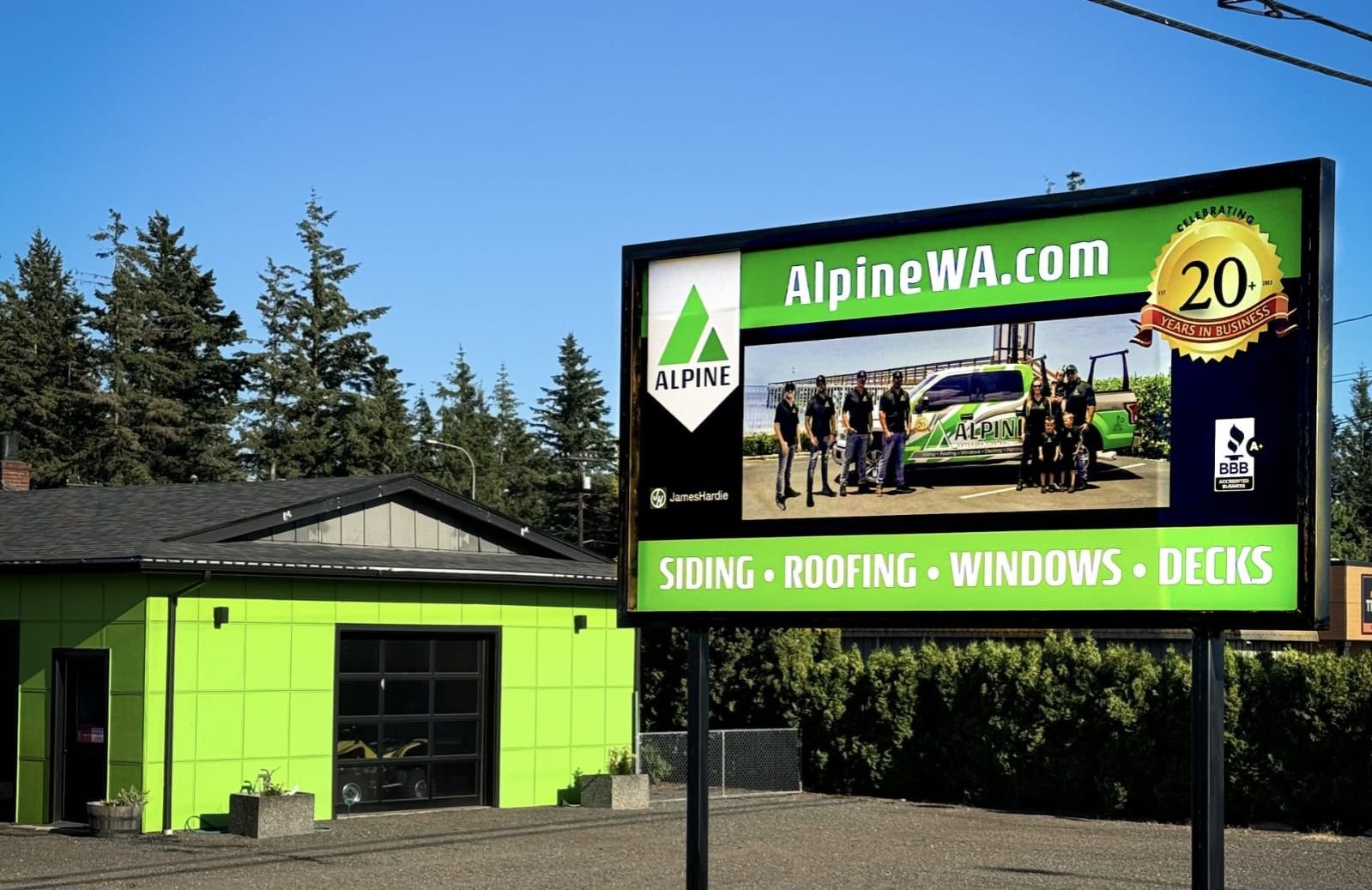
Every lot around Lake Whatcom gets a slightly different mix of shade, wind, and rain exposure, and the right siding color for a sunny point lot isn't always right for a tree-shaded cul-de-sac two streets over. Alpine Exteriors works throughout Whatcom County — Bellingham, Ferndale, Lynden, Blaine, Birch Bay, Sudden Valley, and the islands — and can walk your specific property, check any HOA or covenant requirements that apply, and recommend colors and materials suited to how your home actually sits against the trees and the lake. Alpine Exteriors is licensed in Washington under contractor license ALPINI751OW. Reach out to schedule a walkthrough and get a straight answer on what will hold up on your house.