
Custer sits in the open farmland between Ferndale and Blaine, close enough to Drayton Harbor and the Strait of Georgia that wind-driven rain is a regular part of life, and far enough from any large town that trees and hedgerows around older farmhouses stay damp for days after a storm passes. The housing stock here is a mix: original farmhouses and outbuildings with old wood siding or T1-11 panels, manufactured and mobile homes from the 1970s-90s, and a growing number of newer stick-built homes on larger lots. Whatever the vintage, the exterior cladding on a Custer home does one job above all others: keep a steady supply of Pacific Northwest moisture away from the framing, sheathing, and insulation behind it. This guide compares the siding materials we install and repair most often in Whatcom County and tells you plainly where each one earns its keep and where it falls short in a place like Custer.
For most Custer homes, we point people toward two materials first: fiber cement siding and factory-finished engineered wood siding. Both hold paint and stain far longer than raw lumber in constant damp, both resist the soft rot that shows up at butt joints and lower courses on older farmhouses, and both give an installer the flexibility to detail a proper rainscreen and drip edges around the wide, exposed elevations common on rural lots. Cedar remains a strong choice for owners who love the look of real wood and are willing to recoat it on a schedule; it's not a wrong answer, just a higher-maintenance one. Steel and metal panel siding deserves more consideration in Custer than it gets elsewhere in the county, because open, windswept properties near the water take wind-driven rain straight into the wall assembly, and metal simply doesn't absorb moisture the way wood-based products can. Vinyl remains the budget option and works fine on some homes, but it's the material where we see the most callbacks tied to this specific climate.
Ratings and reviews from other parts of the country don't mean much in Custer. We evaluate siding against the conditions that actually show up on Whatcom County job sites:
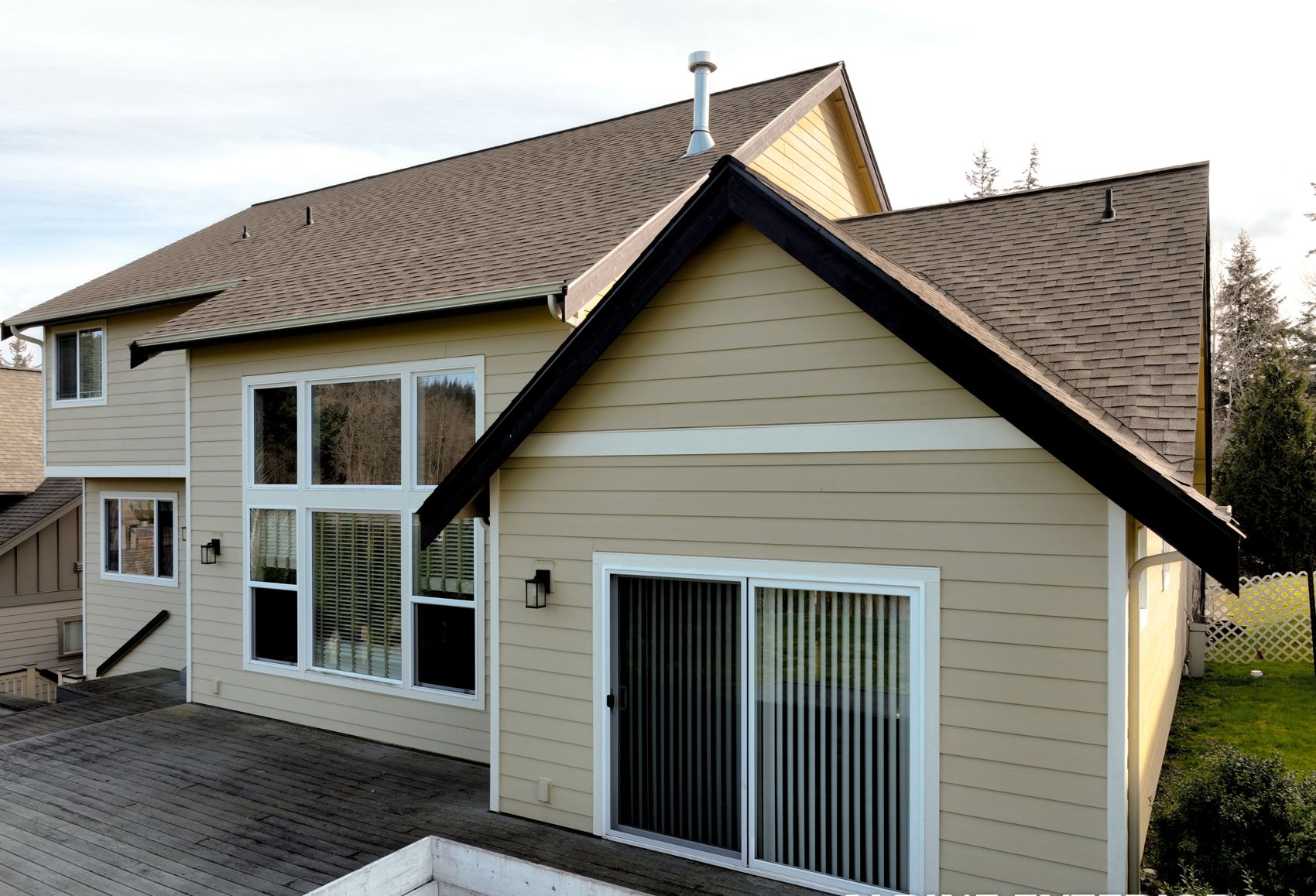
Fiber cement is a blend of cement, sand, and cellulose fiber pressed into planks or panels, then factory-primed or pre-finished. It's the material we recommend most often for Custer's mix of exposed and shaded elevations.
Pros: It doesn't rot, doesn't feed moss the way bare wood does, and holds factory paint far longer than field-applied coatings on lumber. It stands up well to wind-driven rain when installed with proper flashing and a rainscreen gap, and it satisfies the Washington State Energy Code's continuous insulation approach cleanly since furring strips can be integrated into the same layer that creates drainage.
Cons: It's heavy, which makes installation slower and pricier than vinyl, generally landing in a noticeably higher cost range per square foot installed. Cut edges must be sealed and back-primed or they'll wick moisture, and this is the single most common installation mistake we find when repairing other contractors' work in the county. It also requires a crew experienced with fiber cement specifically — cut it dry with the wrong blade and you're dealing with silica dust and a rougher edge that doesn't seal as well.
Engineered wood siding is manufactured from wood strands or fiber bonded with resins and coated with a factory finish, giving it the look of traditional lap siding with more consistent performance.
Pros: It's lighter and easier to install than fiber cement, which can shorten labor time, and modern formulations include treated cores and edge seals specifically aimed at resisting the kind of prolonged dampness Custer sees most winters. It takes paint well and holds a crisp, traditional look that suits the farmhouse aesthetic common on older lots here.
Cons: It's still a wood-based product at its core, and older or lower-grade engineered wood siding has a documented history of swelling and delaminating at the edges when installation details are sloppy or when it's left unprimed at cuts. We only recommend it when we're confident in the specific product line and the installer's track record with it — this is not a material to buy on price alone in a climate this wet.
Western red cedar is native to this region and remains a favorite for owners who want a natural, warm look, especially on newer builds around Sudden Valley and larger custom homes.
Pros: Cedar has natural oils that give it real rot resistance compared to other softwoods, and it ages gracefully even if left to weather naturally rather than stained. It's a renewable, regionally appropriate material, and it's forgiving of minor imperfections that would show on a flatter, more uniform product.
Cons: Cedar needs a maintenance schedule — restaining or resealing every few years — that a lot of busy rural households simply don't keep up with, and once the finish fails, Custer's damp, shaded stretches will grow moss and algae on cedar faster than on almost any other siding we install. Butt joints and any spot where cedar meets grade or a deck are where we see the most rot calls in the county, and it carries a real ongoing cost that a lot of owners underestimate when they fall in love with the look.
Vinyl is the most affordable option and still a reasonable choice for some Custer homes, particularly rentals, manufactured homes, and budget-driven renovations.
Pros: It's inexpensive, never needs painting, and doesn't rot since there's nothing organic in the material itself. Installation is faster than fiber cement or wood, which keeps labor costs down.
Cons: Vinyl is only as good as what's behind it — it's not a water barrier on its own, it's a rain screen with drainage holes, so a poor housewrap or flashing job underneath will fail regardless of the siding on top, and this is where we see the most trouble on older Custer installs that were done without a proper drainage plane. In sustained wind-driven rain off the harbor, lower-quality vinyl can also allow water intrusion at loose or improperly overlapped panels. It's also the material most prone to visible warping if it's ever exposed to reflected heat from a nearby window or dark surface, though direct heat exposure is a minor concern under our typically overcast skies.
Metal panel siding, whether standing-seam or corrugated profiles, has moved from purely agricultural buildings into residential use across Whatcom County, and it fits Custer's open, rural character well.
Pros: Metal doesn't absorb water, doesn't rot, and doesn't feed moss or algae growth the way porous materials can, which makes it a strong performer against the sideways rain that open farmland properties take during winter storms. It also tends to outlast most other claddings with minimal maintenance, which suits larger acreage properties where nobody wants to be up on a ladder every summer.
Cons: The look isn't for everyone — it reads more agricultural or modern than traditional, which can be a mismatch on an older farmhouse unless it's used deliberately. Panel seams and fastener penetrations need to be detailed correctly or you introduce new leak paths, and dents from hail or debris, while not common here, are more visible on metal than on other materials. Cost varies widely by profile and finish, so it isn't automatically cheaper than fiber cement once you account for underlayment and trim work.
A few choices come up often enough in our repair calls that they're worth naming directly. Traditional stucco and EIFS systems are a poor match for this climate — they're built around the idea of shedding water off a hard, mostly sealed surface, and when that surface cracks or is installed without adequate drainage behind it, the trapped moisture has nowhere to go in a climate that rarely gets a real drying stretch. We also see trouble with any siding installed without a rainscreen gap or drainage plane behind it, regardless of material — this detail matters more in constant Pacific Northwest damp than it does in drier climates, and skipping it is the single biggest predictor of a callback within a few years. Unprimed or unsealed cut ends on wood-based products, whether that's real cedar or engineered wood, are another recurring failure point; every cut made on site needs to be treated before it goes up, not after problems show. Finally, be cautious with siding chosen purely on lowest bid without knowing what underlayment and flashing package comes with it — on an open, wind-exposed Custer lot, the assembly behind the siding does as much work as the siding itself.
For most properties here, yes. The price difference reflects real performance gains in rot resistance, finish longevity, and wind-driven rain tolerance, and on an open or shaded lot where moisture sits longer, that difference tends to show up as fewer repairs over the life of the siding rather than just a nicer-looking wall.
It depends heavily on sun exposure and how sheltered the wall is, but most cedar siding in Whatcom County's damp conditions needs a fresh coat well before the manufacturer's ideal interval on a drier-climate schedule, and shaded or north-facing walls that stay damp longest usually need attention first.
Yes — any new construction or full re-side in Washington falls under the Washington State Energy Code's requirements for the wall assembly, which typically means accounting for continuous insulation and air sealing behind the cladding, not just the siding material itself. This affects furring, housewrap choice, and overall wall thickness, so it's worth discussing before you pick a finish material.
Custer's tree lines, hedgerows, and long overcast stretches keep north- and east-facing walls damp far longer than sun-exposed sides, and moss and algae will recolonize any porous or textured surface that stays wet. Trimming back vegetation for airflow and choosing a smoother, factory-finished material for shaded elevations both help slow regrowth, though periodic washing is still part of realistic upkeep out here.
Every property in Custer sits a little differently against the wind and rain coming off the water, and the right siding choice depends on your home's exposure, age, and current condition as much as it does on general guidance like this. Alpine Exteriors has worked on homes across Whatcom County, from Bellingham and Ferndale out to Blaine, Birch Bay, and the farmland around Custer, and we're glad to walk your property, point out any rot or drainage issues already in progress, and give you an honest recommendation rather than a one-size-fits-all pitch. Alpine Exteriors holds Washington contractor license ALPINI751OW — reach out to schedule a walk-through and get a clear picture of what your home actually needs before you commit to a material.