
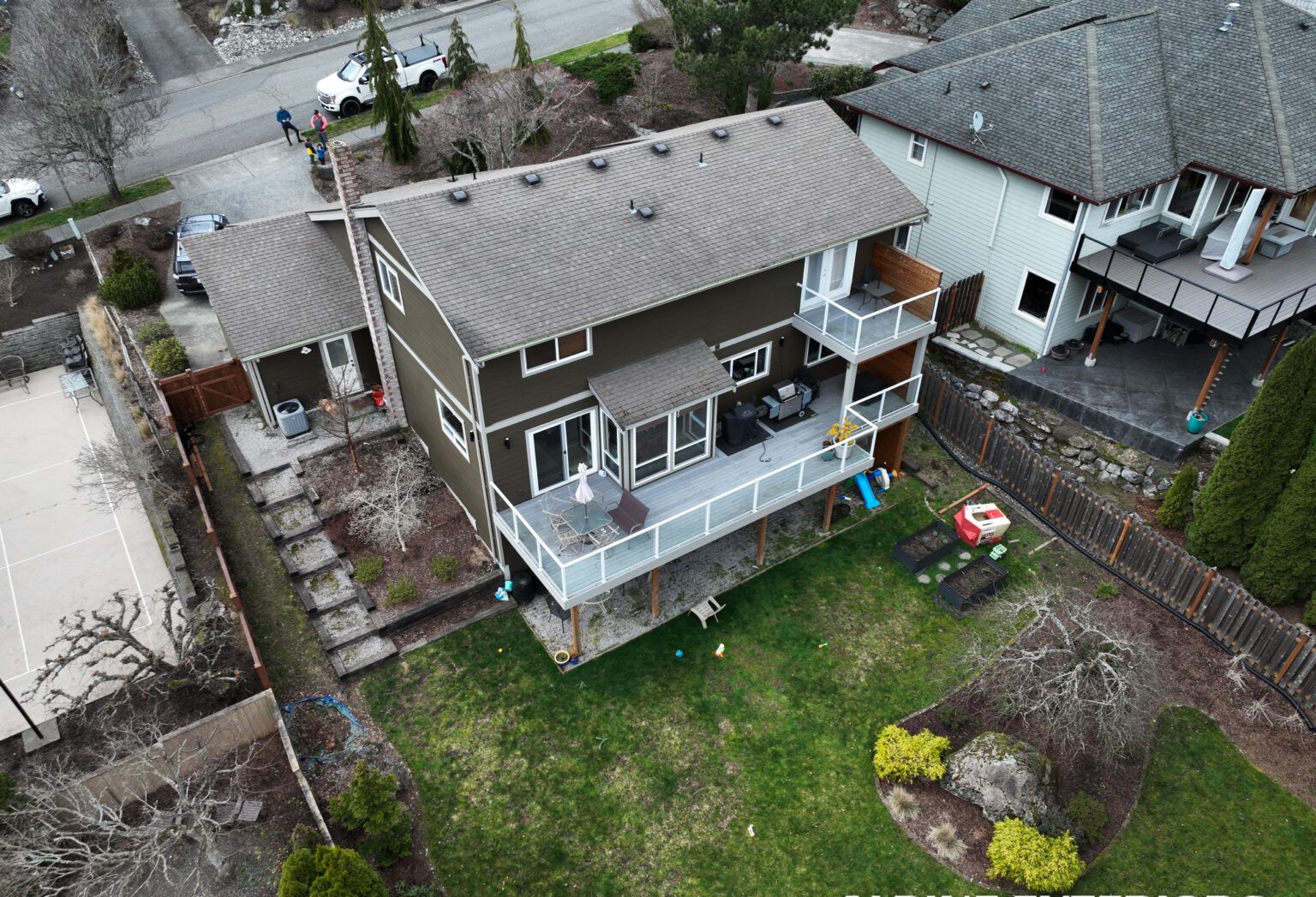
Properly installed James Hardie trim (HardieTrim boards, typically used around windows, doors, corners, and fascia) is engineered to hold up for decades — Hardie backs it with a 30-year limited warranty on the product itself. In real-world terms on a Whatcom County home, that means most owners get 25 to 35+ years of solid service out of their trim before it needs replacement, provided the installation, caulking, and paint were done right in the first place.
That range is wider than the warranty number for a reason: the warranty covers the fiber cement itself, not the caulk joints, the paint film, or the flashing behind it — and those are the parts that actually fail first in a marine climate like ours. We've pulled trim off houses in Bellingham that was structurally fine at 20 years but looked tired because nobody had recaulked or repainted it since installation.
HardieTrim is fiber cement — a mix of Portland cement, sand, and cellulose fiber pressed and cured into dense, dimensionally stable boards. Unlike wood trim, it doesn't absorb moisture into its structure, so it doesn't swell, cup, or split the way cedar or finger-jointed pine trim does after a few Whatcom County winters. That's the core reason it outlasts wood trim by a wide margin in this climate, and it's the main reason we install it on most of the re-trim jobs we do from Ferndale to Blaine.
But "doesn't rot" isn't the same as "lasts forever without attention." Every failure point we see on Hardie trim in this county traces back to one of three things:
Get those three things right — and keep them right over time — and there's no engineering reason a Whatcom County home shouldn't get the full useful life out of its Hardie trim. Alpine Exteriors treats sealing cut edges and joint caulking as a non-negotiable step on every trim installation, not an optional upgrade, because we've seen what happens on the houses where a previous crew skipped it.
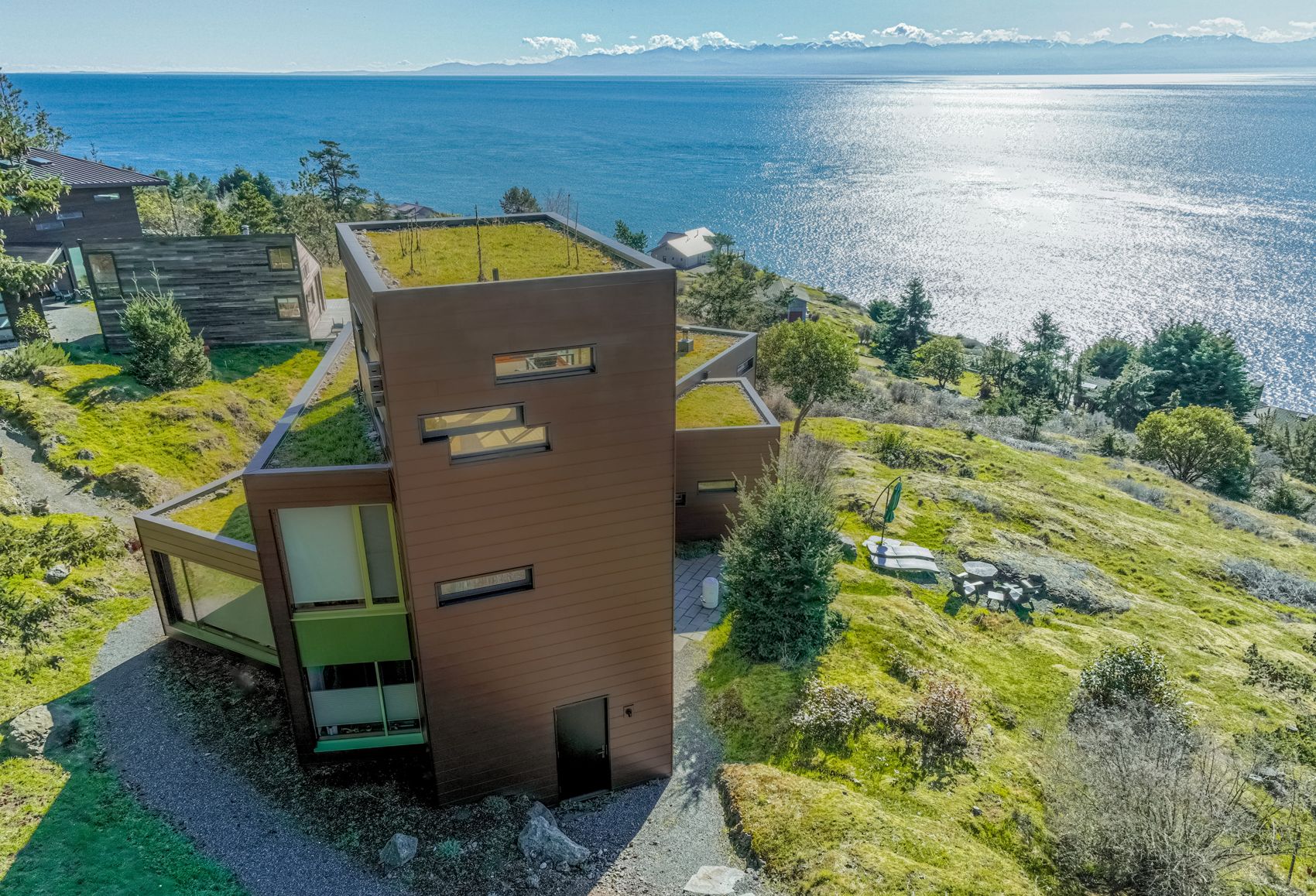
Trim doesn't fail in a vacuum — it fails because of what it's exposed to, and Whatcom County exposes trim to a specific combination of conditions that's harder on caulk and paint than most of the country deals with.
The defining factor is simply how much of the year this trim spends wet. Bellingham and the surrounding lowlands see rain across most months, and it's rarely a hard, short downpour — it's the low, steady, days-at-a-time kind that keeps painted and caulked surfaces damp far longer than an equivalent amount of rain would in a drier climate. Moisture that lingers against a joint or a cut edge has more time to find its way in, which is exactly why caulk and cut-edge sealing matter more here than they would somewhere with less annual rainfall.
Wind-driven rain off Bellingham Bay and the Strait of Georgia is the second factor, and it's location-specific within the county. Homes in Fairhaven, along Chuckanut, out toward Blaine and Birch Bay, or on the islands take rain sideways off the water during winter storms — rain that gets pushed up and under trim boards and horizontal joints in a way that straight-down rain never would. On these waterfront and near-waterfront properties, we pay particular attention to top-and-side caulking on window and door trim, because that's where wind-driven moisture actually gets pushed in.
Then there's biological growth. The same persistent dampness that stresses caulk also feeds moss and algae, and Whatcom County's tree cover and shaded lots — think Sudden Valley, the wooded lots around Lynden and Ferndale, and much of the county outside the open farmland — give moss plenty of places to establish on north-facing trim and fascia that doesn't get direct sun. Moss holds moisture against the board longer than bare siding would, and left unchecked for years it can accelerate paint breakdown even though the fiber cement underneath isn't rotting.
Wood rot is really the backdrop this whole conversation happens against. A huge share of the trim replacement work we do in this county isn't Hardie trim failing — it's old wood trim that finally gave out after years of exactly the moisture exposure described above, which is the whole reason so many Whatcom County homeowners switch to fiber cement trim in the first place.
Finally, the foothill communities — up toward Deming, Acme, Kendall, and the areas climbing toward Mount Baker — see something the lowland and coastal parts of the county mostly don't: real freeze-thaw cycling in winter. Water that gets into a crack, whether in old wood trim or a failed caulk joint on fiber cement, expands when it freezes and works that crack wider. It's a slower, more mechanical kind of damage than the moisture and moss issues down in Bellingham and Blaine, but it's a real factor for anyone building or re-trimming a home at elevation in this county.
Longevity on Hardie trim isn't really about the product — it's about a short list of maintenance habits, done on a schedule, over the decades the trim is up there.
None of this is complicated, and none of it requires tearing into the wall. It's mostly a once-a-year walk-around and staying ahead of caulk and paint before they fail, rather than after. Alpine Exteriors builds this kind of maintenance guidance into every trim project we hand off, because the difference between trim that looks good at year 10 and trim that looks tired at year 10 almost always comes down to whether anyone kept up with these basics.
Hardie trim is available factory-primed, which still requires a topcoat of paint after installation, or as ColorPlus, which comes with a baked-on finish and a longer paint warranty. Either way it's not a bare, unfinished product — factory-primed boards need paint applied within the timeframe Hardie specifies, and even ColorPlus trim will eventually need a repaint decades down the road as the finish ages.
Moss won't eat into fiber cement the way it can degrade some roofing materials, but it does hold moisture against the board and can accelerate paint breakdown over time, especially on shaded, north-facing trim common on wooded Whatcom County lots. The fix is gentle, regular cleaning rather than letting moss establish for years at a time.
For this climate specifically, yes, and it's the main reason we recommend it: wood trim in a persistently wet, moss-prone environment like this county tends to show rot and paint failure well within a decade or two, while fiber cement trim, properly caulked and maintained, is built for a multi-decade lifespan. Wood trim can be less expensive upfront, but the maintenance burden and earlier replacement cycle tend to close that gap over time.
Watch for staining or dark streaks below joints and corners, paint that's bubbling or peeling in a localized spot rather than evenly across the board, and any soft or spongy feel to the sheathing behind the trim when pressed. Those are signs moisture is already getting behind the trim, and it's worth having it looked at before a small caulk fix turns into a sheathing repair.
If your trim is original to the house, showing paint or caulk wear, or you're just not sure how it's holding up after a few Whatcom County winters, Alpine Exteriors will take a look and give you a straight answer — whether that's a maintenance fix, a partial re-trim, or nothing at all yet. We're licensed to do this work in Washington under contractor license ALPINI751OW, and we serve homeowners across Bellingham, Ferndale, Lynden, Blaine, Birch Bay, Sudden Valley, and the islands. Reach out to schedule a trim and siding inspection.