
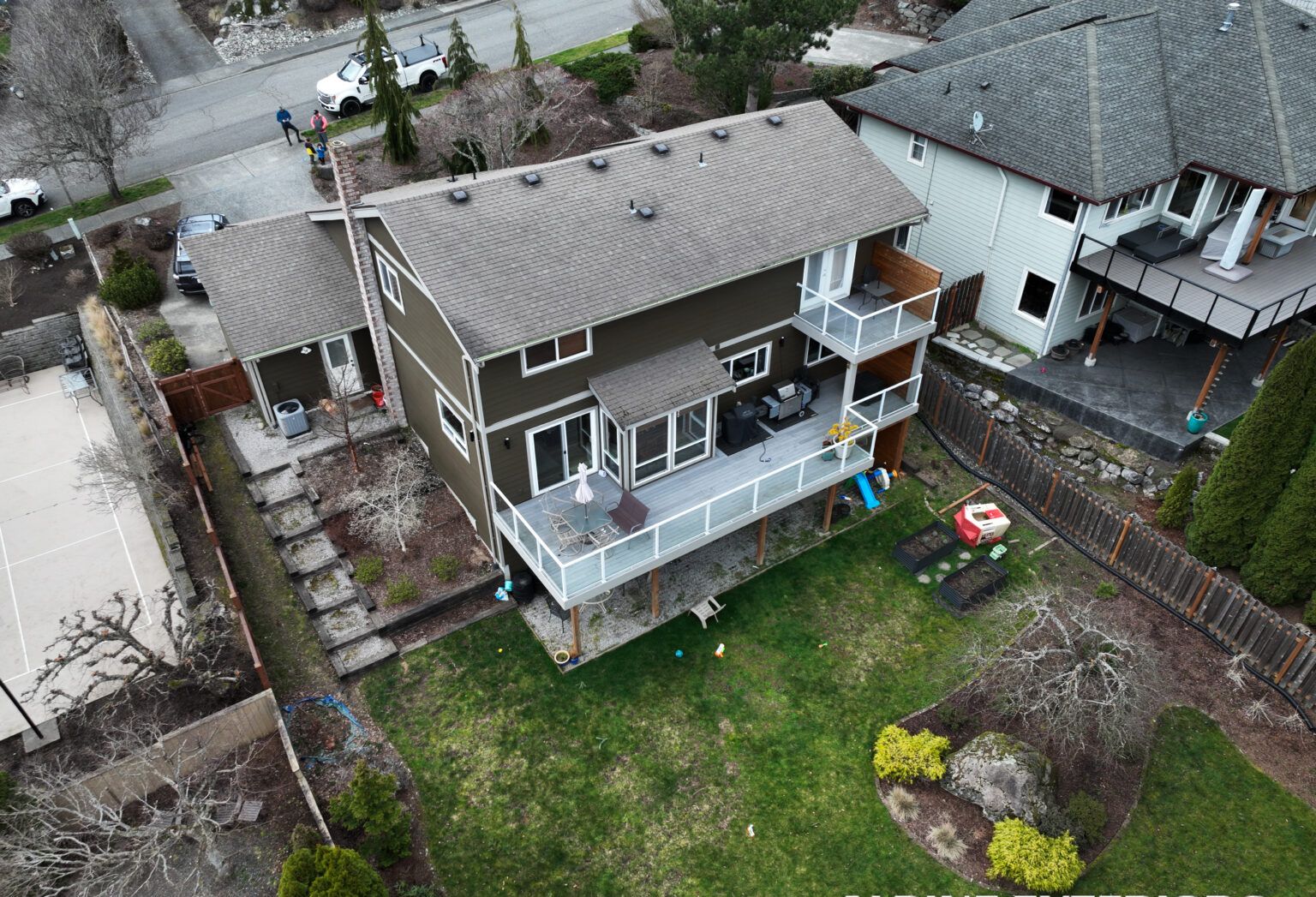
Nooksack sits along its namesake river at the edge of the Mount Baker foothills, which means homes here deal with a mix of conditions found across Whatcom County: long stretches of steady rain, shaded lots that stay damp for days, and colder overnight temperatures than you will find closer to Bellingham Bay. A short walk-around a couple of times a year can catch small siding problems before winter turns them into expensive ones. This checklist is built for that walk-around.
Most of Whatcom County shares the same wet-season math: rain that arrives in October and does not really let up until spring, humidity that lingers under tree cover, and a growing season lush enough to keep moss and algae well fed. Nooksack adds its own wrinkle. Sitting inland along the Nooksack River and closer to the foothills than Bellingham, Ferndale, or the coastal stretch near Blaine and Birch Bay, it tends to see harder overnight cooling and more freeze-thaw cycling in the colder months. Coastal Whatcom County towns deal more with wind-driven rain pushed in off Bellingham Bay and the Strait of Georgia, which drives moisture sideways into wall assemblies; Nooksack's exposure leans more toward freeze-thaw stress on caulking, trim joints, and any siding that is already holding moisture.
None of this means Nooksack siding fails faster than siding anywhere else in the county. It means the failure points are a little different, and worth checking on their own terms. Water that gets behind siding and then freezes expands in the gaps it finds, widening cracks that started small. Wood rot spreads fastest in siding that stays damp for days at a time, which describes a lot of shaded lots along the river corridor. And under the Washington State Energy Code, a wall assembly's moisture barrier and insulation are expected to perform together, so siding that has let water in for a season or two can quietly degrade the insulation behind it, even when the wall still looks fine from the street.
Walk the full perimeter of the house in daylight, ideally after a few dry days so you are not judging wet siding. Bring a flashlight for shaded sides and use a screwdriver handle, not the blade, to press-test any spot that looks suspect.
Siding Surface and Panels
Trim, Corners, and Fascia
Caulking and Sealant Joints
Base of Walls and Ground Clearance
Windows, Doors, and Penetrations
Attic, Interior, and Hidden Signs
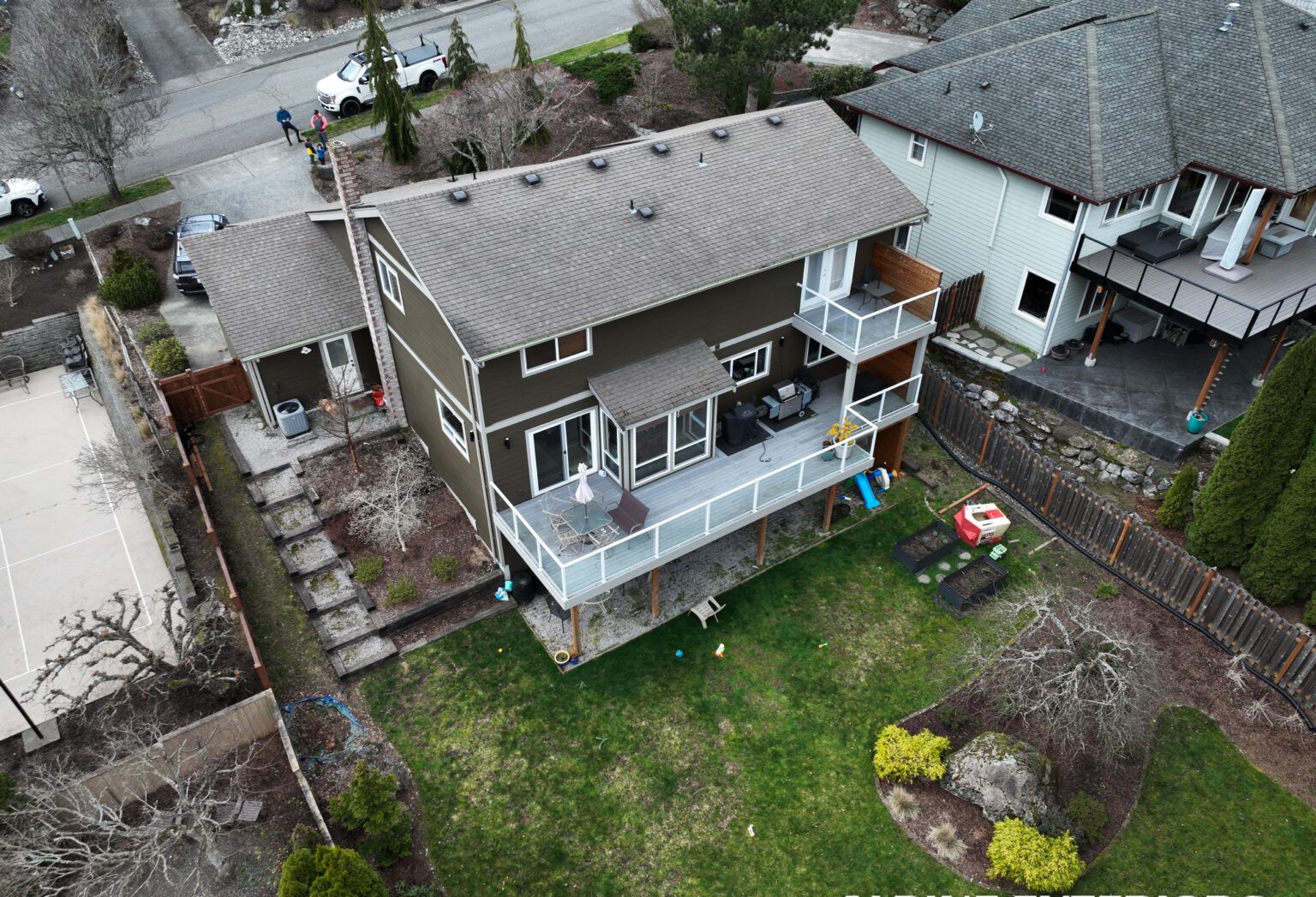
Not every checklist hit means a full re-side. Start by photographing the spot and writing down roughly when you first noticed it — that record is useful whether you end up doing the repair yourself or calling someone in. For small, isolated issues like a single failed caulk joint or a loose piece of trim, a temporary seal with a quality exterior caulk can buy you time until drier weather, but treat it as a stopgap and not a fix, since caulk over a wet or rotten substrate will not hold.
If you find soft or spongy siding, staining that traces down from a specific point such as below a window or at a roofline, or moss that has established enough to grip the surface, resist the urge to just clean it or paint over it. Painting or pressure-washing a panel that is already rotting underneath hides the problem instead of solving it, and pressure washing itself can force water further behind aging siding. The safer move is to open the area up enough to see what is actually happening before deciding between paint, caulk, a spot repair, or a full section replacement.
Keep an eye on timing, too. Issues found in late summer are generally easier and cheaper to address than the same issues found in December, once Whatcom County's wet season is in full swing and contractor schedules fill up.
Some items on this checklist are fine to handle with a caulk gun and an afternoon. Others are worth an experienced set of eyes before you spend money on a fix that does not address the real cause. Call a professional if you notice any of the following:
Alpine Exteriors, which holds Washington contractor license ALPINI751OW, inspects siding across Whatcom County, including Nooksack, Bellingham, Ferndale, Lynden, Blaine, Birch Bay, Sudden Valley, and the islands, and can walk a property to sort out which items are cosmetic and which need structural attention. A licensed inspection is also useful documentation if you are dealing with insurance or planning to sell the home.
Twice a year covers most homes here, once in late summer before the wet season sets in and once in early spring to check how the siding held up over winter. Homes on shaded lots, near the river corridor, or with older wood or hardboard siding benefit from a quicker look after any unusually heavy or prolonged rain event, since that is when small gaps turn into real leaks.
Not necessarily. A light dusting of algae on a shaded north wall is common across Whatcom County and is not automatically a sign of failure. It becomes a concern when moss builds up thick enough to hold moisture against the surface for extended periods, or when it keeps coming back quickly after cleaning, since that pattern usually means the wall is not drying out between rain events and is worth investigating rather than just rewashing.
Yes. The long wet season and shaded lots common around Nooksack and the river corridor mean wood and hardboard siding generally need more frequent painting, caulking, and moisture checks here than the same materials would need in a drier region. That is not a defect in the material, it is the tradeoff for the look, and it is why regular inspection matters more in this climate than in places with shorter, lighter rainy seasons.
It can, over time. The Washington State Energy Code assumes a wall assembly's air and moisture barriers are intact behind the siding. When siding fails and lets water in repeatedly, insulation can lose effectiveness once it has been wet, and gaps that let in rain often let in drafts too. It is rarely dramatic on any single utility bill, but it is one more reason not to leave a known siding problem unaddressed through a full wet season.
A siding checklist is a good starting point, but some of what matters most, including flashing behind trim, the condition of the house wrap, and whether rot has spread past what is visible, is not something you can fully judge from the ground. Alpine Exteriors serves homeowners throughout Whatcom County, from Nooksack and Lynden down through Bellingham, Ferndale, Blaine, Birch Bay, Sudden Valley, and the islands, and offers siding inspections that go beyond a visual walk-around. If your walk-around turned up anything on this list, or it has simply been a while since your siding was looked at by someone other than you, reach out to schedule a look.