
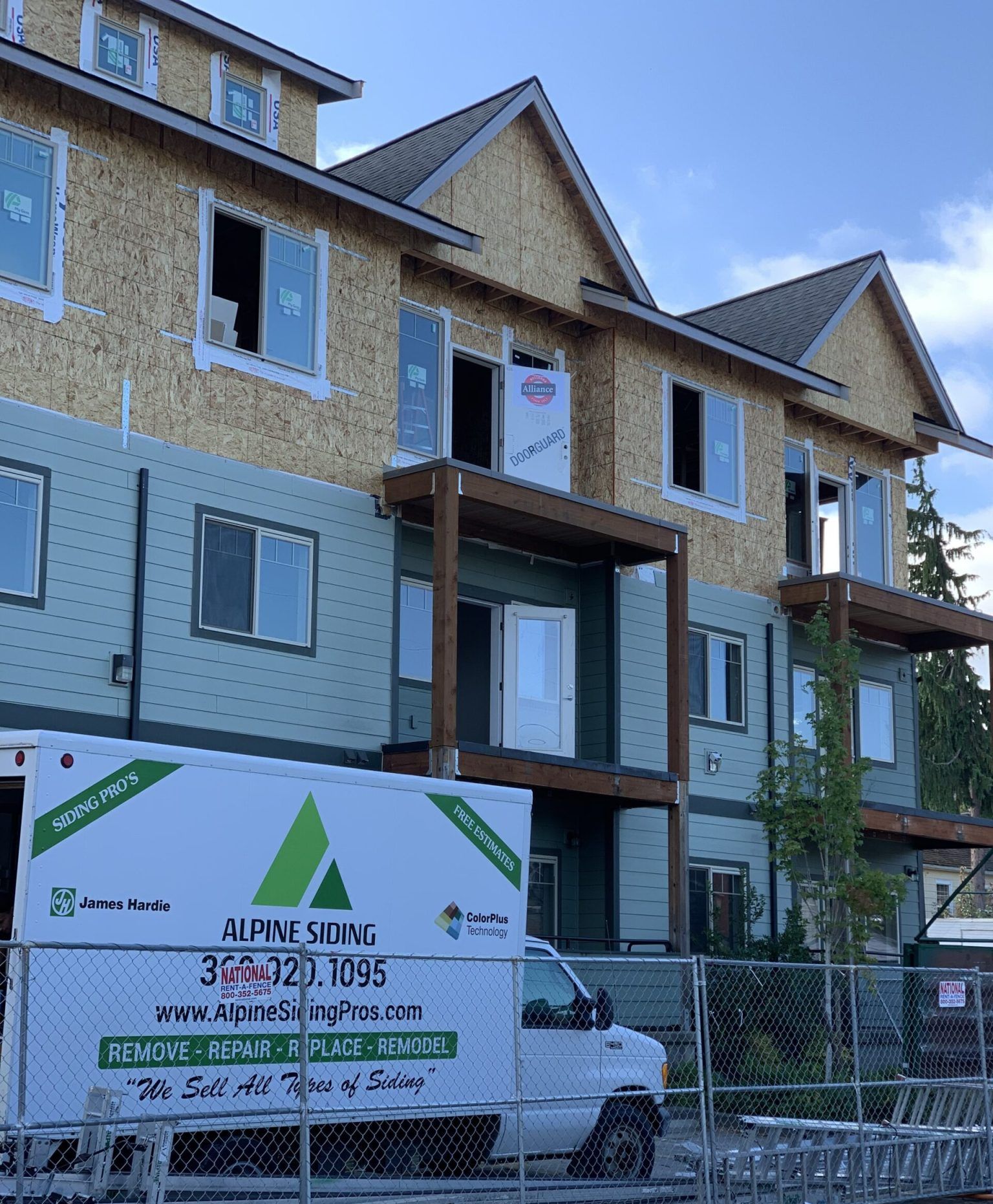
After a windstorm or a hard week of rain moves through Whatcom County, storm damage to siding in Nooksack usually shows up as loose or popped panels, cracked corner boards, and dark water staining creeping out from seams and butt joints. It is rarely one dramatic failure — it is usually several small openings that let water behind the cladding, and the damage that actually costs money shows up weeks later, once that trapped moisture has had time to work into the sheathing.
If you own a home in Nooksack, Everson, Sumas, or anywhere along the Nooksack River valley, it is worth treating every significant storm as a reason to walk the outside of the house, not just the ones that made the news. Small problems caught within a week or two are usually a caulk-and-patch job. The same problem left through a second or third storm cycle often becomes a section of wall that has to be opened up.
Whatcom County storms rarely damage siding through sheer force the way a tropical system would. The damage here is more mechanical and more gradual, and it comes from three things acting together.
Wind-driven rain is the biggest factor. When a storm comes off the Strait of Georgia or Bellingham Bay and pushes inland, rain stops falling straight down and starts hitting the wall at an angle — sometimes nearly sideways during a strong southwesterly blow. That sideways force drives water up under laps, into butt joints, around window and door trim, and into any nail hole or caulk gap that has opened up from age or a prior repair. Siding is designed to shed water moving downward; it is not designed to have water pushed up and into it, which is exactly what a sustained wind-driven rain event does.
Falling debris is the second factor, and it matters more in Nooksack than it does in denser parts of Bellingham. Many Nooksack properties sit on larger, tree-lined lots along the river corridor or back up to farmland windbreaks of alder, cottonwood, and fir. In a strong wind event those trees drop limbs, and a falling limb can crack a fiber cement panel, punch a hole through vinyl, or tear a piece of cedar lap siding loose from its fasteners. The impact point is obvious. What is not obvious is the secondary damage — the crack or gap that limb left behind keeps taking on water long after the storm has passed and the branch has been cleared away.
Freeze-thaw cycling is the third factor, and it is easy to overlook because it does not happen during the storm itself. Nooksack sits closer to the foothills than coastal Bellingham, and it sees more frequent hard frosts and the occasional snow event in a way that low-elevation, bay-moderated neighborhoods do not. When wind-driven rain has already pushed moisture behind a panel or into a seam, and temperatures then drop below freezing, that trapped water expands. Over a few freeze-thaw cycles it can pop fasteners, split fiber cement at a cut edge, or delaminate the outer layer of engineered wood siding. This is why a house can look fine right after a storm and then show cracking or bulging siding two or three weeks later once the region has had a cold snap.
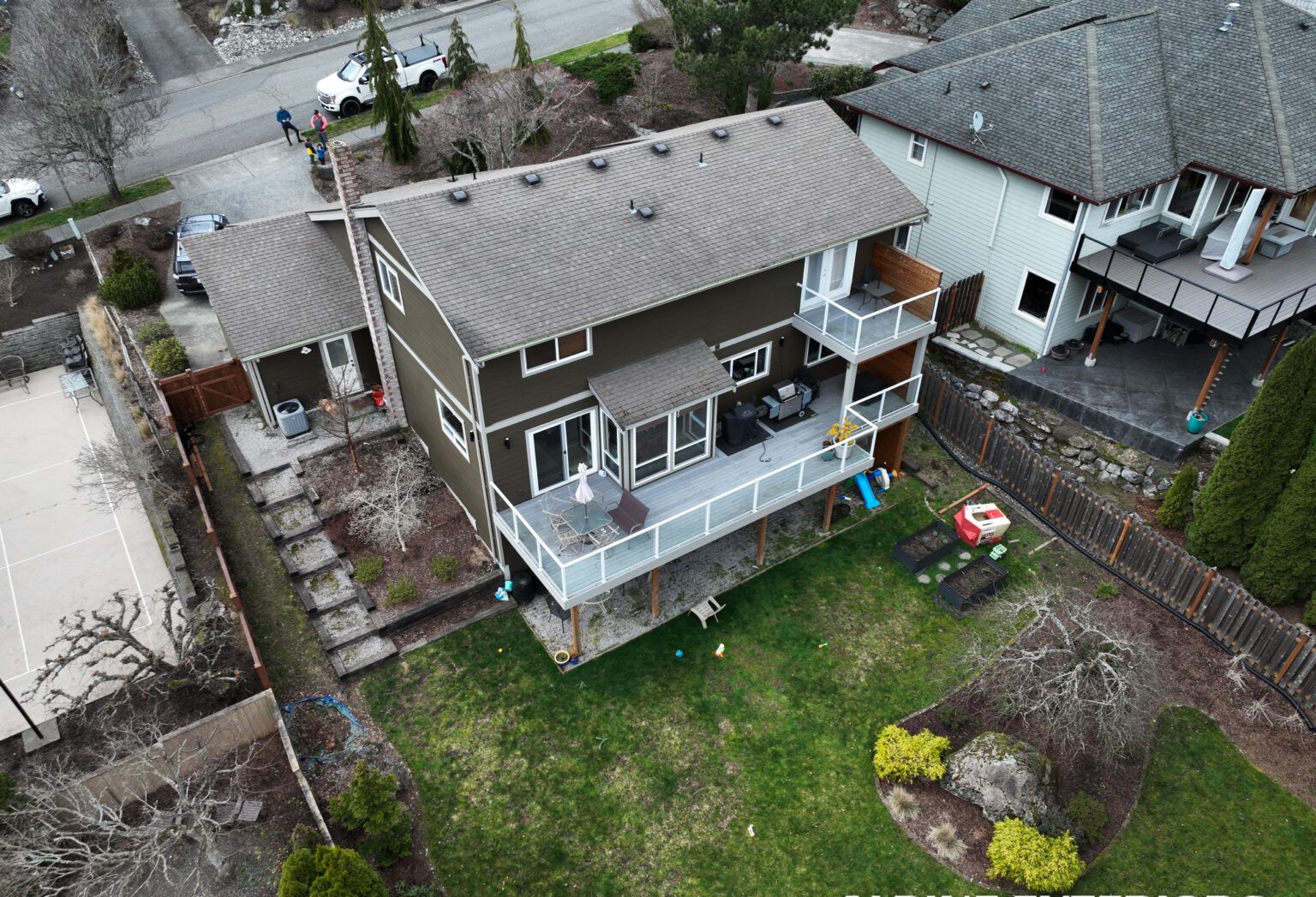
Whatcom County's siding problems are shaped by a wet, mild, but genuinely stormy climate — not by hurricanes, and it is worth being specific about that so homeowners are not chasing the wrong risks.
The Washington State Energy Code also shapes what "correct" siding replacement looks like here. When a wall's siding is removed down to the sheathing, current code requires a continuous weather-resistive barrier and, depending on the wall assembly, continuous insulation to meet the prescriptive or performance path for the climate zone. A storm repair that only replaces the visible panel without addressing the underlying barrier is not meeting the same standard as a full re-side done to current code — that distinction matters when you are deciding between a patch and a larger repair.
The single most useful habit is walking the exterior of the house after every storm that produced sustained wind or heavy rain, not waiting for a specific "damage day." Bring a phone camera and a flashlight, and give yourself fifteen minutes.
Photograph anything you find, and note the date of the storm that likely caused it. That record matters twice: it helps a contractor diagnose whether you are looking at fresh storm damage or older rot that a storm simply exposed, and it is the documentation an insurance adjuster will ask for.
Resist the urge to just caulk over a gap and call it done. A bead of caulk over an opening that already let water behind the siding traps that moisture in rather than keeping it out. If there is any staining, softness, or discoloration around the damage, the repair needs to address what is underneath, not just what is visible on the surface.
On the insurance side, most Washington homeowner policies treat sudden, identifiable damage — a tree limb through a panel, wind tearing siding loose — differently than gradual damage from moss, rot, or long-term neglect. The first category is usually covered; the second usually is not, because insurers generally exclude wear, deterioration, and lack of maintenance. That is another reason to document damage right after a storm: it is much easier to make the case that damage was sudden when you have photos and a specific storm date attached to it, rather than discovering a soft wall a year later with no clear timeline. Contact your insurer promptly, ask what documentation they require, and get a written estimate from a licensed contractor before repairs begin — most adjusters want that estimate as part of the claim, and starting repairs before the claim is documented can complicate things.
Depending on the scope, replacing storm-damaged siding in Nooksack and unincorporated Whatcom County may require a building permit, particularly if the sheathing or structural framing is exposed and being repaired. A contractor familiar with local permitting can tell you quickly whether your specific repair crosses that threshold. Alpine Exteriors has handled storm repairs across Whatcom County, from single-panel patches to full wall re-sides, and can walk you through what a given repair actually requires before any work starts.
Usually, if the damage is sudden and identifiable — a tree limb puncturing a panel, wind tearing siding loose during a specific storm. Most policies exclude damage from gradual causes like moss, algae, or long-term rot, since insurers generally treat those as maintenance issues rather than storm losses. The safest approach is to document damage with photos and a storm date as soon as you find it, then call your insurer to ask what they need before repairs start.
Fresh storm damage tends to have a clear point of impact — a crack, hole, or torn panel that lines up with a specific event, with the surrounding material still sound. Ongoing rot usually shows up as soft, discolored, or crumbling material with no obvious impact point, often near the bottom of the wall, at butt joints, or under thick moss growth. A storm can also expose rot that was already there by knocking loose a panel that had been quietly failing underneath, which is why it is worth having a contractor look at anything questionable rather than assuming a single cause.
It depends on the scope. Replacing a single damaged panel or patching a small section typically does not require a permit, but repairs that expose the sheathing or structural framing, or that involve a significant portion of a wall, often do. Local permitting requirements vary by jurisdiction within Whatcom County, so it is worth confirming with the local building department or a contractor who works in the area before starting anything beyond a minor patch.
Given how much of the year Whatcom County spends wet, waiting is rarely a neutral choice. A gap or crack that lets water behind the siding after one storm will keep taking on water through every storm that follows, and a freeze-thaw cycle can turn a minor crack into a larger one within weeks. Minor cosmetic damage with no moisture intrusion can reasonably wait for a convenient repair window, but anything with staining, softness, or an open gap should be addressed before the next significant rain event, not left until spring.
If a recent storm has left your Nooksack home with cracked, loose, or water-stained siding, it is worth getting a second set of eyes on it before the next system rolls through. Alpine Exteriors is a licensed Washington contractor (ALPINI751OW) serving Nooksack and the rest of Whatcom County, from Bellingham and Ferndale to Lynden, Blaine, Birch Bay, Sudden Valley, and the islands. We can walk your exterior, tell you honestly whether you are looking at a straightforward patch or a larger repair, and put a written estimate together that you can use for your own records or for an insurance claim. Reach out to schedule an inspection and get a clear read on where your siding actually stands.