
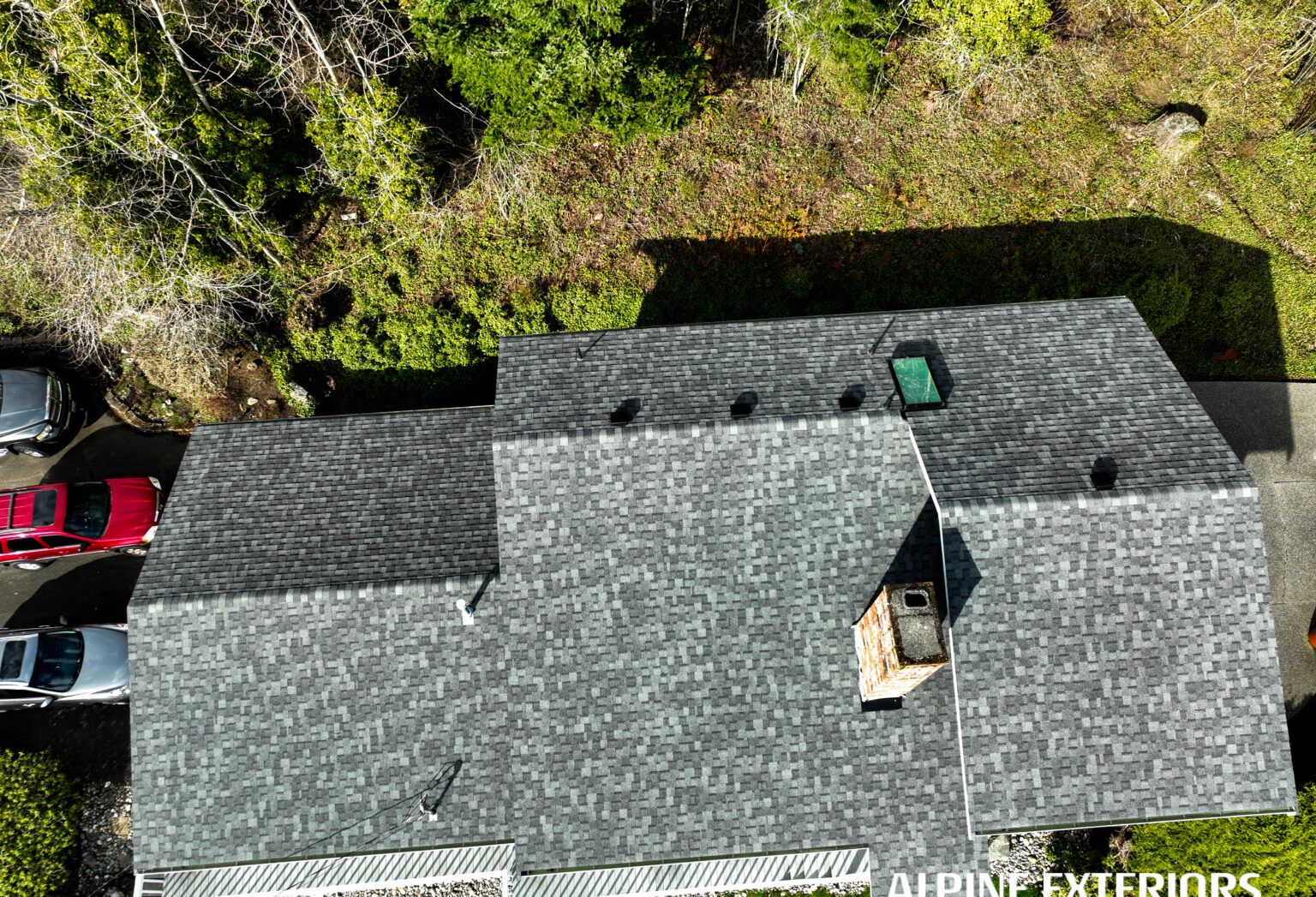
On the Semiahmoo peninsula, siding has to be installed to the manufacturer's tested fastening schedule for the wind exposure category the county assigns your lot, not just nailed up by feel. Because Semiahmoo sits on open water facing Semiahmoo Bay and the Strait of Georgia, most homes there fall into a higher wind exposure category than a similar house a few miles inland in Bellingham, which changes nail spacing, starter strip attachment, and in some cases which siding products are even allowed.
Washington doesn't run a statewide product-approval list the way some coastal states do. Instead, siding installed in Whatcom County has to comply with the Washington State Building Code (the state's adoption of the International Residential Code with Washington amendments) and, for the building envelope's energy performance, the Washington State Energy Code. Wind design itself is governed by the wind provisions the IRC pulls from ASCE 7, which assigns your property a basic wind speed and an exposure category based on terrain and how open the surrounding land or water is. A lot on the Semiahmoo spit, with unobstructed fetch across the bay, is typically going to land in Exposure C or D rather than the more sheltered Exposure B that a lot on a tree-lined Bellingham street usually gets. That exposure category is what an installer or engineer uses to look up the correct fastening pattern in the siding manufacturer's ICC-ES evaluation report or ASTM D3679 test data for vinyl, or the equivalent installation instructions for fiber cement, engineered wood, or metal panel siding.
In practice this means three things change on a higher-exposure lot: nail or screw spacing on studs tightens up (often from 16 inches down to 12 inches or less on vinyl and lap siding), fasteners are driven to the tighter end of the manufacturer's tolerance rather than left loose for "thermal movement" the way older installers were taught, and starter strips, corner posts, and J-channel get positively fastened rather than just interlocked. Manufacturers publish separate fastening tables specifically for high-wind and coastal exposure, and those tables are what a Whatcom County plan reviewer or inspector will reference if wind resistance ever becomes a question, whether that's at permit review for a full re-side or during a field inspection after a windstorm claim.
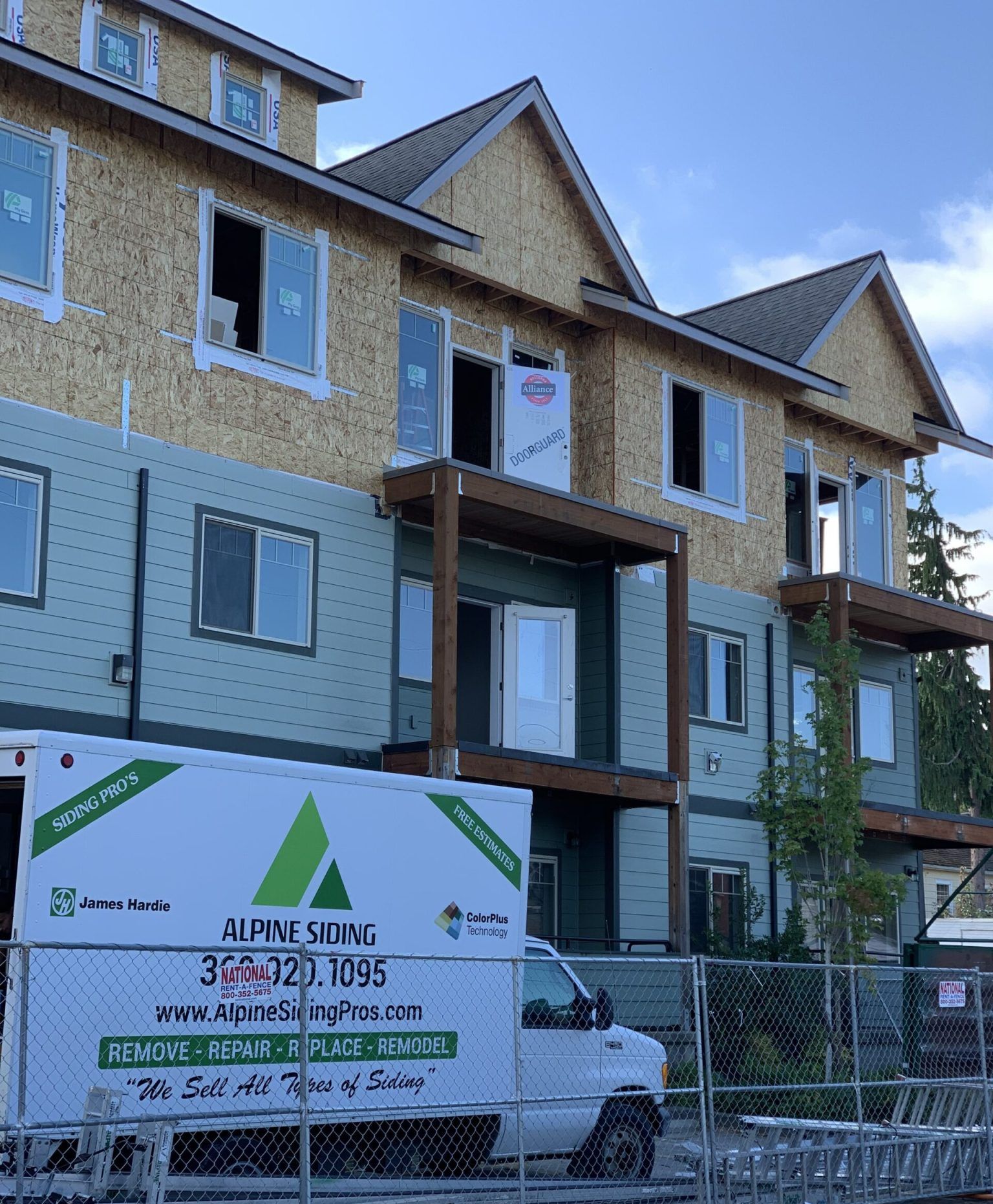
Semiahmoo isn't just windy — it's wind combined with rain, and that combination is what actually damages siding here over time. Storms tracking in off the Strait of Georgia push wind-driven rain sideways into wall assemblies, which means the water-resistive barrier and flashing details behind the siding matter as much as the siding itself. A perfectly fastened panel over a poorly lapped house wrap will still let water track in around a window head or a butt joint during a January southwesterly blow. We see this pattern repeatedly on homes near the water: the siding looks intact, but rot has already started in the sheathing behind it because the drainage plane was compromised years earlier.
Add to that the near-constant moisture Whatcom County holds for much of the year, which feeds moss and algae growth on north-facing walls and anywhere siding sits close to landscaping or tree cover. That growth isn't just cosmetic — trapped organic matter holds water against the siding surface and accelerates wood rot on cedar and engineered wood products, and it can degrade caulk and sealant joints faster than the manufacturer's warranty assumes. Homes further inland toward the Mt. Baker foothills deal with a different regional stress: freeze-thaw cycling, where moisture that gets into a seam or a crack expands when it freezes overnight and gradually works joints loose. Semiahmoo itself, being right on the water, rarely sees hard freezes, so wind-driven rain and sustained dampness are the bigger design drivers there rather than freeze-thaw. None of this is hurricane country, and siding here doesn't need hurricane-rated impact ratings or the wind-borne debris protections you'd see in a Gulf Coast code — but it does need an installation that respects a genuinely wet, genuinely windy marine exposure, which is a different problem than either extreme.
Start by finding out what wind exposure category actually applies to your specific lot rather than assuming — a licensed contractor pulling a permit through Whatcom County will determine this as part of the plan review, and it's worth asking to see it in writing rather than taking it on faith. From there, confirm in writing which fastening schedule the installer is using and ask them to point to the manufacturer's documentation for it; a reputable installer won't hesitate to show you the table. Alpine Exteriors builds every Semiahmoo-area bid around the manufacturer's high-exposure fastening specification rather than the standard-exposure default, because using the wrong table is one of the most common ways siding fails in a windstorm even when the product itself was rated for the job.
Beyond fastening, pay attention to what's underneath. If you're re-siding rather than doing new construction, ask your contractor to inspect the sheathing and water-resistive barrier once the old siding is off rather than sheeting over questionable material — on a water-facing lot, this is where problems actually originate. Budget for it: opening up a wall and finding rot behind it is common enough on older Whatcom County coastal homes that it shouldn't come as a shock, and a contractor who tells you it's a possibility before starting is being honest with you, not upselling you. Also ask how the energy code factors in — the Washington State Energy Code sets continuous insulation and air-sealing requirements that interact with how siding, house wrap, and rigid foam are layered, so re-siding is often a chance to correct an underinsulated wall at the same time you fix a wind or moisture problem, rather than two separate projects later.
Finally, verify licensing. Washington requires a state contractor license to pull residential siding permits, and Alpine Exteriors holds Washington contractor license ALPINI751OW. Ask any contractor bidding your Semiahmoo project for their license number and confirm it's active before you sign anything — an unlicensed or lapsed installer working on a wind-exposed coastal home is a real liability if something fails later and there's a warranty or insurance question.
Not automatically for a straightforward re-side using a manufacturer's published high-exposure fastening schedule, but it depends on the specific product, the height and shape of the wall, and what the county plan reviewer asks for at permit submittal; some larger or unusual installations do get flagged for engineering review, so it's worth asking your contractor early rather than assuming either way.
Inspectors generally check that the water-resistive barrier is properly lapped and sealed at penetrations, that flashing at windows, doors, and butt joints directs water outward rather than into the wall, and that fastener type, spacing, and depth match the manufacturer's installation instructions for the assigned wind exposure — they're not just checking that the siding looks finished.
Vinyl can perform well on a coastal Whatcom County lot as long as it's installed to the manufacturer's high-wind fastening table with the correct nail spacing and hem engagement, but it will underperform if it's installed loosely the way it might be in a sheltered inland yard, so the product matters less than whether the installer actually adjusted the fastening for your specific exposure.
A visual check for cracked caulk, loose panels, and moss buildup once a year is reasonable for most homeowners, but given how much wind-driven rain this stretch of coastline gets, having a contractor pull a section near a known trouble spot — a window head, an outside corner, a low wall near grade — every five to seven years is a worthwhile way to catch rot before it spreads.
If you own a home on the Semiahmoo peninsula or elsewhere along Whatcom County's shoreline, it's worth getting a siding assessment from a contractor who will actually check your lot's wind exposure and what's happening behind the current siding before quoting a number. Alpine Exteriors is licensed in Washington (ALPINI751OW) and works throughout Whatcom County, including Semiahmoo, Blaine, Birch Bay, Bellingham, Ferndale, Lynden, Sudden Valley, and the islands. Reach out for an on-site evaluation and a written estimate that spells out the fastening schedule and moisture-barrier work involved, not just a per-square-foot price.