
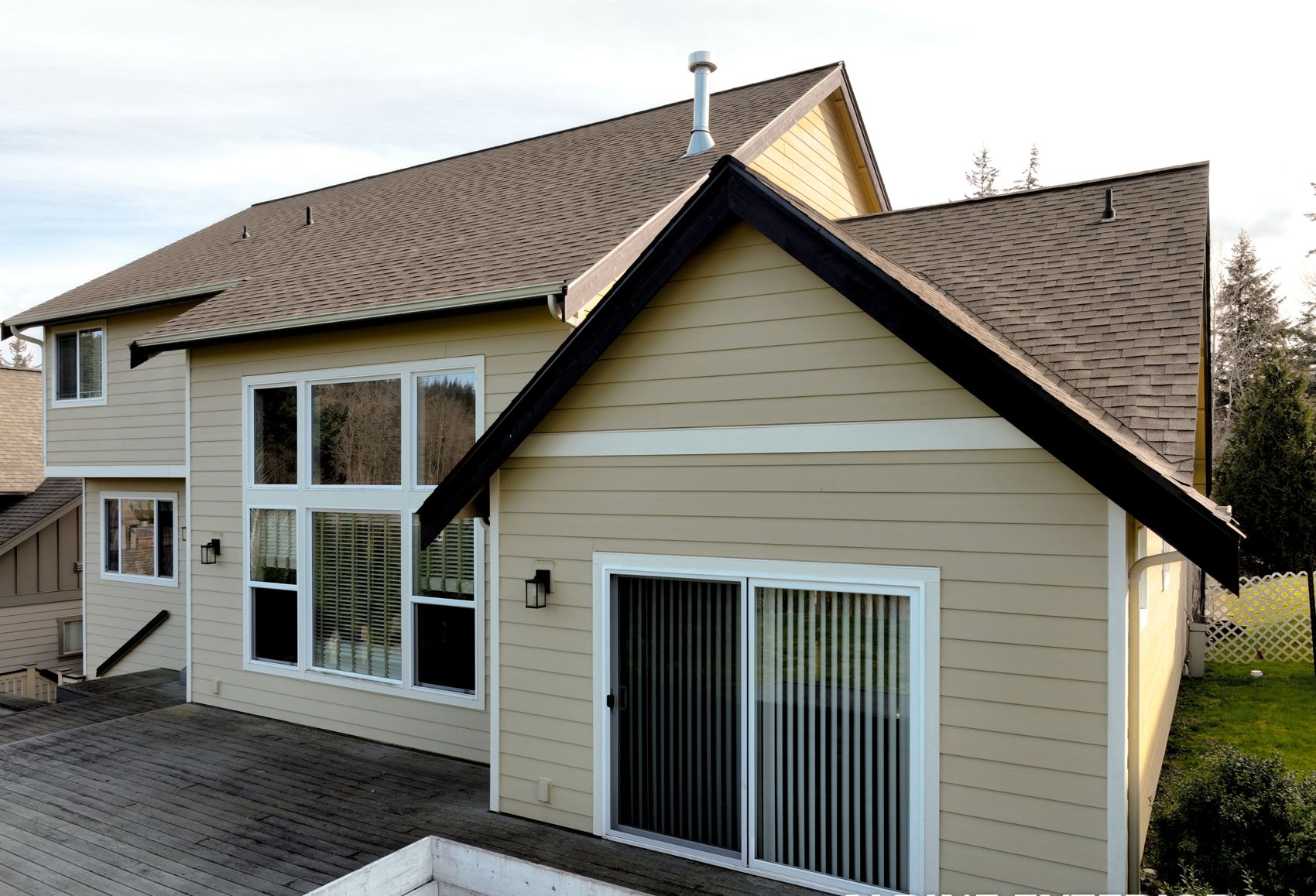
Sudden Valley sits differently than most of Whatcom County's siding-worn housing stock. It isn't a waterfront exposure like Blaine or Birch Bay, and it isn't the open, wind-scoured lots you find outside Lynden. It's a lake community wrapped in second-growth fir and cedar, with roads that climb from the shoreline of Lake Whatcom up into genuine foothill terrain. That combination of heavy canopy shade and elevation change creates its own particular pattern of siding wear, and it's worth understanding before you walk your own exterior with this checklist in hand.
Whatcom County gets a long, wet season most years, and Sudden Valley's tree cover makes that season last longer on the siding itself. A house on an open lot in Ferndale can dry out within a day or two of a storm front passing through. A house tucked under mature fir on a north-facing slope in Sudden Valley may stay damp for a week at a time, because the canopy blocks both sun and wind from reaching the wall. That slow-drying cycle is the single biggest driver of the two problems homeowners here run into most: moss and algae colonizing the siding surface, and wood rot developing quietly behind or underneath panels long before it shows on the outside.
The foothill elevation adds a second, smaller factor. Nighttime temperatures in the higher parts of Sudden Valley routinely run a few degrees cooler than in downtown Bellingham, which means the community sees more freeze-thaw cycling over a winter than the lowland parts of the county. That cycling doesn't crack siding on its own, but it does work on anything that's already compromised - a hairline gap in caulk, a small split at a butt joint - and widen it a little more with every freeze. Sudden Valley doesn't take the direct, sustained wind-driven rain that comes off Bellingham Bay and the Strait of Georgia the way waterfront homes in Blaine do, but gusts still funnel down the lake basin, and homes with west- or southwest-facing gables catch more of that moisture than the rest of the house. None of this is severe weather - there's no storm season to brace for - it's a slow, patient kind of wear, which is exactly why a periodic visual inspection catches problems while they're still cheap to fix.
Roofline, gutters, and upper wall panels
Siding field, seams, and caulk lines
Trim, corner boards, and fasteners
Moss, algae, and shaded north and east walls
Foundation line, ground clearance, and crawlspace vents
Windows, doors, and other penetrations
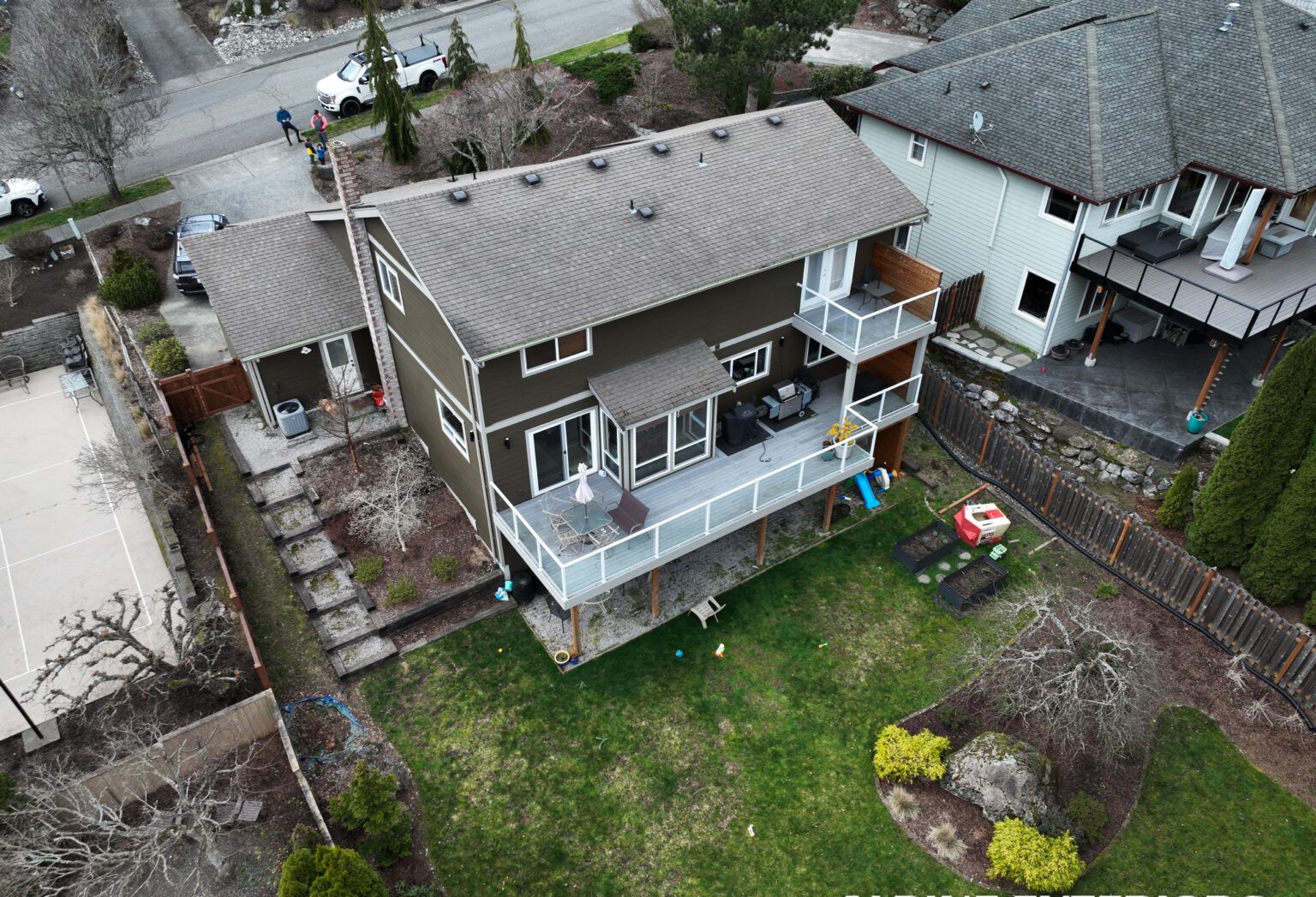
Not every failed item on this list means a major repair. Surface moss and light algae film on a shaded wall can often be handled with a soft wash - a low-pressure rinse with a cleaning solution meant for siding - rather than a pressure washer. Pressure washing feels like the faster fix, but on lap siding it can force water up under the panels and strip paint or finish, which trades a cosmetic problem for a moisture problem. If you go this route, work from the bottom up and rinse from the top down, and avoid pressure washing fiber-cement or older wood siding altogether.
Cracked or missing caulk at seams, trim, and penetrations is a reasonable homeowner fix as long as the panel underneath still feels solid when pressed. Remove the old caulk fully, let the area dry, and use a quality exterior-grade sealant rated for the Pacific Northwest's wet cycle rather than the cheapest tube on the shelf. If the siding underneath feels soft or spongy once the old caulk is out, stop there - caulking over damp or rotten material just traps the moisture in.
Soft spots, popped fasteners, or visible bowing in the siding field are a different category. These usually mean the sheathing behind the panel has already taken on water, and a surface patch won't address what's happening underneath. The same goes for ground clearance problems - the fix there is regrading or pulling mulch and plantings back from the foundation, not trimming the bottom of the siding to compensate, which just invites the next round of splash-back.
Bring in a licensed contractor when more than one or two panels fail the pressure test, when soft spots seem to be spreading rather than isolated, or when you can see or feel evidence of rot from the inside - discoloration or a musty smell in an attic or crawlspace near an exterior wall. Steep, forested lots around Sudden Valley also mean some inspections and repairs genuinely require working at height on a slope, which isn't worth the fall risk for most homeowners to do themselves.
It's also worth a professional opinion before a full re-side, because tearing off existing siding down to the sheathing brings the project under current Washington State Energy Code requirements for wall insulation and air sealing - not just a like-for-like material swap. Alpine Exteriors, licensed in Washington under contractor number ALPINI751OW, evaluates the whole wall assembly during an inspection rather than just what's visible from the driveway, which matters on homes where moisture has been working behind the siding out of sight for a season or two.
Twice a year - once in spring after the wettest months and once in fall before the next wet season starts - is a reasonable baseline for most homes here. Lots with heavy tree canopy or north-facing walls that stay damp longer benefit from an extra look partway through the winter, since that's when moss growth and caulk failures tend to show up first.
You can, but it carries real risk on lap siding, older paint finishes, and fiber-cement products - high pressure can drive water behind panels or strip the surface finish, turning a cosmetic problem into a moisture one. A soft wash with a proper cleaning solution and low pressure is the safer approach for most Sudden Valley homes, and it's worth testing on a small, hidden section first.
It can, depending on scope. A cosmetic repair or partial panel replacement generally doesn't trigger code review, but a full re-side that removes siding down to the sheathing typically needs to meet current Washington State Energy Code requirements for wall insulation and air sealing at the time of permitting. That's a scope question worth raising with your contractor before work starts, not after.
The underlying climate is the same countywide, but the way it shows up differs by lot. Waterfront areas like Blaine and Birch Bay see more direct wind-driven rain forcing water into seams and upper walls facing the water. Sudden Valley's forested, shaded lots see less of that direct wind exposure but far more moss, algae, and slow-drying moisture from tree cover, which is why the two areas tend to fail in different places first.
A checklist like this one catches a lot, but it can't tell you what's happening behind a panel that looks fine from the ground. If anything on this list gave you pause - a soft spot, a persistent moss mat, a gap you can't quite explain - Alpine Exteriors serves Sudden Valley and the rest of Whatcom County, from Bellingham and Ferndale out to Lynden, Blaine, Birch Bay, and the islands, and can walk your exterior with you to sort out what's cosmetic from what needs attention. Reach out to schedule a straightforward inspection before small issues have another wet season to work with.