
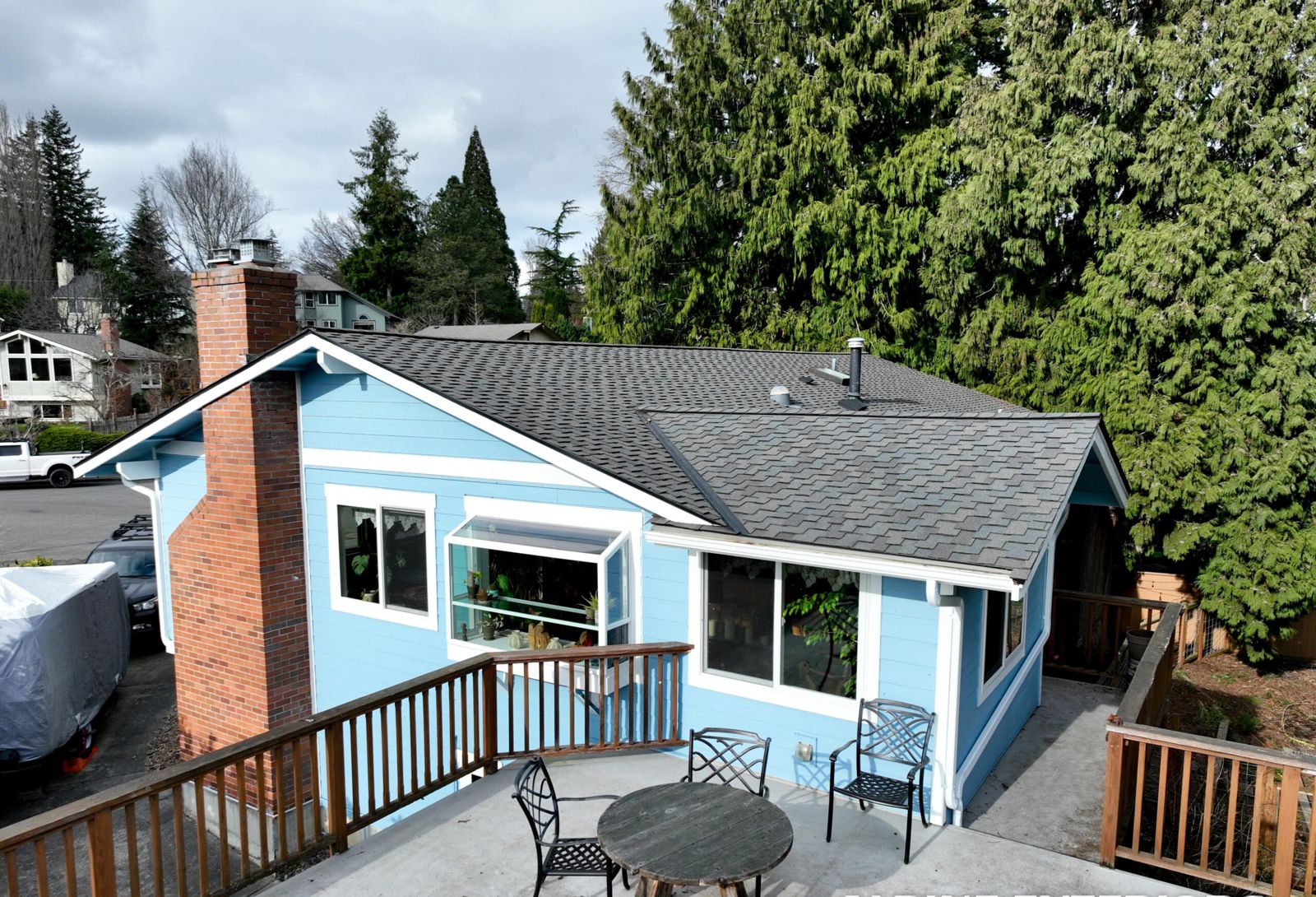
North Bellingham sits close enough to Bellingham Bay that homes here take a steady beating from wind-driven rain, salt-tinged air off the Strait of Georgia, and long stretches of gray, damp weather that keep siding wet for days at a time. That combination is why older wood and even some early fiber cement installations in neighborhoods like Birchwood, Cordata, and the streets near Bellingham Technical College start showing rot, delamination, or moss staining well before their expected lifespan. A siding replacement is a bigger project than most homeowners expect, but it isn't mysterious, and knowing the sequence ahead of time makes the six or so weeks it typically takes far less stressful.
For a typical single-family home in this area, plan on roughly one to two weeks from signed contract to a scheduled start date if materials are in stock, though popular fiber cement lines can push that closer to four to eight weeks during busy spring and summer seasons. The physical tear-off and installation itself usually runs five to ten working days for an average-size home, longer if the crew finds rotted sheathing underneath the old siding, which is common on north- and west-facing walls that catch the worst of the weather. Weather delays are a real factor here — a run of heavy rain can pause work for safety and quality reasons, since siding and especially house wrap should not be installed over saturated framing. A contractor who tells you an exact date months in advance without caveats about weather is not being fully honest about how projects actually go in this climate.
Most full siding replacements in the City of Bellingham and unincorporated Whatcom County require a building permit, particularly when the work includes removing sheathing down to the studs, adding or upgrading house wrap, or changing insulation values, since those changes touch requirements under the Washington State Energy Code. A licensed contractor should pull this permit and schedule the required inspections rather than leaving it to the homeowner. Skipping the permit might save a few days up front, but it creates real problems later — unpermitted exterior work can complicate a home sale, an insurance claim, or a future remodel, and Whatcom County has gotten more consistent about checking permit history.
If your home is in a development with a homeowners association — several of the newer subdivisions off Northwest Avenue and around Cordata fall into this category — check the covenants before ordering material. Many HOAs restrict siding colors, textures, or materials, and some require an architectural review submission with a turnaround time of two to four weeks. Submitting that paperwork early, in parallel with permit review, keeps it from becoming the item that delays your start date.
Material lead times deserve honest attention. Fiber cement lap siding and panel products are often stocked regionally and can arrive within a couple of weeks, but specialty colors, board-and-batten profiles, or certain trim packages may be special-order items running six to ten weeks. Vinyl siding in common colors tends to move faster, while custom trim work in cedar can be delayed by regional lumber supply. Ask your estimator for the manufacturer's current lead time on your specific product and color before you commit to a start date, and get it in writing — verbal estimates on lead times are often optimistic.

Every siding job follows roughly the same sequence, though the details shift depending on what's underneath your current siding.
Alpine Exteriors sequences these steps elevation by elevation on most homes, which limits how much of the house is open to weather at any given time — a meaningful advantage during a Whatcom County fall or winter install.
A little preparation on your end keeps the project moving and avoids surprises. Move or relocate anything within about ten feet of the house exterior — patio furniture, potted plants, grills, and hanging décor — since scaffolding, ladders, and debris will occupy that space for the duration. Trim back shrubs and vines that touch the siding; not only do they need clearance for the crew, but plant growth against siding is itself a contributor to trapped moisture and moss growth in this climate.
Inside the house, expect noise and vibration during tear-off and nailing, particularly on walls shared with bedrooms or home offices. Remove wall-mounted items like picture frames and shelving on exterior walls, since impact from the outside can occasionally jar them loose. If you have exterior-mounted fixtures — light fixtures, house numbers, security cameras, or a doorbell — flag them for the crew in advance so they can be removed and reinstalled rather than worked around.
Pets and small children should be kept away from the work zone entirely during active hours; job sites involve nail guns, exposed fasteners, and debris that isn't safe underfoot. Finally, expect some interruption to exterior electrical outlets or hose bibs if they're being relocated or reflashed, and confirm with your project manager which days those might be briefly inaccessible.
Once the siding, trim, and finish work are complete, the permitted portions of the job require a final inspection from the local building department before the permit can close. Your contractor should schedule this and be present for it — it isn't something the homeowner needs to arrange independently.
Daily cleanup during the job should already keep debris, old siding, and packaging contained, but the final cleanup is more thorough: magnetic sweeps for stray nails and screws across the yard and driveway, removal of all scrap material and packaging, and a check that landscaping, gutters, and downspouts weren't left displaced. Ask specifically whether debris disposal and dump fees are included in your contract, since this is occasionally billed separately.
The final walkthrough is your chance to check the work in daylight, ideally with your project manager present. Look closely at caulking lines, corner trim, and any areas around windows and doors for gaps. Check that all fixtures, house numbers, and mounted items were reinstalled correctly. This is also the time to raise any concerns before the crew demobilizes — a good contractor will address punch-list items promptly rather than treating the walkthrough as a formality.
New siding in this region still needs periodic attention. Moss and algae growth on north-facing walls and anywhere shaded by trees is common in Whatcom County's damp climate regardless of material, and a gentle annual rinse — never a high-pressure wash aimed directly at seams or under laps — helps keep it from taking hold. Fiber cement holds up well against moisture but still benefits from repainting on the manufacturer's recommended cycle, typically every seven to fifteen years depending on the finish. Vinyl requires less maintenance but can become brittle with age and is worth a visual check after any significant windstorm off the bay.
Warranty coverage on a siding replacement typically has two layers: the manufacturer's product warranty, which covers material defects and varies by product line, and the contractor's workmanship warranty, which covers installation quality. Get both in writing, understand what voids each one — improper pressure washing is a common exclusion — and keep your documentation with your home records. Alpine Exteriors, WA contractor license ALPINI751OW, provides workmanship warranty documentation at project close and can walk you through what's covered under the specific manufacturer's terms for the product installed on your home.
For an average single-family home in North Bellingham, active work typically runs five to ten working days once the crew is on site, though homes with extensive rotted sheathing, additional trim detail, or multiple elevations facing away from good weather windows can run longer. Rain delays are common enough in this climate that most contractors build a few flex days into the schedule rather than promising a fixed end date.
It's common, though not universal. Homes older than fifteen to twenty years, and especially those with wood siding or older lap siding on north- and west-facing walls exposed to wind-driven rain off the bay, frequently have some degree of sheathing or framing damage discovered during tear-off. A trustworthy contractor documents this with photos, explains the scope and cost before proceeding, and doesn't treat it as a routine upcharge added without your sign-off.
In most cases, yes, particularly for full replacements that involve removing sheathing, replacing house wrap, or making changes relevant to the Washington State Energy Code's building envelope requirements. A licensed contractor should handle the permit application and inspection scheduling directly rather than leaving that step to the homeowner.
Yes, but with more scheduling flexibility required. Crews can work through fall and winter, but active installation should pause during heavy or sustained rain since house wrap and siding should not go over saturated sheathing. Homeowners scheduling a project for late fall through early spring should expect the timeline to have more built-in weather contingency than a summer project would.
If your siding is showing moss staining, soft spots, or visible gaps after years of wind-driven rain and damp winters, a straightforward on-site evaluation is the best next step. Alpine Exteriors serves North Bellingham and the surrounding Whatcom County communities, including Ferndale, Lynden, Blaine, Birch Bay, and Sudden Valley, and can walk your home's exterior with you, explain what's driving the deterioration, and lay out a realistic scope, timeline, and cost range before any commitment is made. Reach out to schedule a site visit and get a written estimate specific to your home.