
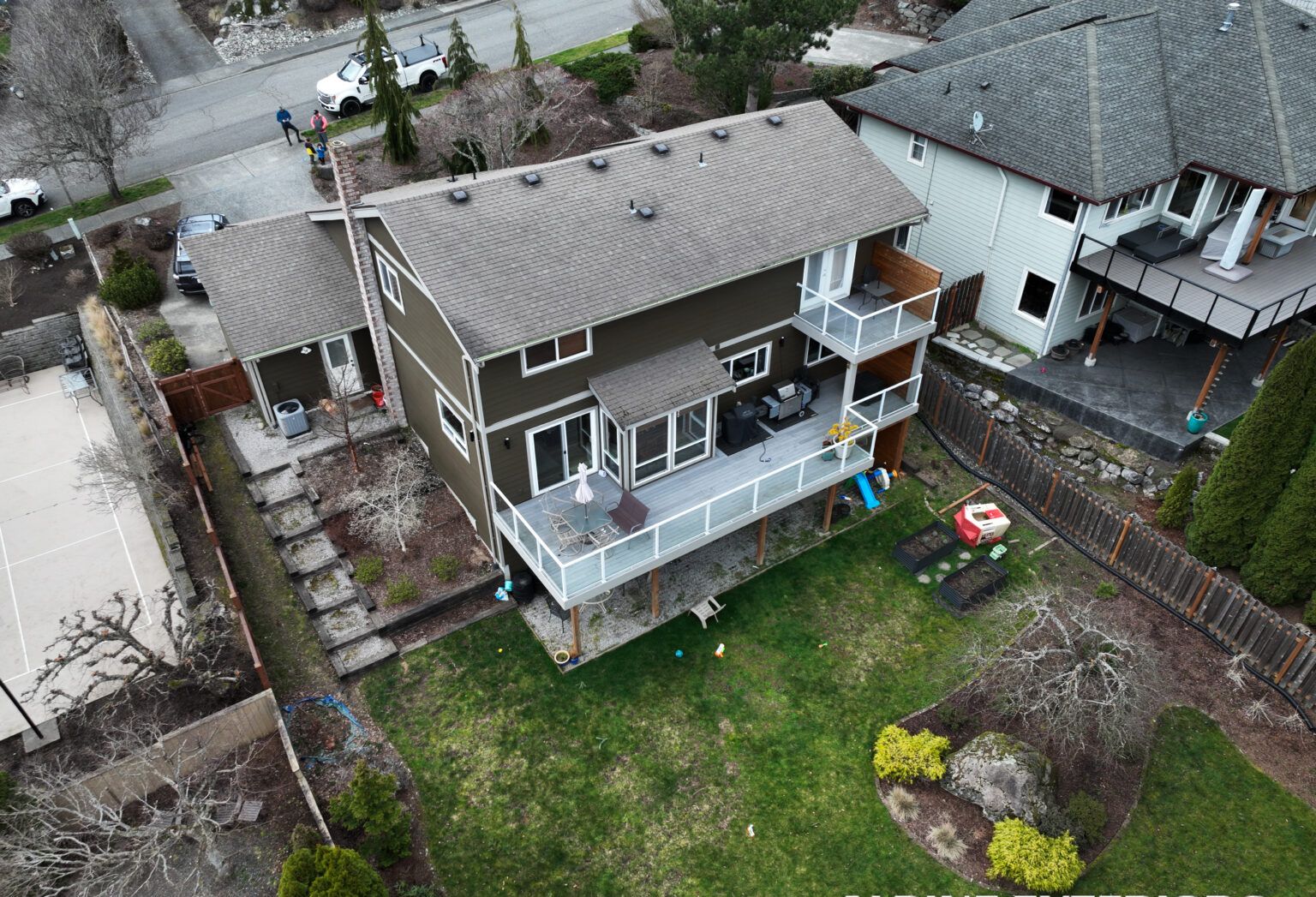
Any siding installed on a home in York or elsewhere in Whatcom County has to meet the wind and water-resistance provisions of the Washington State Building Code, and the fasteners have to match the manufacturer's tested installation instructions, not a generic nailing pattern. In practice that means the product needs a current evaluation report or manufacturer specification sheet on file, the crew has to use the fastener type and spacing that report calls for, and the county or city inspector checks the water-resistive barrier and flashing details before the siding ever goes on.
Washington adopts the International Residential Code with state amendments, and for siding the code doesn't set its own wind-pressure number the way some coastal states do. Instead it leans on the product's own testing. Vinyl siding is tested and rated under ASTM D3679, fiber cement is tested under ASTM standards referenced in its ICC-ES evaluation report, and each manufacturer publishes an installation manual that specifies fastener type, penetration depth, and on-center spacing for a given wind exposure. The building code requires that installation to follow the manufacturer's instructions or an approved alternative, which is why a Whatcom County plan reviewer or field inspector will sometimes ask to see the product's evaluation report or spec sheet on a bigger job, especially a multi-story home or one on an open bluff.
Underneath the siding, the code also requires a water-resistive barrier — house wrap or building paper — installed shingle-style so water sheds down and out, with all seams and penetrations properly lapped and taped or sealed. Flashing at windows, doors, deck ledgers, and any wall penetration has to direct water out over the barrier below it, not behind it. This is the part of the inspection that actually catches problems, because siding itself rarely fails outright in a wind event here; it's water getting behind failed or missing flashing that causes the expensive damage months or years later.
The Washington State Energy Code also comes into play, even though it's not primarily about wind. Most re-siding jobs that add or replace exterior insulation, or that are part of a broader exterior remodel, trigger energy code compliance for the wall assembly — continuous insulation values, vapor retarder placement, and air sealing at penetrations. A crew that's only thinking about the siding and ignores this layer can pass a rough framing look but fail on the energy component, which holds up final approval.
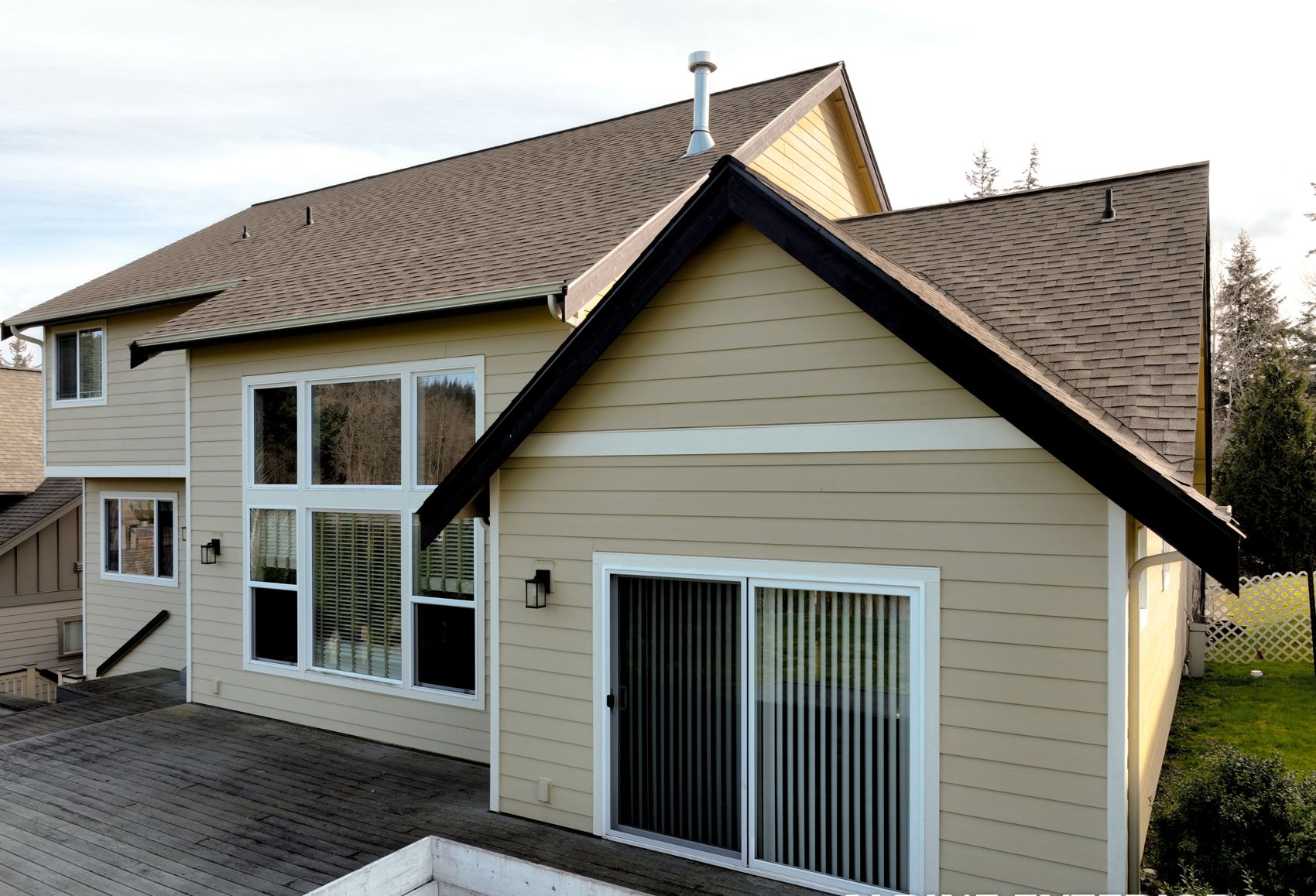
Whatcom County doesn't deal with hurricane wind loads, and nobody here needs a wind mitigation inspection or a hurricane-rated product line. What the county deals with instead is sustained, wind-driven rain — the kind that comes off Bellingham Bay and the Strait of Georgia during a fall or winter frontal system and drives horizontally into a wall for days at a time, not the short violent burst of a storm cell. That distinction matters for how siding is detailed. A wall assembly can be rated for a respectable wind pressure and still leak, because the failure mode here is water intrusion over time through joints, laps, and fastener penetrations, not siding panels tearing off in a gust.
That's also why a rainscreen gap — a furring strip or drainage mat behind the siding that lets bulk water drain and the wall cavity dry — is worth the extra step on most jobs in this area, even though it isn't universally required by code. Homes closer to the water in York and downtown Bellingham, and exposed properties in Blaine, Birch Bay, and on the islands, see enough direct wind-driven rain that a drainage gap measurably reduces the moisture load on the sheathing behind it.
Moss and algae growth is another local reality that doesn't show up in the code text but shows up on every north-facing wall in the county within a few years. It's mostly a maintenance and material-choice issue rather than a structural one, but it's worth knowing before you pick a product: fiber cement and some engineered wood products handle algae growth and periodic washing better than raw wood, and darker colors show growth less than pale ones.
Wood rot from long-term moisture exposure is the failure Alpine Exteriors sees most often on tear-offs in this county, usually traced back to a missing kick-out flashing, a caulked joint that was supposed to be an open weep, or house wrap that was stapled instead of properly lapped. None of that is exotic or hard to get right — it's just easy to skip on a rushed job, and Whatcom County's persistent rain gives any shortcut years to do damage before it's visible from the street.
Up in the foothills around Sudden Valley and similar elevated pockets of the county, freeze-thaw cycling adds one more variable. Water that gets behind siding and freezes can push joints and fasteners loose over a winter, so those homes benefit from the same rainscreen and flashing discipline, plus fasteners and trim that are rated for the temperature swing rather than the cheapest option on the shelf.
Start by asking whatever contractor you're considering for the manufacturer's installation manual for the specific siding product being quoted, and ask how the crew's fastening plan matches it. A contractor who can produce that document and explain the fastener spacing without hesitation has done this before; one who shrugs is a sign to ask more questions.
It's also worth being honest about the limits of a re-side. New siding, correctly installed, is not a substitute for fixing an underlying moisture or ventilation problem — a bathroom fan venting into the attic or a grading issue pushing water at the foundation will keep causing damage no matter how good the exterior looks. Alpine Exteriors flags issues like that during estimates rather than just quoting over them, because it's cheaper to fix once than to redo siding a second time.
In most cases, yes. A full re-siding job — removing old siding down to the sheathing and installing new material and a new water-resistive barrier — is a permitted scope of work under the Washington State Building Code as adopted locally, and it triggers inspections at the barrier/flashing stage and again at final. Smaller repairs, like replacing a few damaged panels with matching material, sometimes don't require a separate permit, but it's worth confirming with the local building department before work starts rather than assuming.
Washington's code doesn't publish a single statewide wind-speed number the way some states do for coastal exposure; the basic wind speed used in structural design varies by location and exposure category and is something a designer or engineer pulls for the specific site when it matters, such as for a taller wall or an unusually exposed lot. For a typical single-family home, what matters more day to day is that the siding product carries a valid manufacturer rating and evaluation report, and that it's installed to that report's fastening schedule — that's the actual compliance path the code relies on.
It can be, as long as it's installed with the fastening and drainage details the manufacturer specifies, since vinyl siding is designed to be installed with a slight float rather than nailed tight, and it relies on properly lapped panels and a sound water-resistive barrier behind it to keep wind-driven rain out. Where vinyl tends to underperform in this climate is on very exposed sites with heavy, sustained wind-driven rain, where fiber cement or a well-detailed engineered wood product with a rainscreen gap generally holds up with less long-term moisture risk.
The most reliable way is a physical inspection — probing suspect areas with an awl or screwdriver at wall penetrations, below windows, and near ground level, along with a look at the sheathing once a section of siding is pulled for the estimate. Soft spots, staining, or a spongy feel under paint are the usual signs. A contractor experienced with this county's older housing stock, including a lot of the homes in York and nearby neighborhoods, will generally check these areas as part of a serious estimate rather than quoting from photos alone.
If you're weighing a re-side in York, elsewhere in Bellingham, or anywhere else in Whatcom County, Alpine Exteriors can walk your property, check what's actually happening behind the existing siding, and put together a plan that meets code and holds up to this region's rain rather than just looking good on installation day. Alpine Exteriors holds Washington contractor license ALPINI751OW — reach out for an on-site estimate and a straightforward explanation of what your home needs.