
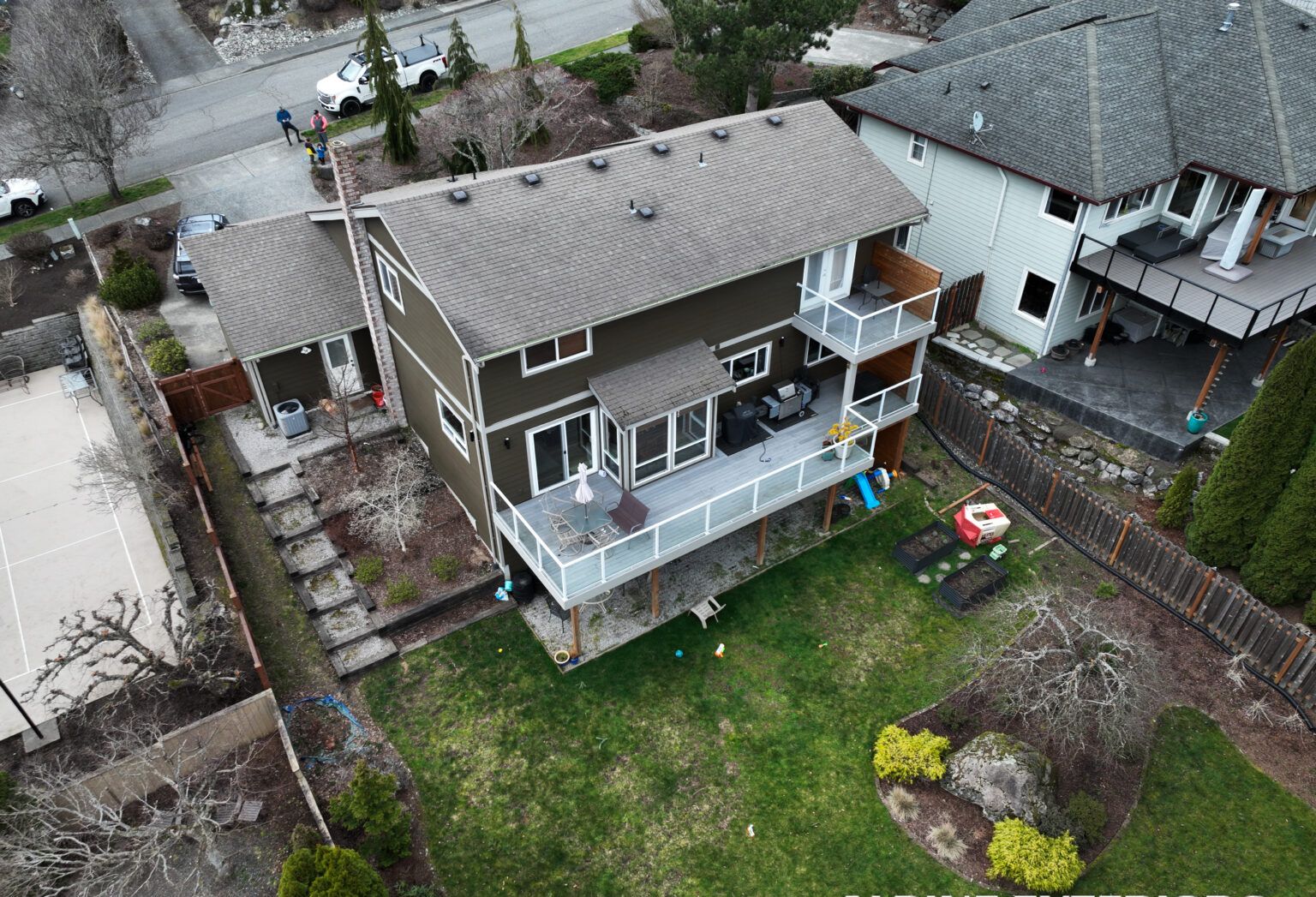
If you own a home in Everson or anywhere along the Nooksack River valley, you already know this part of Whatcom County asks more of exterior building materials than a typical suburban lot. Long wet seasons, shaded north walls that never fully dry out, occasional freeze-thaw swings when cold air drains down from the Mount Baker foothills, and the periodic high water that this stretch of the valley is known for all put real stress on siding. Choosing between James Hardie fiber cement and vinyl siding isn't just a style decision here — it affects how often you're painting, patching, or replacing panels a decade from now. This page walks through both options honestly, including where each one falls short, so you can make a call that fits your house, your budget, and how long you plan to own it.
For most owner-occupied homes in Everson that people plan to keep for ten years or more, James Hardie fiber cement is usually the better long-term match for this climate. It resists moisture damage and moss growth better than vinyl, holds paint longer, and stands up to the kind of splash-back and prolonged dampness that lower-lying lots near the Nooksack see more of than homes up on drier ground. That said, vinyl siding is not a bad product, and it's a perfectly reasonable choice in the right situation — a rental property where minimizing upfront cost matters more than a 40-year horizon, a home going up for sale in the near term, or a tight budget where fiber cement's higher installed cost just isn't workable right now. Neither material is wrong; they're suited to different priorities, and the honest answer depends on how long you're keeping the house and how much maintenance you're willing to take on.
James Hardie fiber cement is a blend of cement, sand, and cellulose fibers pressed into planks, panels, or shingle-style pieces. The company makes a version of its product line, sold under the HZ5 designation, specifically engineered for the Pacific Northwest's wet climate — it's formulated to resist moisture absorption better than standard fiber cement, which matters in a place where the siding might not see full direct sun for weeks at a time in November and December. Because the material itself is essentially inert cement board rather than organic wood fiber, it doesn't feed pests, doesn't swell and warp the way wood-based products can, and doesn't provide the kind of surface that moss and algae latch onto as readily as some other claddings.
The tradeoffs are real, though. Fiber cement is heavier and more labor-intensive to install than vinyl, which shows up in the installed price. It has to be factory-primed at minimum, and pre-finished ColorPlus panels cost more than field-painted boards — if you go with primed-only siding, you're committing to a paint job within a reasonable window after installation, and to repainting again on a cycle of roughly ten to fifteen years depending on sun exposure and how well the original paint job was done. Fiber cement can also crack or chip if struck hard enough — a ladder mishap, a wind-thrown branch — and while patching small areas is possible, matching an aged paint color exactly is harder than people expect. It also depends heavily on correct installation: proper flashing, caulking at joints, and adequate clearance from grade and hard surfaces. Skip those details and you can still get moisture problems behind fiber cement, same as any other cladding.
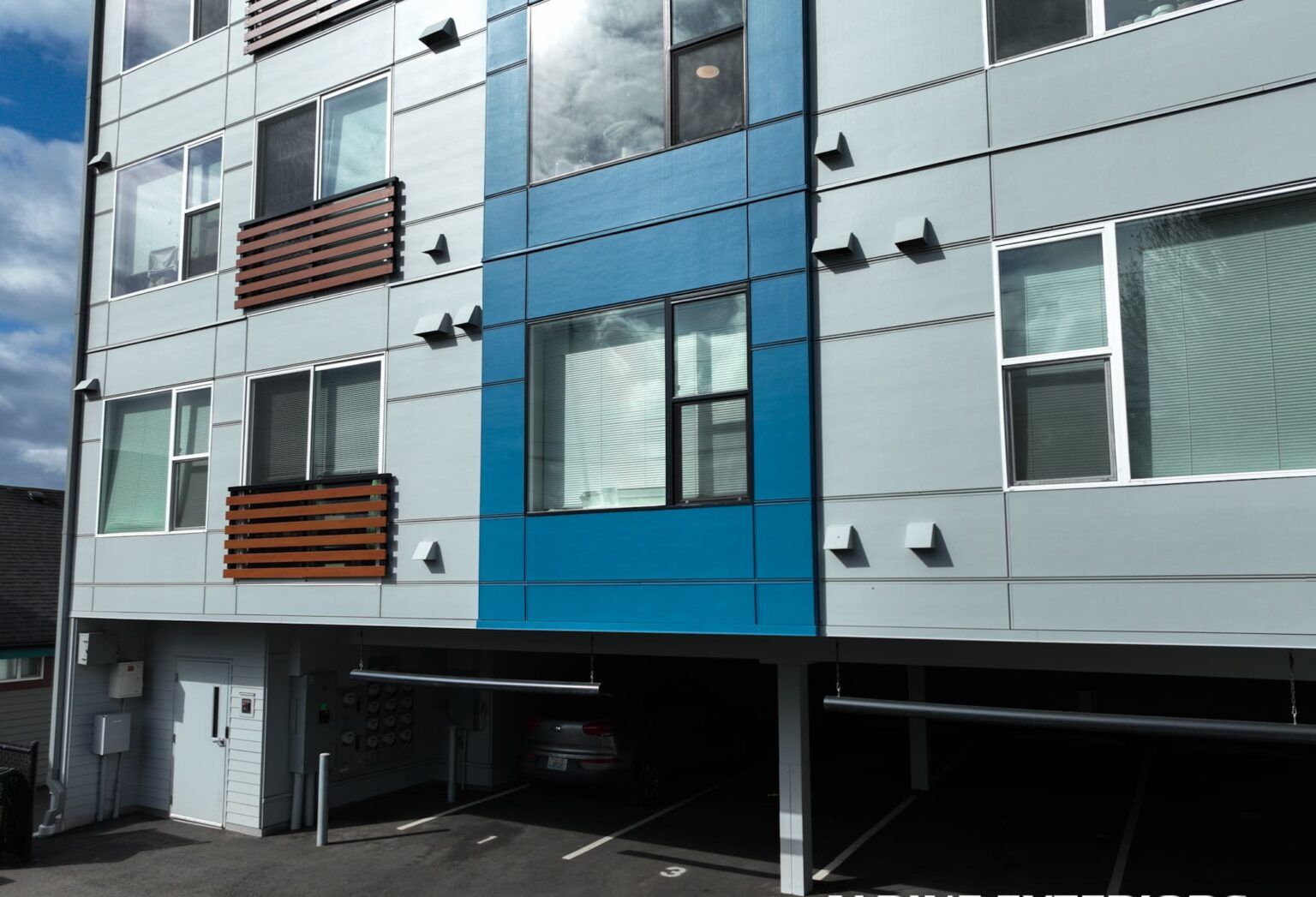
Vinyl siding is a PVC-based product that comes pre-colored, installs relatively quickly, and costs less upfront than fiber cement in almost every comparison. It never needs painting, which is a genuine advantage for homeowners who don't want that maintenance line item ever showing up on their to-do list. Modern vinyl profiles have improved a lot over the older, flimsier versions from decades ago, and a well-installed vinyl job on a house with good roof overhangs can perform acceptably for a long time.
Where vinyl runs into trouble in this specific climate is moisture and biological growth. On the shaded, north-facing walls common on lots tucked under fir and cedar cover around Everson, Nooksack, and the surrounding farmland, vinyl siding accumulates moss and green algae film noticeably faster than fiber cement, because the panel surface holds a thin layer of moisture longer and doesn't offer much for cleaning solutions to bite into without careful pressure-washing technique. Vinyl is also more prone to becoming brittle during the occasional hard cold snap that rolls down from the foothills — a panel that would flex under an impact in July can crack in January. And because vinyl siding is installed as overlapping panels rather than a monolithic surface, any gaps in the underlying weather-resistive barrier or flashing can let wind-driven rain track behind the panels during the region's wetter storms, sometimes for years before anyone notices the sheathing or framing underneath has started to rot. Vinyl also fades and chalks over time, especially on south and west exposures, and once it does, there's no repainting it — the whole elevation needs replacing to get back to a uniform color.
| Factor | James Hardie Fiber Cement | Vinyl Siding |
|---|---|---|
| Upfront cost | Higher installed cost; heavier material and more labor-intensive install | Lower installed cost; faster install with lighter material |
| Typical lifespan | Often 30-50 years with proper maintenance and repainting cycles | Often 20-30 years, shorter if exposed to repeated freeze-thaw or heavy shade/moisture |
| Maintenance | Needs repainting roughly every 10-15 years (unless factory-finished); occasional caulk touch-up | No painting ever, but needs regular washing to control moss/algae and can't be spot-repainted if faded |
| Moisture & moss resistance | Strong; cement-based material resists rot and slows moss/algae buildup | Weaker on shaded, damp walls; moss and algae film build up faster |
| Impact resistance | Durable but can crack or chip under a hard direct impact | Can crack or become brittle, especially in cold weather |
| Appearance options | Wide range of textures (lap, shingle, panel) and can be painted any color over time | Wide range of factory colors but locked in — no repainting, and color fades unevenly by exposure |
Everson sits in a part of Whatcom County shaped by the Nooksack River, and that geography matters more for siding decisions than people usually realize. Homes on lower ground near the river corridor deal with higher ambient humidity for more of the year than homes up on drier terraces, and the valley has seen serious high-water events in recent years that left standing moisture around foundations and lower wall sections for extended periods. Even where flooding hasn't directly touched a house, the general dampness of the surrounding fields and tree lines keeps humidity elevated against exterior walls, particularly on the north and east sides that get the least afternoon sun to dry out. Combine that with the freeze-thaw cycling that shows up more here than in downtown Bellingham, since cold air pools in the valley and drains down off the Mount Baker foothills on clear winter nights, and you've got a climate that rewards a cladding material built to resist both prolonged moisture exposure and repeated temperature swings.
That combination is exactly where James Hardie fiber cement tends to earn its higher price tag in Everson specifically. It holds up better against the moss and green staining that shaded, tree-lined lots produce, it doesn't become brittle during the occasional hard freeze, and it doesn't give wind-driven rain the same easy path behind the cladding that a poorly-flashed vinyl installation can. It's also worth noting that the Washington State Energy Code drives requirements for the wall assembly behind whichever siding you choose — continuous insulation or an equivalent thermal performance path is required for most wood-framed exterior walls in this climate zone, and that requirement applies regardless of whether the visible cladding is fiber cement or vinyl. In practice this means the bigger energy-performance decisions happen in the wall assembly and insulation detailing, not in the siding material itself, so don't let a siding sales pitch convince you one product solves your energy code compliance on its own — it doesn't.
None of this means vinyl is a poor choice for every Everson property. A well-built home with generous roof overhangs, good site drainage, and an owner who's comfortable washing the siding once or twice a year to keep moss in check can get a long, low-maintenance run out of vinyl siding, and the upfront savings can matter a lot depending on the project budget. Alpine Exteriors installs both materials and doesn't push one over the other by default — the right call depends on how exposed the specific walls are, how long the owner plans to keep the house, and what the budget actually allows for right now versus what it costs to maintain over twenty years.
Not directly. The Washington State Energy Code sets requirements for the wall assembly's overall thermal performance — things like continuous insulation, air sealing, and window U-factors — rather than mandating a specific cladding material. Both fiber cement and vinyl can be installed over a code-compliant wall assembly; the insulation and air barrier details behind the siding matter more for code compliance than which visible material you choose.
No siding material is immune to moss and algae in a climate this wet, especially on shaded north-facing walls under conifers. Fiber cement resists it better than vinyl and doesn't provide as hospitable a surface for growth to take hold, but any exterior wall in Everson that stays damp and shaded for long stretches will still need occasional washing regardless of what it's clad in.
It varies a lot based on sun exposure, installation quality, and how shaded the lot is, but a reasonable expectation is somewhere in the 20 to 30 year range before fading, brittleness, or moisture issues behind the panels become a real concern. Homes on damp, heavily treed lots near the river tend to see problems show up sooner than homes on open, well-drained sites.
It depends on the extent and location of the damage. Small areas of cracked or impact-damaged fiber cement or vinyl can often be repaired or panel-replaced without redoing an entire elevation, but if the damage points to hidden moisture or rot in the sheathing behind the siding — which is more common with long-neglected vinyl installations — a larger repair scope is usually the honest recommendation rather than a quick patch.
Every house on the Nooksack River valley faces this climate a little differently depending on tree cover, sun exposure, and how the original siding and flashing were installed. Alpine Exteriors, WA contractor license ALPINI751OW, works on both James Hardie fiber cement and vinyl siding projects throughout Everson and the rest of Whatcom County, and can walk your specific property to tell you which option actually makes sense given your walls, your budget, and how long you're planning to stay in the house. Reach out to Alpine Exteriors for a straightforward, no-pressure look at your siding options before you commit to either material.