
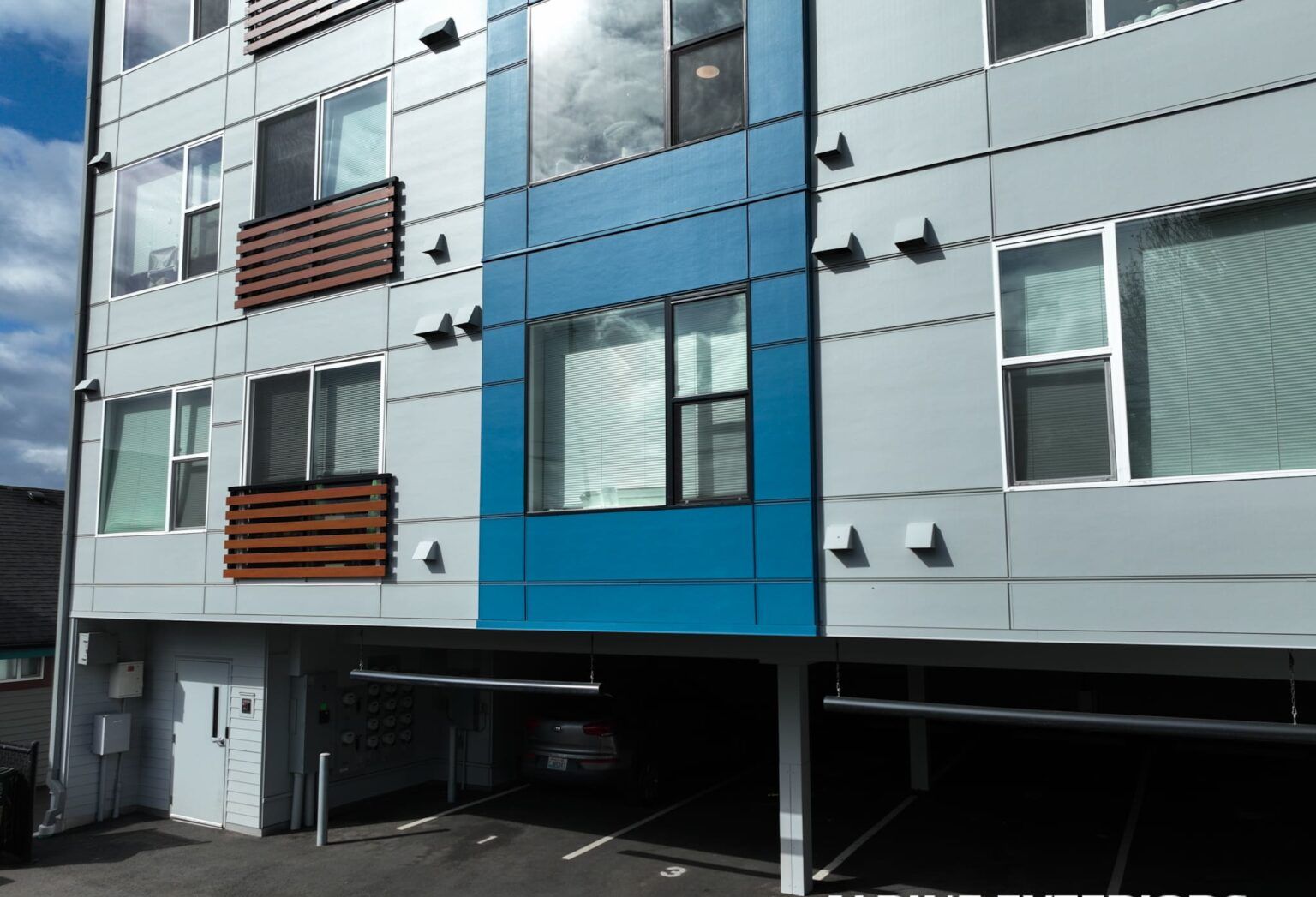
If your home sits on an exposed lot in North Bellingham where wind off Bellingham Bay and the Strait of Georgia hits the walls directly, or if you have north-facing walls shaded by fir and cedar that stay damp for days after a storm, James Hardie fiber cement siding is usually the better long-term investment. It resists moisture, resists moss and algae staining better than untreated vinyl, and holds paint and color well through our wet winters. If your home is more sheltered, tucked behind a windbreak of trees or neighboring structures, and your priority is a lower upfront cost with genuinely low maintenance, vinyl siding remains a reasonable choice, especially on rental properties or homes where the ownership timeline is short. Alpine Exteriors installs both products across Whatcom County, and the honest answer is that neither material is wrong everywhere — the right call depends on the specific exposure of your lot, your budget, and how long you plan to own the home.
James Hardie fiber cement is a blend of cement, sand, and cellulose fibers pressed into planks, shingles, or panels. Hardie makes a version of its product line, marketed under the HZ5 designation, engineered specifically for the wetter, more moderate climate zones that include Western Washington. That matters here because North Bellingham gets a long wet season of sustained drizzle rather than short, heavy downpours, and the product is formulated to hold up under that kind of prolonged moisture exposure rather than dry out between rain events.
The material does not rot, and it is not a food source for insects, which matters on older North Bellingham lots where original wood siding has failed from long-term moisture intrusion. It takes and holds factory-applied color (Hardie's ColorPlus finish) or field-applied paint noticeably longer than vinyl before you see fading or chalking. Because it is rigid and dense, it also stands up well to the kind of driving rain that arrives during a southwesterly storm off the Bay.
The tradeoffs are real. Fiber cement costs more upfront than vinyl, it is heavier and requires proper fastening and cutting technique (typically with dust-controlled saws, since the material contains silica), and it must be installed with correct clearances, flashing, and caulking details to perform as designed. A sloppy install can trap moisture behind the panels just as easily as a sloppy vinyl install, so the quality of the installer matters as much as the material itself.
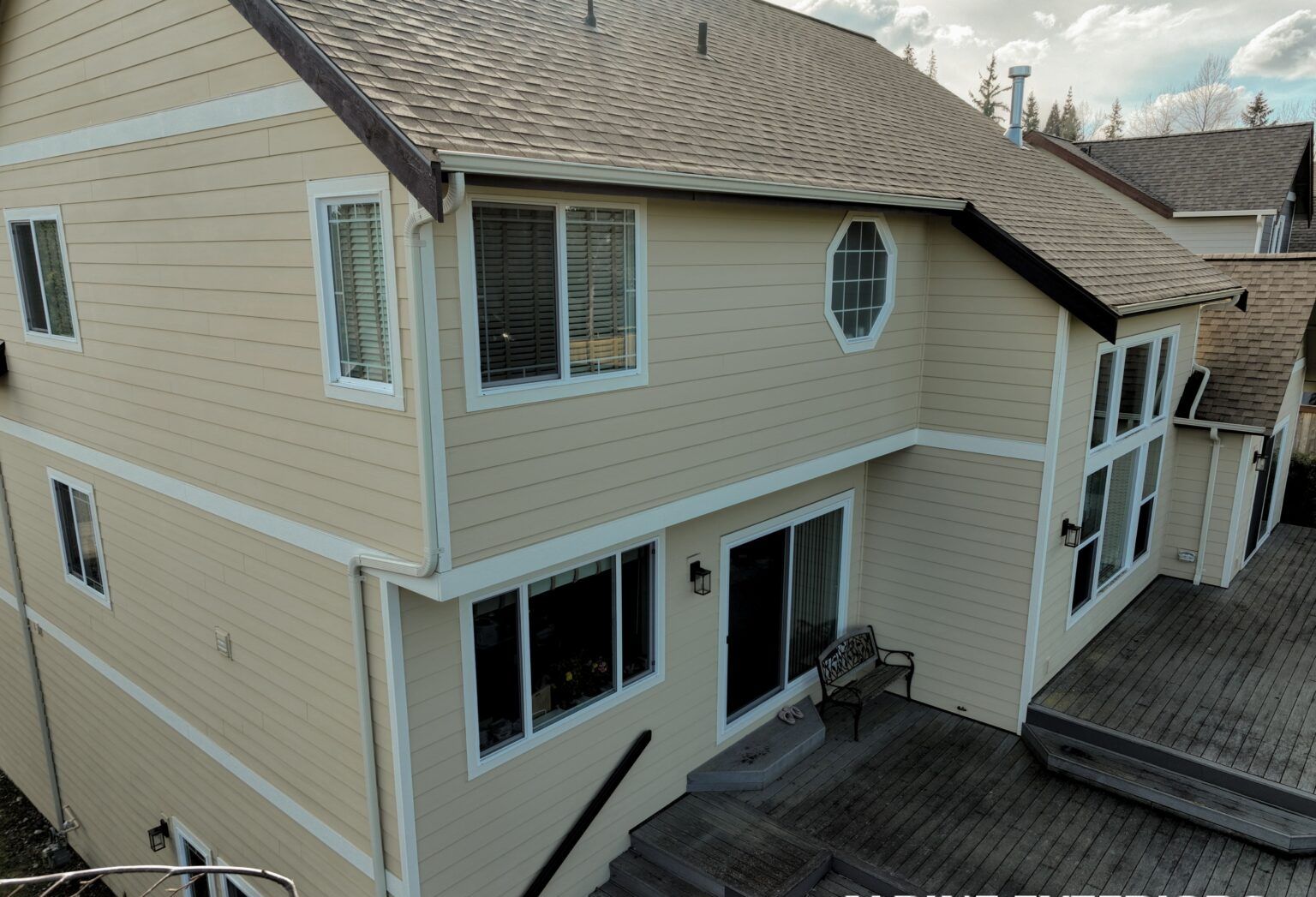
Vinyl siding is an extruded PVC product that comes in horizontal lap profiles, vertical board-and-batten styles, and increasingly in insulated versions with a foam backer laminated to the panel. Its biggest advantages are cost and maintenance: it costs less installed than fiber cement, never needs painting, and cleans up with a hose and mild detergent in most cases.
For a lot of Whatcom County homes, especially in more sheltered parts of the county or on secondary structures like garages and outbuildings, vinyl performs fine for a long service life. Modern vinyl has improved UV stabilizers that reduce the chalky fading older vinyl was known for, and insulated vinyl adds a modest amount of thermal value at the wall.
The drawbacks show up most in exposure-heavy locations, which is relevant to North Bellingham. Vinyl is a thinner, more flexible material, and in cold snaps it becomes more brittle; homes in the foothill areas toward Lake Whatcom and Sudden Valley see more freeze-thaw cycling than the immediate waterfront, and vinyl siding can crack on impact more readily than fiber cement during those colder mornings. Vinyl panels also expand and contract with temperature swings, and if the installer doesn't leave the manufacturer's specified nailing slack, panels can buckle. Because vinyl relies on overlapping panels and a drainage plane behind it rather than a monolithic surface, wind-driven rain off the Bay can find its way behind poorly lapped or poorly flashed sections — more a function of installation quality than the material itself, but a real risk on exposed elevations. Color is baked into the vinyl rather than painted on, so you can't repaint to update the look without replacing the panel, and darker vinyl colors can warp in direct afternoon sun.
The table below summarizes how the two materials generally compare for a typical single-family home in North Bellingham. Actual costs vary by home size, trim complexity, tear-off scope, and current material pricing, so treat these as planning ranges rather than quotes.
| Factor | James Hardie Fiber Cement | Vinyl Siding |
|---|---|---|
| Typical installed cost | Higher upfront; commonly a mid-to-upper range per square foot installed | Lower upfront; commonly a lower-to-mid range per square foot installed |
| Expected lifespan | Multiple decades with proper installation and periodic repainting or caulk maintenance | Multiple decades in sheltered locations; shorter effective life on exposed walls due to cracking or fading |
| Maintenance | Occasional repainting (longer intervals with ColorPlus finish), periodic caulk inspection, moss/algae wash-downs on shaded elevations | Low; occasional cleaning, but cracked or warped panels must be replaced rather than repaired |
| Appearance | Convincing wood-grain or smooth textures, holds crisp paint lines, ages more like painted wood trim | Wide color and profile selection, but a more uniform, plastic sheen up close and visible seams on longer wall runs |
North Bellingham's specific weather pattern is the deciding factor more than personal taste. Homes near the water and along open north- and west-facing exposures take wind-driven rain directly off Bellingham Bay and the Strait of Georgia during fall and winter storms. That kind of sustained, horizontally driven moisture is exactly the condition fiber cement's HZ5 formulation and rigid panel structure are built to shed, and it's also the condition where lapped vinyl seams are most likely to let water track behind the cladding if the original install skimped on flashing or house wrap detailing.
Shaded lots under mature fir and cedar canopy, common on the north side of Bellingham and in older neighborhoods with established tree cover, hold moisture longer after a storm passes. That promotes moss and algae growth on north-facing walls regardless of siding type, but fiber cement's factory finish generally resists staining and cleans up better over time than unprotected vinyl, which can develop a chalky texture that traps green growth in its grooves.
If you're replacing old wood siding that's failed from long-term rot, a common renovation scenario on older North Bellingham housing stock, this is also a moment to think about the wall assembly, not just the cladding. Either material should go over a proper rainscreen gap and drainage plane, and the Washington State Energy Code's requirements for wall insulation and air sealing mean your contractor should be addressing continuous insulation and moisture management at the same time as the siding swap, not just cladding over the same problems.
For homes toward the foothills and around Sudden Valley, where nighttime temperatures swing lower and freeze-thaw cycling is more frequent than at sea level, fiber cement's rigidity is an advantage against cracking, though it comes with a higher price tag.
Given all that, Alpine Exteriors generally recommends James Hardie fiber cement for exposed, shaded, or foothill lots in and around North Bellingham where long-term durability and lower ongoing maintenance matter most, and reserves vinyl as a sound, budget-conscious option for sheltered lots, secondary structures, or projects where the homeowner has a shorter ownership horizon. Both are legitimate choices when installed correctly for the specific site.
Not automatically. Vinyl performs adequately in Whatcom County when it's installed with correct overlaps, proper nailing slack for expansion, and a functioning drainage plane behind it. The risk increases on exposed, wind-driven-rain elevations facing the Bay or the Strait, where seams are more likely to be tested by horizontal moisture, so installation quality matters more for vinyl here than in calmer inland climates.
James Hardie's factory-applied ColorPlus finish resists moss and algae staining better than bare or field-painted surfaces, and the material itself doesn't feed mold growth the way old wood siding can. That said, no exterior cladding is immune to moss on a shaded, damp North Bellingham wall, and periodic gentle washing is still part of realistic upkeep regardless of material.
Siding itself isn't the code-regulated layer, but a siding replacement is a natural point to address the wall assembly requirements in the Washington State Energy Code, including continuous insulation and air sealing. Whichever cladding you choose, the underlying rainscreen and insulation work behind it is what actually affects energy performance and moisture durability, so it's worth discussing as part of the same project.
Yes, more so than fiber cement. Standard vinyl becomes more brittle as temperatures drop, and homes toward Lake Whatcom, Sudden Valley, and other foothill areas see more freeze-thaw cycling than waterfront North Bellingham. A stray impact from a dropped tool, a ladder, or blown debris during a cold snap is more likely to crack vinyl than dent fiber cement in those conditions.
The right siding for your North Bellingham home depends on how exposed your walls are to wind-driven rain, how much shade and moss pressure your lot has, and how long you plan to own the property. Alpine Exteriors, WA contractor license ALPINI751OW, installs both James Hardie fiber cement and vinyl siding throughout Whatcom County, from North Bellingham and Ferndale to Lynden, Blaine, Birch Bay, and Sudden Valley, and can walk your specific lot with you to recommend the material that actually fits its exposure rather than a one-size-fits-all answer. Reach out to Alpine Exteriors to schedule an on-site assessment before you commit to either material.