
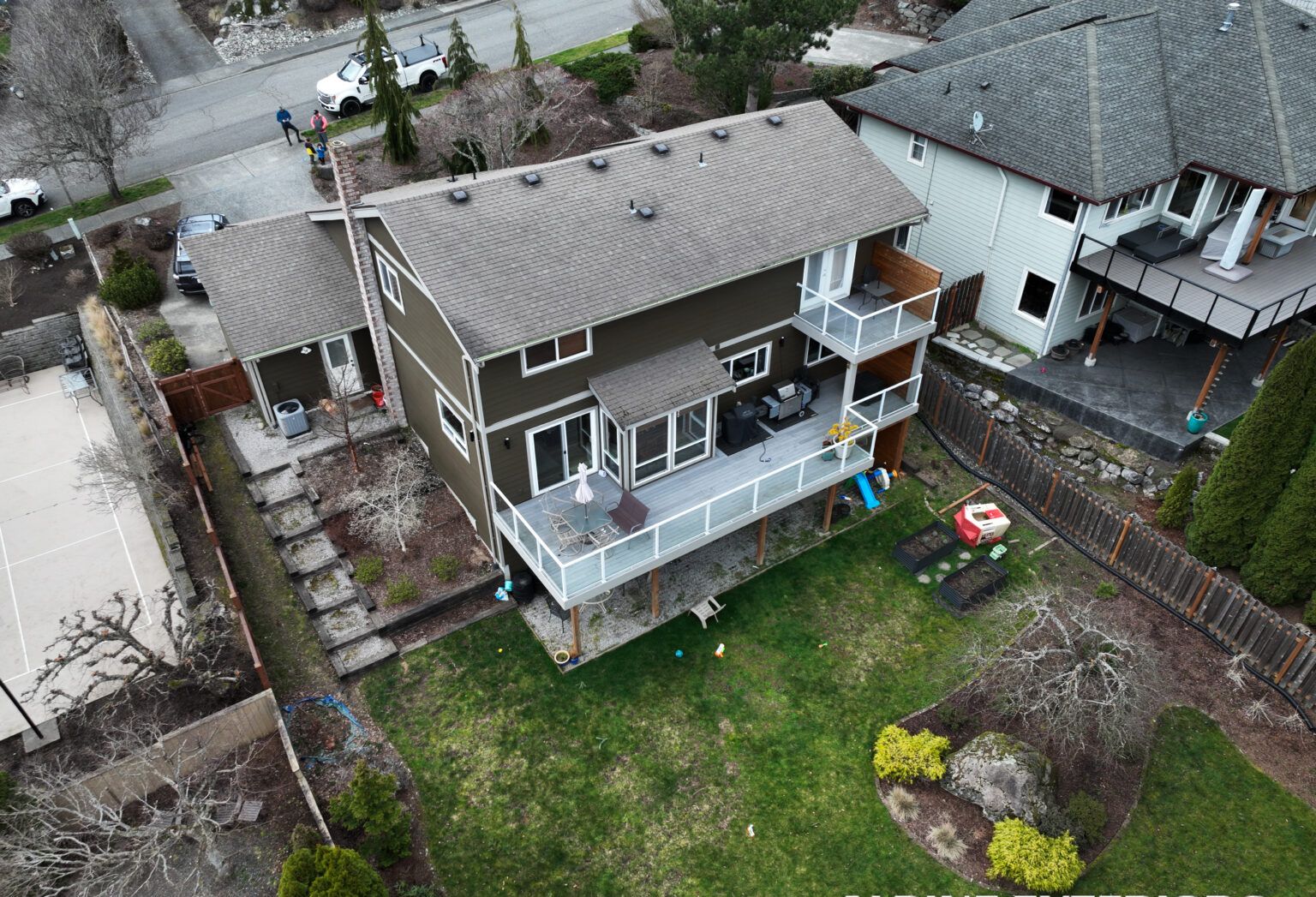
Kendall sits up the Mt. Baker Highway corridor, tucked against the foothills where the Nooksack River valley starts to climb toward the mountain. It's a different environment than downtown Bellingham or the shoreline at Birch Bay — colder overnight temperatures in winter, more freeze-thaw cycling, longer gravel driveways, and homes that often back up to timber. If you're pricing James Hardie fiber cement siding for a home in Kendall, the honest answer is that there's no single number that applies to every house. What follows is a realistic range, the factors that push a Kendall project toward the low or high end, and what a trustworthy quote should actually spell out before you sign anything.
For a full tear-off and re-side with James Hardie fiber cement products, most Whatcom County homeowners should expect an installed cost somewhere in the neighborhood of $9 to $18 per square foot of siding surface, with the final number depending heavily on the condition of the existing walls, the home's complexity, and how much trim and detail work is involved. For an average-sized single-family home, that typically works out to a total project range of roughly $18,000 to $45,000, though a smaller ranch-style home with simple walls can land below that and a larger home with steep rooflines, multiple gables, and extensive trim can run above it.
Kendall projects have a few things working against a tight, low-end estimate. Many homes in this part of the county were built decades ago with cedar lap siding, T1-11 panels, or early vinyl, and rural homes that sit close to tree cover tend to hold moisture longer than homes in more open, sunny parts of the county. When a crew pulls the old siding off, it's common to find soft sheathing or framing that needs to be addressed before a single piece of Hardie board goes up — and that repair work is priced separately from the siding itself. A quote that looks unusually low for a Kendall home is often a quote that hasn't accounted for what's likely hiding underneath.
| Cost Factor | What It Depends On | Typical Impact |
|---|---|---|
| Tear-off & disposal of existing siding | Number of layers, whether old siding contains asbestos (common in homes built before the 1980s), dump distance from rural lots | Adds a modest amount per square foot; asbestos testing/abatement adds more if found |
| Sheathing and framing repair | Extent of wood rot or water damage found once old siding is removed, especially around windows and roof-wall intersections | Ranges from minor (a few boards) to significant on homes with a history of leaks |
| House size and wall complexity | Number of stories, dormers, gables, bump-outs, and cut angles | More cuts and corners raise both material waste and labor time |
| Siding profile and finish | Lap siding vs. shingle-style panels; factory-applied ColorPlus finish vs. field-painted after install | ColorPlus costs more up front but skips a repaint cycle down the road |
| Trim, fascia, and corner detail | Amount of trim board, frieze board, and corner treatment specified | Detailed trim packages add noticeably to both material and labor |
| Site access | Long gravel driveways, steep grades, and limited staging area common on Kendall foothill lots | Harder access can add setup and material-handling time |
| Weather-resistive barrier & flashing | Proper WRB and window/door flashing detailing required for durability in this climate | Not optional — a real cost, but one that protects the rest of the investment |
Beyond the base price-per-square-foot, a handful of conditions specific to this part of Whatcom County tend to shift a Kendall estimate one way or the other.
Persistent moisture and moss. Western Whatcom County gets a long wet season, and homes shaded by fir and cedar stands — common around Kendall — hold onto that moisture longer than homes in open, sunnier locations. Moss and algae growth on old siding isn't just cosmetic; it traps water against the wall assembly. A house with heavy moss coverage usually needs a more thorough wash and inspection before installation, and if that moss has been sitting against wood siding for years, there's a real chance of finding soft sheathing underneath.
Wind-driven rain. Whatcom County doesn't see hurricanes, but wind off Bellingham Bay and the Strait of Georgia can drive rain sideways into wall assemblies, especially on homes with exposed western or northern faces. This is one of the reasons flashing detail around windows, doors, and roof intersections matters as much as the siding itself — a beautiful Hardie installation with sloppy flashing will still let water in over time. That detail work takes time and isn't a place to cut corners for a lower bid.
Freeze-thaw cycling in the foothills. Kendall sits at a higher elevation than downtown Bellingham, and it sees more frequent freeze-thaw cycling through the winter months than the immediate shoreline. That cycling stresses fasteners, caulk joints, and any trapped moisture behind the cladding. Correct fastener spacing and manufacturer-specified gapping matter more here than they might in a milder microclimate, and a crew that rushes those details is setting a homeowner up for callbacks.
HardieZone rating. James Hardie manufactures its products in different formulations for different climate zones — the HZ5 line for regions with more moderate, cycling weather like western Washington, and the HZ10 line engineered for hot, humid, high-moisture regions. Western Whatcom County falls in the HZ5 zone. Make sure any quote you receive specifies HZ5 product; using the wrong zone formulation isn't a huge cost difference, but it's a meaningful long-term performance difference.
Washington State Energy Code. Depending on the scope of the project and whether wall insulation or the water-resistive barrier assembly is being upgraded at the same time, work may need to meet current Washington State Energy Code requirements for the building envelope. A re-side is a natural opportunity to improve wall insulation, but that add-on work carries its own cost and should be priced as a separate line item, not folded silently into the siding number.
A vague, one-line quote — "reside house, $X" — doesn't give a Kendall homeowner enough to compare or trust. A written estimate worth signing should itemize:
Alpine Exteriors builds Whatcom County quotes this way — line by line — specifically so a Kendall homeowner can see where the money goes rather than trusting a single lump-sum figure. When a contractor won't break down the number, that's usually because the estimate hasn't accounted for the prep work a rural, tree-shaded property is likely to need.
Getting more than one bid is worth the time, but only if the bids are actually comparable. Confirm the contractor is licensed to do this work in Washington. Alpine Exteriors holds Washington contractor license ALPINI751OW, and any siding contractor's license status can be verified directly through the Washington State Department of Labor & Industries before you sign a contract. This matters more than it might seem — an unlicensed or lapsed contractor leaves a homeowner with little recourse if something goes wrong.
Ask each bidder to walk you through what they expect to find once the old siding comes off, and how they'd price repairs if the sheathing is soft. A contractor who has actually inspected the home closely should have an opinion on this; a bid that ignores the question entirely is a red flag on an older Kendall property.
Compare product specifics, not just total price. Two bids that both say "Hardie siding" can differ meaningfully if one specifies HZ5 lap siding with a factory finish and the other specifies a thinner trim package or skips flashing detail to hit a lower number. Ask for the product line, profile, and finish in writing.
Ask whether the crew doing the work is employed directly by the company or subcontracted, and who's on site day to day. On a longer rural driveway with limited staging room, a smaller, consistent crew often works more efficiently than a larger crew that has to shuffle equipment in and out.
Finally, be wary of a bid that's dramatically lower than the others without a clear explanation. On a Kendall home with any history of moisture exposure, an unusually cheap number is more likely to mean skipped prep work than a genuine deal.
Fiber cement siding is a significant home improvement expense, and most contractors — Alpine Exteriors included — can point homeowners toward financing options that spread the cost over time rather than requiring payment in full up front. Terms vary by lender, so it's worth comparing the total cost of financing against paying from savings or a home equity line, especially if a lender's promotional rate expires after a set period.
If the siding replacement is being driven by storm damage, a fallen limb, or another insurable event rather than routine wear, check with your homeowner's insurance carrier before work begins. An adjuster may need to inspect the damage first, and insurance-funded repairs often come with their own documentation requirements that a contractor experienced with insurance claims can help you navigate. Routine siding replacement for age, appearance, or moisture prevention, on the other hand, is typically an out-of-pocket home improvement and isn't something insurance covers.
It's also worth asking your insurance agent whether upgrading from wood or older vinyl siding to fiber cement affects your premium. Some carriers offer modest credits for non-combustible or more durable exterior materials, though this varies by insurer and isn't guaranteed — treat it as a question to ask, not an assumption to build into your budget.
Most full tear-off and re-side projects on an average-sized Whatcom County home fall somewhere between roughly $18,000 and $45,000 installed, with the actual number depending on the home's size, wall complexity, trim detail, and how much sheathing repair is needed once the old siding comes off. A detailed, on-site estimate is the only way to get a number specific to your house.
Fiber cement generally costs more up front than vinyl, but it holds up differently to this region's wet climate — it doesn't warp or buckle from moisture the way vinyl can, and it resists the moss and algae staining that's common on shaded, tree-covered lots around Kendall. Whether the higher upfront cost is worth it depends on how long you plan to stay in the home and how much you value lower long-term maintenance versus a lower initial price.
It can, particularly on older homes where moisture has been sitting behind the siding for years. Tear-off itself is a modest cost, but if the sheathing or framing underneath has soft spots or rot, that repair is priced separately from the siding installation and can be a meaningful add depending on how extensive the damage is. This is one of the biggest reasons two bids on the same house can come in far apart — one contractor may be pricing for repairs the other hasn't accounted for.
It can help, but the effect varies by home. If a re-side includes upgrading the wall's water-resistive barrier and insulation to current Washington State Energy Code standards, you may see some improvement in comfort and energy use, though the siding material itself is not primarily an insulation product. Insurance impact depends entirely on your carrier — some offer modest credits for more durable, non-combustible exterior materials, but this isn't universal, so it's worth a direct conversation with your agent rather than assuming a specific savings.
Every property up the Mt. Baker Highway corridor is a little different — tree cover, driveway access, and the age and condition of the existing siding all shift the number. Alpine Exteriors provides written, itemized estimates for Whatcom County homeowners so you can see exactly what's driving your project's cost before any work begins. If you're weighing James Hardie siding for a home in Kendall or anywhere else in the county, reach out to Alpine Exteriors for an on-site look and a real, line-by-line number for your house.