
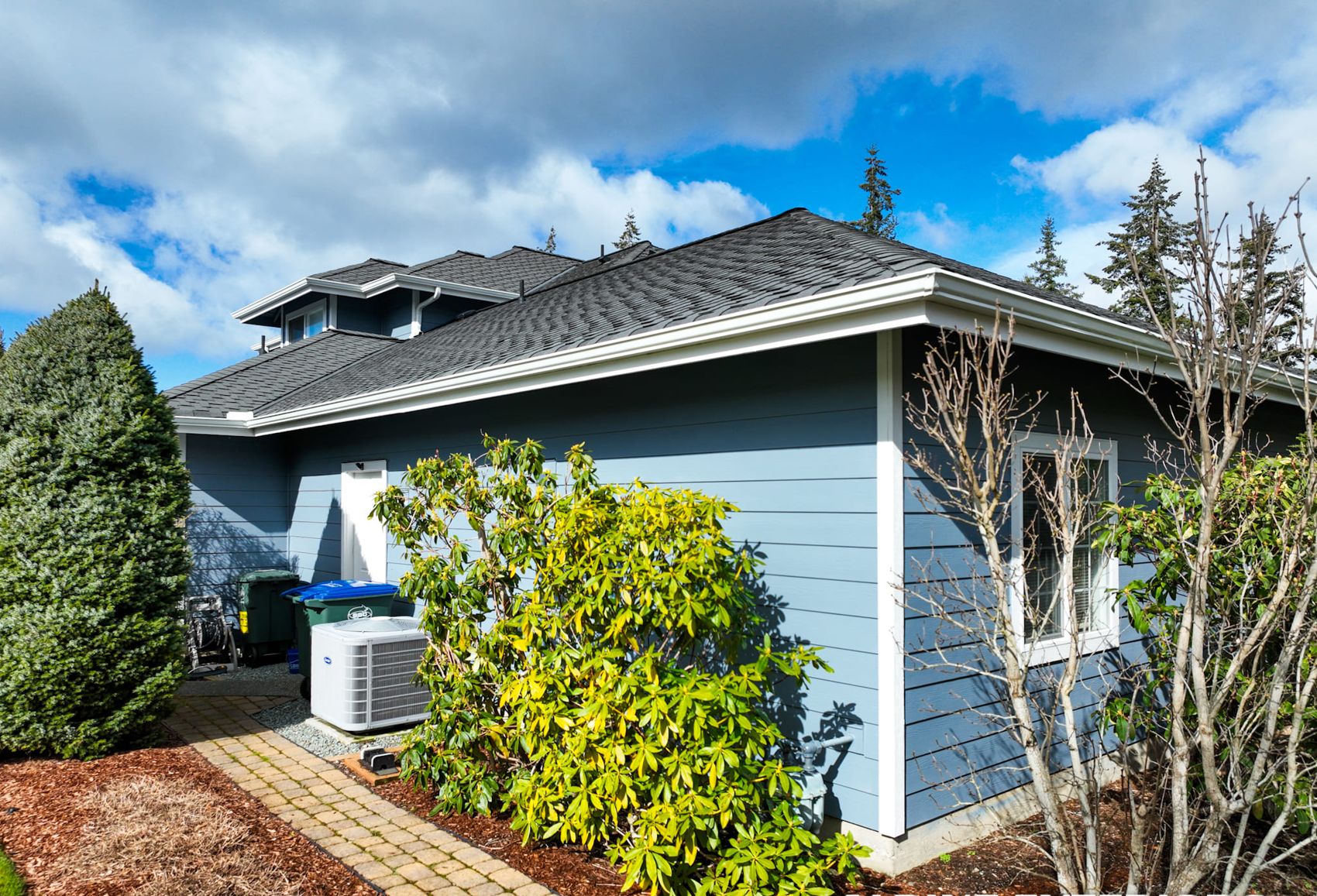
For most homes around Lake Whatcom — Sudden Valley, the North Shore, and the timbered slopes above the water — the siding colors that hold up best and look best over time are mid-to-dark neutrals with either a warm or a cool-gray base: deep charcoal, weathered driftwood gray, and warm greige are the three we point people toward first. These tones do three specific jobs well in this setting. They read as natural against the fir, cedar, and hemlock canopy that rings the lake instead of competing with it. They hide the moss spotting and rain streaking that our wet, shaded climate produces faster than a stark white ever could. And they tend to sail through the architectural review process that Sudden Valley Community Association and similar lake-adjacent neighborhoods use to keep new siding from standing out against the tree line. Alpine Exteriors fields color questions on nearly every Lake Whatcom estimate we write, and the honest answer is always the same: the right color depends on which direction your walls face, how much tree cover shades them, and what your HOA packet actually says — not just which chip looks good under a showroom light.
Whatcom County's marine climate is mild but relentless, and a color that performs in a drier or sunnier market can behave very differently on a lake lot here. We weighed each option against the conditions that actually show up on a Lake Whatcom job site.
Charcoal and graphite have become the most requested tones on new Lake Whatcom builds, and for good reason. From across the water, a dark gray or near-black home recedes into the tree line instead of standing out, which is a big part of why architectural committees tend to approve it without much back-and-forth. It also hides the fine streaking and dust that collects on any exterior over a Whatcom County winter, and it pairs naturally with the black-frame windows and standing-seam metal roofing showing up on a lot of newer lake homes.
The honest drawback: dark pigments absorb more UV energy, and on walls that get real sun — south- and west-facing elevations open to the lake — charcoal siding can show visible fading or chalking sooner than a mid-tone will, even in a cloudy climate, simply because dark pigment breaks down faster under sustained UV than lighter pigment does. It's not a dramatic effect over a year or two, but over a decade the difference between a shaded charcoal wall and a lake-facing charcoal wall can be noticeable. Fiber cement and engineered wood panels also expand and contract slightly with temperature, and in the foothill freeze-thaw zone near Sudden Valley that movement is worth watching at butt joints regardless of color.
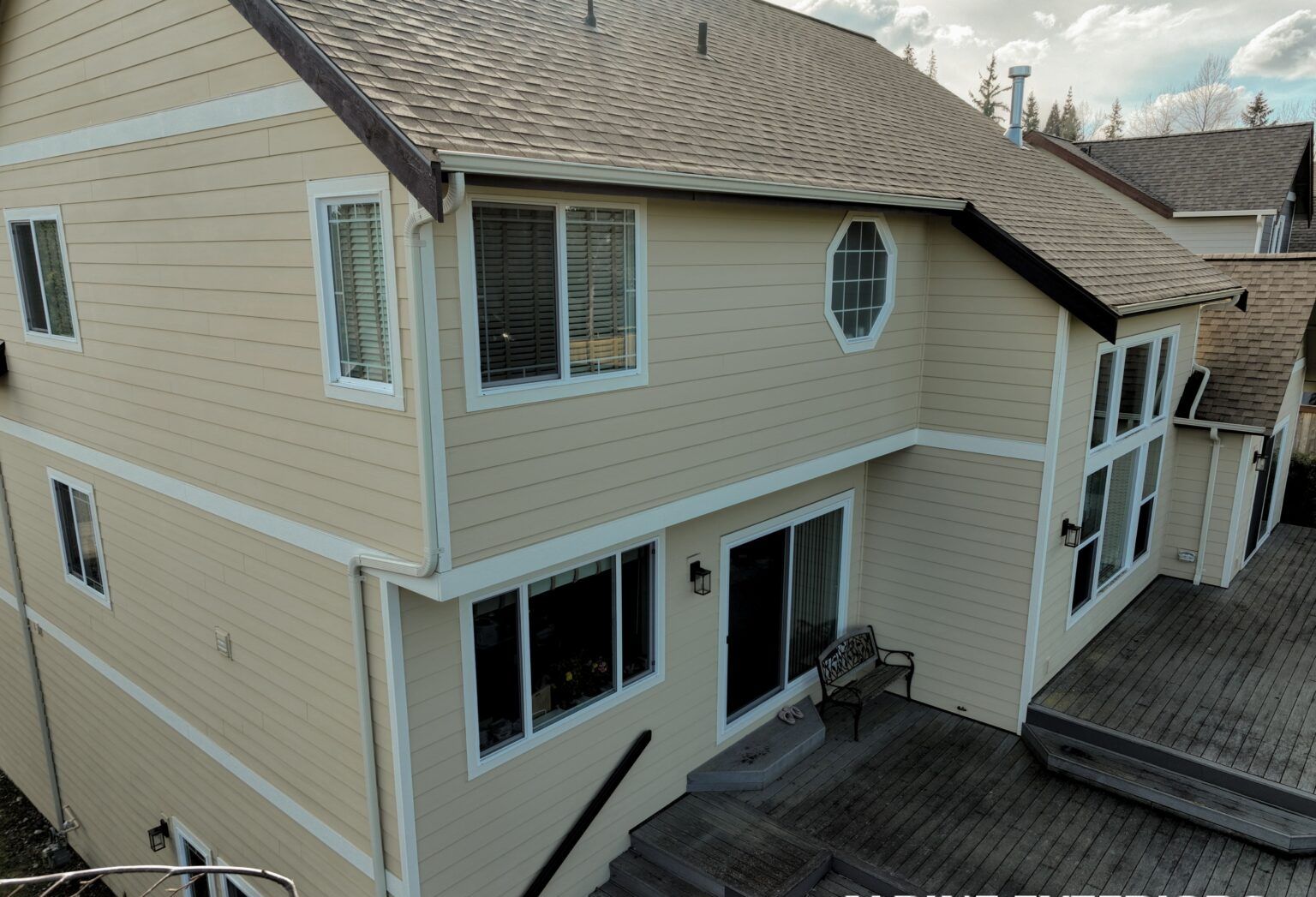
Greige — the gray-beige middle ground — is the safest long-term choice for a lot of Lake Whatcom lots, and it's what we steer undecided owners toward most often. It ages gracefully because a mid-tone shows fade and chalking far less obviously than either a very dark or very light color, it complements the cedar trim, stone veneer, and natural wood accents common on lake homes, and it's rarely a problem for architectural review because it reads as neutral rather than a statement color.
The catch is undertone. A greige with too much pink or purple in its base can look muddy under Whatcom County's heavy overcast and the green-tinted, filtered light that comes through a forest canopy — a swatch that looked warm and inviting in a showroom can read dingy on an actual north-facing wall above the lake. We always push clients to view large sample boards outdoors, on an actual overcast Bellingham-area day, rather than trusting a small chip or a sunny-climate photo.
For remodels on older lake cabins, or for owners who want to keep the rustic character that originally defined a lot of Lake Whatcom's housing stock, a wood-tone finish is the obvious emotional choice. Modern fiber cement and engineered wood products can replicate a cedar shake or board-and-batten look through a factory-applied finish, which gives you the aesthetic without taking on the maintenance burden of real wood.
That maintenance burden is the part worth being direct about. Real cedar siding, or a wood-look product finished with a field-applied stain rather than a factory finish, is genuinely at risk here. Constant dampness under tree cover, combined with wind-driven rain coming off Bellingham Bay and the Strait, is exactly the combination that leads to wood rot — especially at the lower courses near grade and at butt joints where water can sit. If you want the wood-tone look on a lake-facing or wind-exposed wall, we'd rather steer you to a factory-finished fiber cement product than real wood that depends on a strict recoating schedule to avoid rot.
A muted blue-gray — sometimes marketed as a "driftwood" or "harbor" tone — is a less common choice around the lake, which is part of its appeal for owners who want something distinct without going bold. It nods to the water without leaning into an obvious coastal palette, and because it already sits close to the color of shadow and wet moss, it tends to hide algae streaking reasonably well on shaded walls.
The risk with blue-gray is undertone drift. Depending on the light, the same chip can read blue, teal, or even faintly lavender, and Whatcom County's shifting overcast and filtered-canopy light will expose that drift more than a consistently sunny climate would. This is one where we insist on full-size boards viewed at different times of day before ordering material.
Often, yes. Sudden Valley Community Association and several other lake-adjacent neighborhoods maintain architectural guidelines that either require review of exterior color changes or list an approved palette meant to keep homes visually consistent with the surrounding forest. Whatcom County itself doesn't regulate siding color through shoreline management rules, but your specific HOA or plat covenants might — always check your community's current guidelines before ordering material, since requirements can change and vary by neighborhood within the same lake.
Not meaningfully in this climate. The Washington State Energy Code governs western Washington homes primarily through insulation levels, air sealing, and window performance rather than exterior color, and cooling loads here are minor compared to hotter climates. A dark-colored wall will run a few degrees warmer at the surface on a sunny afternoon, but it's rarely enough to affect comfort or energy use in a marine climate like Whatcom County's, where summer heat is the exception rather than the rule.
It depends heavily on exposure. Walls shaded by trees or facing north tend to develop moss and algae staining faster than open, sun-exposed walls, and homes closer to the water or under heavy canopy generally need more frequent washing than homes on open lots. Rather than a fixed schedule, we tell owners to walk the exterior each spring and fall and wash as soon as streaking starts, since it's far easier to remove early growth than buildup that's had a full wet season to set in.
Mid-tone neutrals — warm greige, medium gray, and similar tones — generally show fade and chalking less visibly than either very dark or very light colors, because the contrast between fresh and faded is smaller in the middle of the value range. Beyond color choice, the finish matters as much as the pigment: a quality factory-baked finish on fiber cement or engineered wood siding will outlast a field-applied paint or stain job, especially on a wall that takes direct wind-driven rain off the lake or the Strait.
Every lot around Lake Whatcom gets a different mix of sun, shade, wind, and HOA rules, which is why we don't recommend a single "best" color without seeing the site. Alpine Exteriors, WA contractor license ALPINI751OW, works with homeowners across Whatcom County — Bellingham, Ferndale, Lynden, Blaine, Birch Bay, Sudden Valley, and the islands — to walk the exterior, check what your architectural committee requires, and bring full-size sample boards so you can see the actual color in your actual light before committing. If you're planning a re-side or a new build near the lake, reach out to Alpine Exteriors and we'll help you land on a color that still looks right in ten years, not just on install day.