
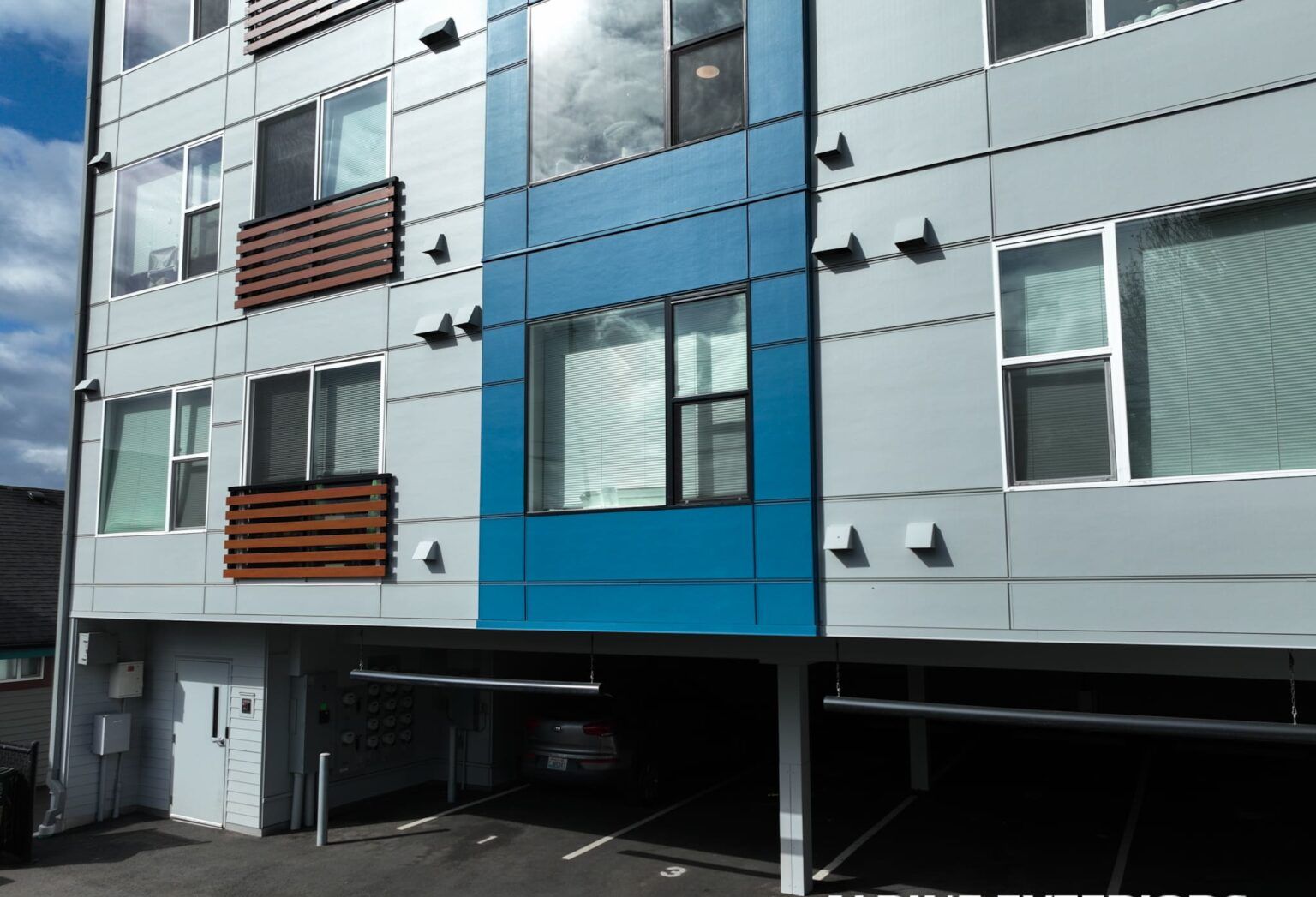
North Bellingham sits in an odd spot climate-wise: close enough to Bellingham Bay and the Strait of Georgia to catch wind-driven rain off the water, shaded by enough fir and cedar canopy to grow moss on anything that stays damp, and just far enough inland that the foothill neighborhoods toward Kendall and Deming see real freeze-thaw cycles in January. A siding choice that works fine in Seattle or Portland doesn't automatically work here, and a lot of the older housing stock in this part of Whatcom County — 1950s and 60s ranch homes, older bungalows near downtown Bellingham, farmhouses out toward Lynden and Ferndale — is still wearing original wood lap siding that's showing exactly what forty or fifty years of Pacific Northwest weather does to an unprotected wall. This page walks through what actually holds up here, what doesn't, and why, based on what we see replacing siding across Bellingham, Ferndale, Lynden, Blaine, Birch Bay, Sudden Valley, and the islands.
For most homes in this region, fiber cement lap siding is the safest default. It doesn't rot, it shrugs off moss and algae better than wood, and it holds paint through our wet winters without the maintenance cycle that wood demands. Engineered wood siding (LP SmartSide and similar products) is a close second and often a better fit for budget-conscious remodels or new construction in Lynden and Sudden Valley, as long as the installer details the flashing and butt joints correctly — this product fails when water gets behind it, and around here water finds a way in eventually if it isn't detailed right. Vinyl still has a place on rental properties and lower-budget jobs, but it's the weakest performer against the specific combination of UV, wind-driven rain, and temperature swings this county produces. Cedar is beautiful and historically appropriate for a lot of Bellingham's older neighborhoods, but only for owners who will commit to real maintenance. There's no single right answer for every house — the right pick depends on the home's exposure, budget, and how much upkeep the owner actually wants to do.
We're not ranking these on looks alone. The criteria that actually matter for a Whatcom County exterior are:
Fiber cement — a blend of cellulose fiber, sand, and cement, sold under brands like James Hardie and Nichiha — is the material we install most often on both remodels and new builds across Bellingham and Ferndale. It doesn't rot, it doesn't feed moss the way raw wood does, and factory-primed or factory-finished boards hold their color and paint adhesion far longer than field-painted wood in this climate. It's heavy and rigid, which helps it resist the flexing and cracking that some lighter products show after a few winters of freeze-thaw in the higher parts of the county.
Engineered wood siding is strand-based wood fiber treated with resin and a zinc borate additive for insect and moisture resistance, then coated. It's lighter than fiber cement, easier and faster to install, and often a genuinely good value for Sudden Valley cabins, Lynden farmhouse remodels, or new construction where budget matters. The catch is that its wood core means it depends entirely on the coating and the installation staying intact — any gap where water can sit against a cut edge or an unsealed joint becomes a slow-motion problem.
Vinyl is still common on rentals, manufactured homes, and lower-budget jobs around Whatcom County, and it's not a bad product — it's just the least forgiving of our specific weather mix. Vinyl doesn't rot or feed algae on its own surface the way wood does, but it does grow surface algae film in shaded, damp spots just like anything else, and it's more prone than fiber cement to cracking or becoming brittle after enough freeze-thaw cycles, particularly cheaper gauge products. Wind-driven rain off the Bay can also drive moisture behind loosely installed vinyl panels, and once water gets behind vinyl there's no drainage plane doing much for you unless the installer added one.
Cedar is part of the visual identity of a lot of older Bellingham neighborhoods and island properties, and there's a real argument for keeping it on a historic home where matching character matters. Western red cedar has natural rot resistance compared to other woods, but natural resistance is not the same as immunity, and in a climate this wet, unmaintained cedar siding is exactly what we see failing on the most service calls — split boards, rot at the bottom courses near grade, and heavy moss growth on shaded elevations.
Steel siding shows up more on shops, barns, and some modern-style homes out toward Lynden and Ferndale than on typical residential remodels, but it deserves a mention because it performs well against several of our specific conditions — it doesn't feed algae or moss growth on a properly coated panel, and it handles wind-driven rain without much concern once flashed correctly. It's a legitimate option for a contemporary build; it's just not the right aesthetic fit for most of the traditional housing stock in North Bellingham.
A few choices come up on estimates that we're honest with homeowners about steering away from. Untreated or unpainted wood siding left to weather naturally looks appealing in photos but doesn't hold up against nine months of rain a year — it needs a maintained finish, full stop. Any siding installed without a drainage gap or rainscreen behind it is a bad idea in this climate regardless of material, because our rain volume and the wind off the Bay and the Strait will eventually push moisture past a face-sealed wall system; a ventilated gap gives that moisture somewhere to go instead of sitting against the sheathing. We're also cautious about stucco and EIFS (exterior insulation finish systems) on this side of the state — they can work when detailed by a specialist, but they're unforgiving of the small flashing mistakes that are common in general remodeling crews, and a failed stucco wall in a wet climate is an expensive, hidden problem by the time anyone notices. Finally, skipping proper flashing at windows, doors, and butt joints to save labor cost is the single most common root cause we find behind siding replacement calls, no matter which material was originally installed — the material almost never fails on its own; the installation around it does.
Yes, indirectly. The energy code sets requirements for the wall assembly's overall insulation performance, and on many Whatcom County projects that means continuous insulation is added over the sheathing before siding goes on. The siding itself isn't an insulation component, but its thickness and installation method affect how that continuous insulation layer and the drainage plane behind it get detailed, so the two decisions need to be made together rather than siding chosen in isolation.
On its own, surface algae is mostly cosmetic, but moss is different — moss holds moisture directly against the siding surface for extended periods, and on wood or lower-grade engineered products that sustained dampness is what eventually leads to rot or delamination. Shaded, north-facing walls near mature trees, common in parts of Sudden Valley and North Bellingham, are the areas we see it worst, and periodic gentle washing (not high-pressure blasting, which can force water behind panels) goes a long way regardless of material.
It can be, particularly for rental properties, budget-driven remodels, or homes on more sheltered lots away from direct exposure to wind off the water. It's a reasonable, low-maintenance option — it's just not our first recommendation for a home directly exposed to wind-driven rain off Bellingham Bay, Birch Bay, or the Strait, where its seam performance and cold-weather brittleness are more likely to show up as problems over time.
It depends heavily on material and, even more, on installation quality. A well-installed fiber cement or engineered wood system with proper flashing can reasonably be expected to last multiple decades with routine maintenance. Wood siding without a disciplined repainting schedule, or any siding installed without a drainage gap, tends to show problems much sooner — sometimes within ten to fifteen years — regardless of what the material itself is rated for.
Every home in Whatcom County sits differently — how much wind off the Bay it takes, how much shade and moss pressure it deals with, how old the existing wall assembly is — and that matters more to the right siding choice than any general ranking can capture. Alpine Exteriors is a licensed Washington contractor (license ALPINI751OW) serving Bellingham, Ferndale, Lynden, Blaine, Birch Bay, Sudden Valley, and the islands, and we walk every property before recommending a material rather than defaulting to whatever's easiest to sell. If you're weighing siding options for a home in North Bellingham or anywhere else in Whatcom County, contact Alpine Exteriors for an on-site look at your walls, your exposure, and an honest read on what will actually hold up.