
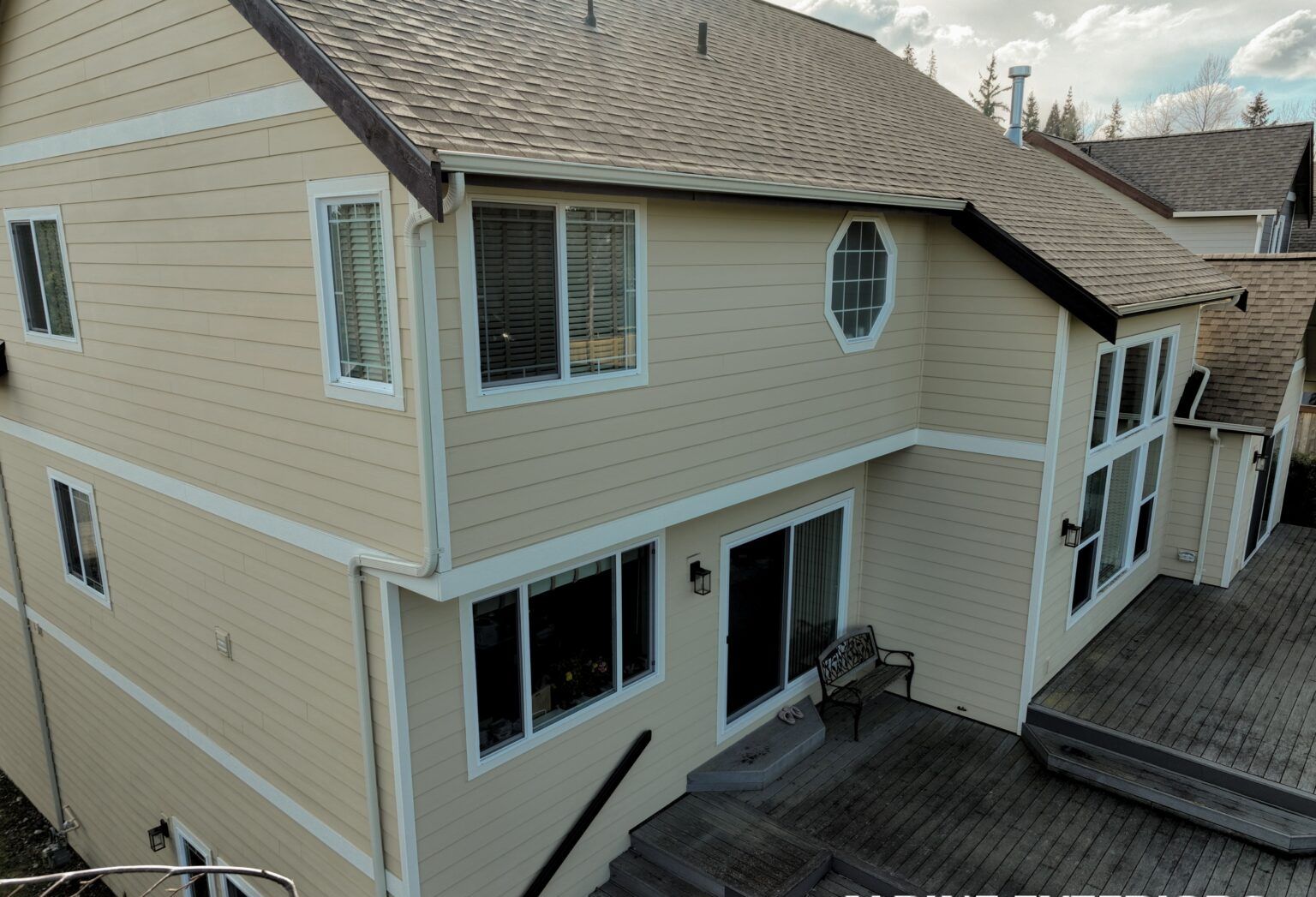
For most homes in Whatcom County, Hardie shingle siding is worth it if your walls take real weather — sideways rain off Bellingham Bay, deep shade under fir and cedar canopy, or a north face that never fully dries out. It resists the rot, moss staining, and paint failure that wear down wood and vinyl siding here, and it holds paint and shape better through our wet winters. It is not automatically the right call for every house or every budget, and it comes with real tradeoffs you should know before you sign a contract.
Hardie shingle siding is fiber cement — a mix of cellulose fiber, sand, and cement pressed and cured into panels that mimic the staggered, textured look of cedar shingle without being made of wood. That distinction matters more here than almost anywhere, because wood is the material that struggles most in a marine climate with long stretches of rain and short windows to dry out between storms. Fiber cement doesn't absorb water the way wood does, so it doesn't cup, split, or feed the kind of moisture-loving fungus that eventually shows up as soft, dark, crumbling boards behind a gutter downspout or under a leaky window flashing.
The upside list is genuine: it holds its shape through wet-dry cycling, it doesn't attract carpenter ants or wood-boring insects the way cedar shingle can, it's non-combustible, and factory-primed or pre-finished products hold paint noticeably longer than field-finished wood. The downside list is just as real. Fiber cement is heavier than wood or vinyl, which means installation takes more labor and more careful fastening — cut corners here and the siding can crack at the fastener points within a few years. It still needs paint eventually, usually on a longer cycle than wood but not never. Cutting it on site produces silica dust, which means a contractor should be using shears, dust-collecting saws, or scoring tools, not a dry blade with no containment. And while it resists moisture far better than wood, it is not a substitute for correct flashing, kick-out flashing at roof-wall intersections, and a drainage gap behind the cladding — get those details wrong and you can still trap water behind a material that itself doesn't rot, which just means the rot happens in the sheathing behind it instead.
Cost sits above vinyl and below high-end real cedar shingle installed with full rainscreen detailing, though exact numbers depend heavily on your home's size, tear-off scope, and trim complexity, so we'd rather give you a real range after seeing the walls than a number that doesn't apply to your house.
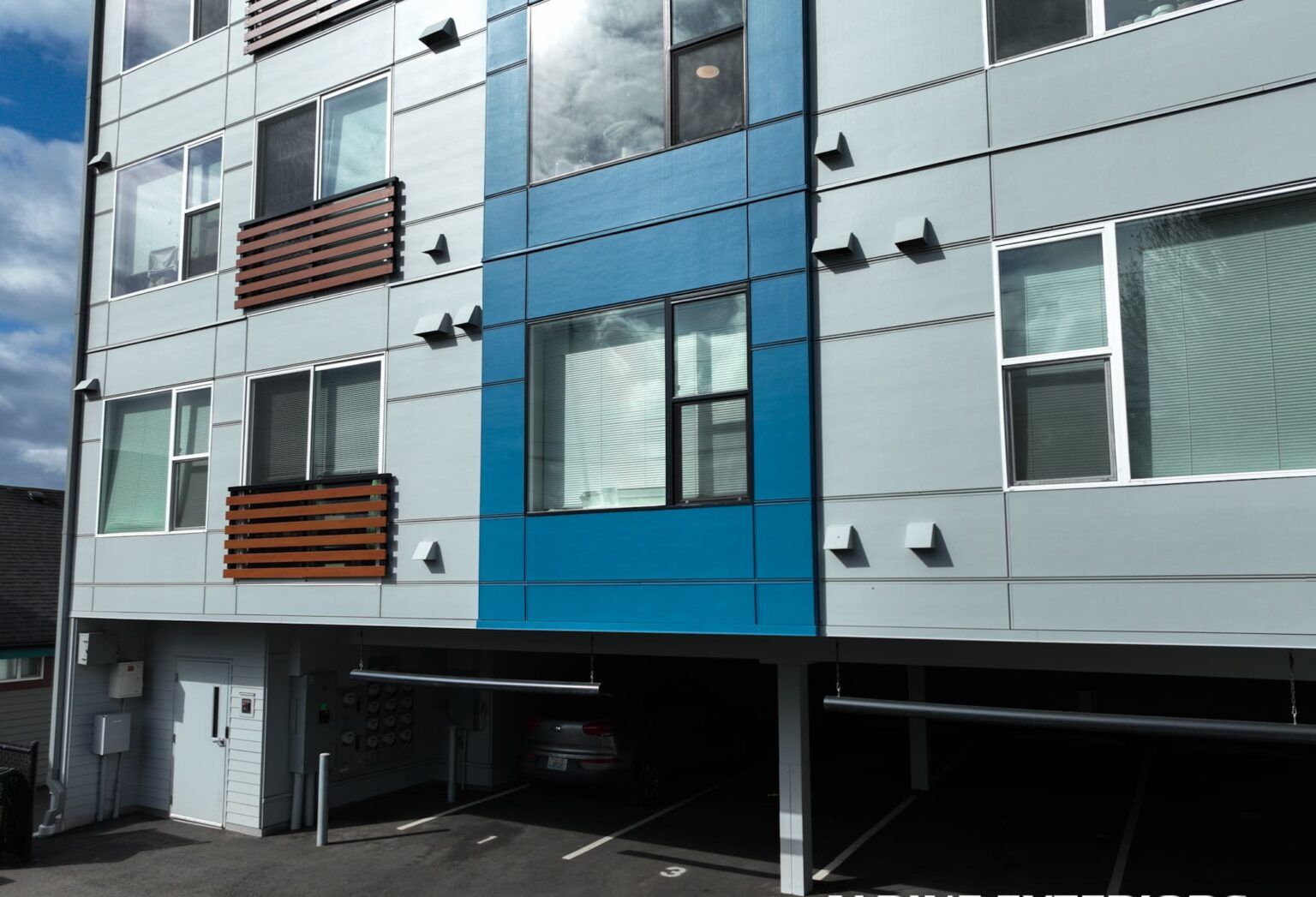
Siding advice that works in Spokane or Sacramento doesn't automatically work here, and a few things about this specific stretch of Washington change the calculation.
Don't start from the material and work backward — start from your walls. Walk your house and note which elevations get the most wind-driven rain (usually the west and southwest faces here), which stay shaded and damp longest, and whether you already have soft spots, peeling paint, or dark staining that suggests moisture is getting in. That tells you more about whether Hardie shingle siding is worth it for your specific house than any general comparison can.
From there, get more than one bid, and ask each contractor the same questions: will they install a rainscreen gap or furring strips behind the siding, how will they flash roof-to-wall intersections and window heads, and what paint or finish system are they using and what's the expected repaint interval. A contractor who can't answer those specifically is a bigger risk than any siding material choice. If only part of your home shows rot or damage — say, one shaded elevation or the area around a chronically leaky gutter — a full re-side may not be necessary; targeted repair paired with fixing the water source (regrading, gutter work, better flashing) can be the more honest recommendation, even if it's the less profitable one for the contractor to make.
Color is a smaller factor but worth a mention: darker colors show less moss and algae staining between cleanings but absorb more heat, which matters less for siding durability than it does for paint fade over time. Lighter, factory-finished colors tend to hold their finish longest with the least visible maintenance in this climate.
Alpine Exteriors walks Whatcom County homes through this assessment before recommending a material or a scope of work, because the right answer for a shaded Bellingham lot under fir trees is often different from the right answer for a wind-exposed lot in Birch Bay, even though both are technically the same siding product.
Real cedar shingle can look excellent and plenty of Whatcom County homes wear it well, but it asks more of the homeowner over time — regular refinishing, more vigilance about trapped moisture, and more vulnerability to the rot and insect issues that come with our wet climate. Hardie shingle siding is built to echo that same shingle profile and shadow line while holding up to sustained moisture exposure with less upkeep. The tradeoff is that it's a manufactured look rather than the real material, which matters to some homeowners and not at all to others.
It needs different maintenance, not necessarily less. Vinyl doesn't need repainting, but it can crack in cold snaps, fade unevenly over the years, and it flexes and warps if installed too tightly, which shows up as waviness on a wall. Hardie shingle siding holds its shape and finish longer but is a heavier, more labor-intensive material to install correctly and will eventually need repainting, even if the interval is longer than typical wood. Neither is maintenance-free; they just ask for different kinds of attention.
The material itself handles wind-driven rain well because it doesn't absorb moisture the way wood does, but the honest answer is that performance in that exposure depends as much on installation detail as on the product — proper lap, correctly sealed butt joints, and flashing that accounts for water being pushed sideways rather than falling straight down. On waterfront and near-waterfront lots in Blaine, Birch Bay, and on the islands, we pay particular attention to those details rather than assuming the material alone will do the job.
Fiber cement siding is generally considered a long-lived product, and manufacturers back it with lengthy product warranties, but real-world lifespan in a wet marine climate depends heavily on installation quality, paint maintenance, and how exposed a given wall is to wind-driven rain. We won't invent a specific number for your house without seeing it — a sheltered, well-detailed wall will outlast an exposed one with poor flashing by a wide margin, regardless of the siding material.
If you're weighing Hardie shingle siding against other options for a home in Bellingham, Ferndale, Lynden, Blaine, Birch Bay, Sudden Valley, or the islands, the most useful next step is an in-person look at your walls, not a generic estimate. Alpine Exteriors is licensed in Washington (ALPINI751OW) and works throughout Whatcom County, and we'll tell you honestly if your home needs a full re-side, targeted repair, or something short of either. Reach out to schedule a walk-through and get a real assessment of what your specific house needs.