
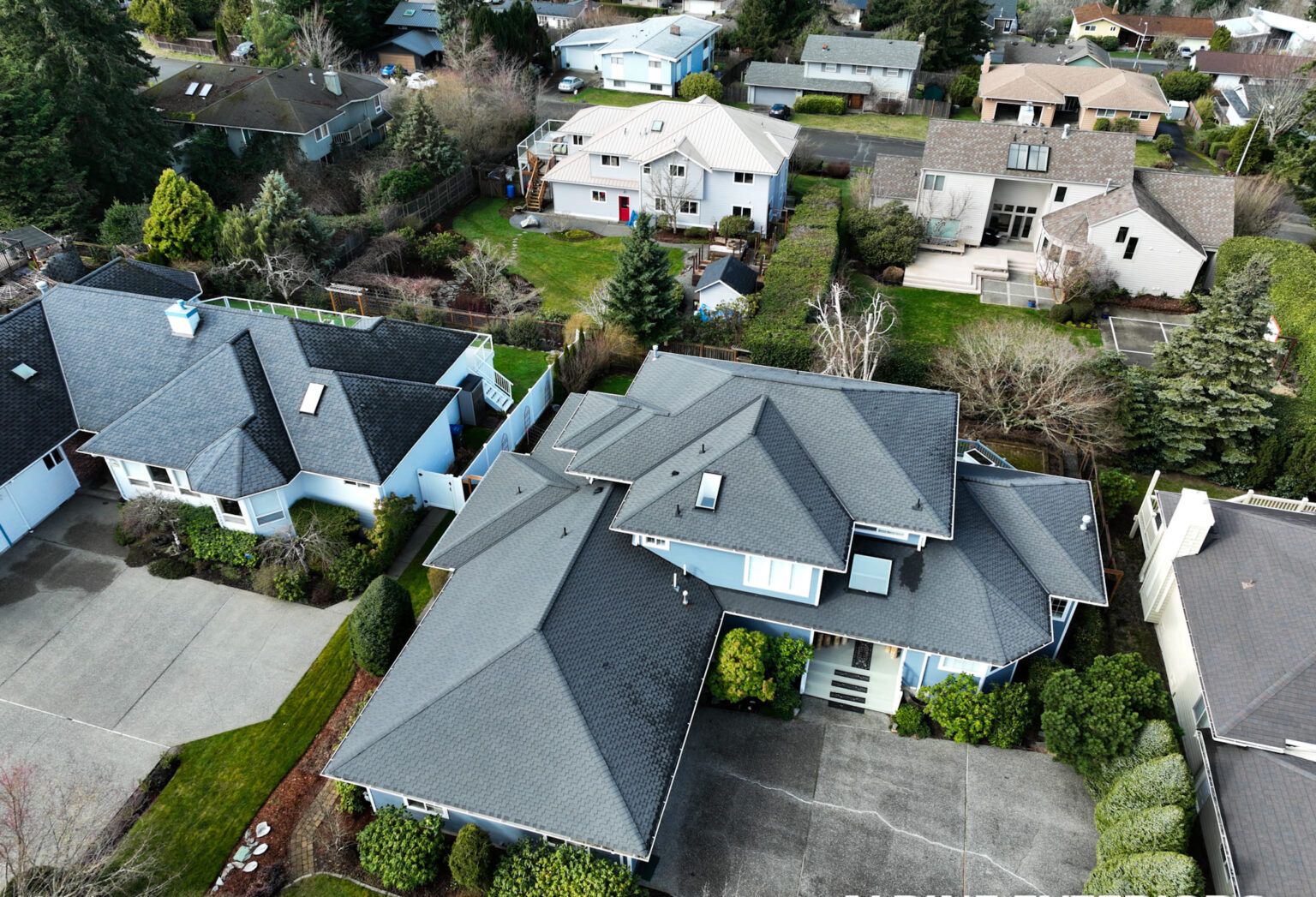
North Bellingham sits close enough to Bellingham Bay and the Strait of Georgia that homes here take a steady dose of wind-driven rain most of the fall, winter, and spring. Add the region's long stretches of low-intensity, all-day rain, and siding in this part of Whatcom County is under near-constant moisture pressure for eight or nine months of the year. Most siding failures we see at Alpine Exteriors did not happen overnight. They started as a small gap at a trim joint or a patch of moss that nobody thought much about, and by the time a homeowner notices, the damage has usually reached the sheathing or framing behind the panels. This page walks through the warning signs worth knowing, what causes them in this specific climate, and how to tell the difference between a problem that needs attention this week and one that can go on next year's list.
Paint that bubbles or peels in patches, rather than fading evenly across the whole wall, is usually a moisture problem, not a paint-quality problem. When water gets behind a wood or fiber-cement panel and can't dry out between rain events - which in Whatcom County can mean days in a row without a real dry spell - it pushes against the paint film from underneath. On older wood lap siding around North Bellingham, this shows up first at butt joints and around window trim, where caulking has a way of shrinking and cracking years before anyone notices.
Wood and some engineered wood siding products absorb moisture and swell, then dry out and shrink, over and over, through our wet season and the shorter dry stretches in summer. Repeated over several winters, that cycle can leave panels visibly wavy or bowed away from the wall. It's most common on walls that take direct wind-driven rain - typically the west and southwest exposures that face the water - where the siding rarely gets a full chance to dry before the next system rolls through.
If you press on a section of siding, especially near the bottom of the wall or below a window, and it gives slightly or feels spongy, that's usually active wood rot, either in the siding itself or in the sheathing behind it. This is one of the more serious signs on this list, because by the time rot is soft enough to feel through the siding, it has typically been progressing for a while unseen. Lower wall sections are most at risk because splashback from grade, gutters that overflow, and general standing moisture concentrate there.
North-facing and shaded walls around North Bellingham - especially on lots with mature trees or close neighboring structures - stay damp far longer than south-facing walls, and that's exactly the environment moss and algae need. A light green tint on the surface is mostly cosmetic and can often be cleaned. But moss that's been established for a season or more holds moisture directly against the siding around the clock, and on wood siding in particular that constant dampness is a direct path to rot underneath, even if the surface still looks intact from the sidewalk.
As siding and trim boards go through repeated wet-dry cycles, caulking loses flexibility and small gaps open up at seams, outside corners, and around window and door trim. Wind-driven rain off the bay doesn't need much of a gap to work its way in - horizontal rain pushed by a west or southwest wind can drive water sideways into openings that would never leak in a still, straight-down rain. These gaps are easy to miss during a quick look from the ground but are one of the more common entry points we find during inspections.
By the time moisture shows up on the inside of a wall, it usually means the siding, the weather-resistive barrier behind it, or both have been compromised for some time. A musty smell in a bedroom or closet along an exterior wall, discolored or soft baseboards, or peeling interior paint near a window are all signs that water has made it past the siding. This is not a wait-and-see situation - it points to conditions that can support mold growth inside wall cavities.
Wet, failing siding and the insulation behind it don't perform the way dry materials do. Waterlogged fiberglass or cellulose insulation loses much of its R-value, and gaps that let water in also let conditioned air out. If your heating costs have climbed over a couple of winters without a clear explanation - and you're not seeing it reflected in obvious drafts around windows and doors - deteriorating siding and the wall assembly behind it are worth ruling out.
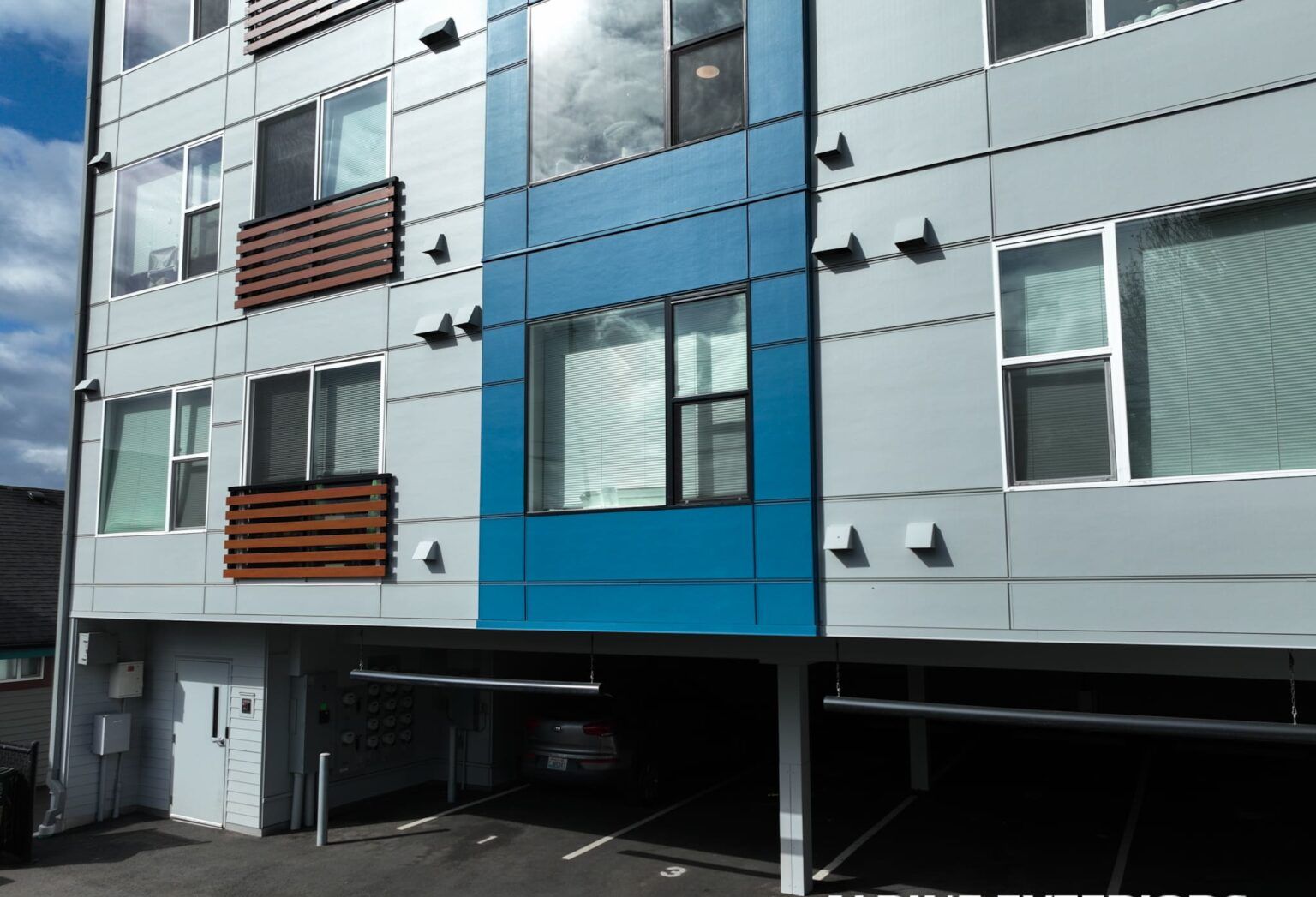
Not every sign on this list means calling someone today. A little moss on the north side of the garage, some sun-fading on the west wall, or one loose piece of trim can usually go on the schedule for the coming month without real risk. What changes the timeline is active water intrusion or structural softness.
Treat these as urgent, particularly heading into fall and winter: soft or spongy siding you can press your thumb into, a musty smell or visible water staining inside the house, siding that has visibly pulled away from the wall in a section, or sheathing you can see because siding has fallen off or rotted through. These conditions get worse quickly once the wet season sets in, and delaying repairs through a Whatcom County winter often turns a section repair into a full wall replacement by spring.
Lower-urgency issues - cosmetic paint fading, light surface moss that hasn't been there long, minor caulk cracking with no soft wood underneath - are worth scheduling but won't typically cause damage in the next few months if the weather cooperates. The honest caveat is that cosmetic and structural can look similar from the ground, which is why a hands-on check is worth more than guessing from the driveway.
Start with a basic walk-around on a dry day. Press on suspicious sections, especially near the bottom of walls, below windows, and around any spot where two different materials meet - siding to trim, siding to foundation, siding to a deck ledger. Look closely at north- and west-facing walls first, since those tend to show problems earliest in this area. If you have attic or crawlspace access, a flashlight check for staining, damp insulation, or a musty smell can tell you a lot before any siding comes off.
From there, get an actual inspection rather than relying on a driveway assessment. A contractor who knows what to look for can check moisture content with a meter, probe suspect boards, and tell you whether you're looking at a spot repair, a partial re-side of one or two walls, or a full replacement. Alpine Exteriors inspects homes throughout Bellingham, Ferndale, Lynden, Blaine, Birch Bay, Sudden Valley, and the islands, and can usually tell within one visit whether damage is isolated or has spread further than it looks.
Late summer and early fall - roughly August through October - tend to be the best window for siding work in Whatcom County, since it falls before the heaviest rain returns and gives new siding a chance to be fully sealed before winter. That said, if you're seeing urgent signs, it's better to address them out of season than wait for ideal weather.
The simplest test is to press on the area. Cosmetic issues - fading, minor moss, small paint cracks - stay firm under pressure. If the siding flexes, feels spongy, or you can push a screwdriver in with light pressure, that's a sign the wood underneath has started to rot, which is a structural issue rather than a cosmetic one. When in doubt, it's worth having someone check with a moisture meter rather than guessing.
Not always, but it raises the risk the longer it's there. A season or two of light surface moss on wood or fiber-cement siding is often still just a surface issue and can be cleaned off. Moss that's been established for several years, especially in a shaded, north-facing spot, has likely kept that section of wall damp for extended stretches, and that's the kind of sustained moisture that leads to rot. It's worth checking the siding underneath established moss rather than assuming it's purely cosmetic.
It depends on how far the moisture has traveled. If rot is limited to one or two boards and the sheathing behind them is still sound, a spot repair is often reasonable. If water has been getting in for a while - which is common at corners and around window trim where it's hardest to see - it may have spread along the sheathing or framing, and patching over that without addressing the source usually just hides the problem for a year or two. An inspection that includes opening up a suspect area, not just a visual look, is the only reliable way to know which situation you're in.
Yes, when a project involves removing siding down to the sheathing, the work generally needs to meet current Washington State Energy Code requirements for the wall assembly, which can include added insulation or a compliant weather-resistive barrier depending on the scope of work and what's already in the wall. This is worth planning for early, since it can affect both the materials used and the overall cost of a larger siding project, rather than being an add-on decided partway through.
If any of these signs sound familiar, it's worth getting a second opinion before another Whatcom County winter puts more moisture behind the siding. Alpine Exteriors is a licensed Washington contractor (ALPINI751OW) serving Bellingham, Ferndale, Lynden, Blaine, Birch Bay, Sudden Valley, and the surrounding islands, and we're glad to walk a North Bellingham home, point out what we find, and lay out honest options - whether that's a small repair, a partial re-side, or a full replacement - so you can make the call with real information instead of guesswork.